From Missed Moments to Cinematic Memory
You crest the singletrack, tires buzzing on dirt, the forest a green blur. The light is perfect, the feeling electric. But the shaky, narrow clip from your phone fails to capture the speed, the immersion, the sheer thrill. The essence of the adventure is lost in translation.
The right helmet camera changes everything. It becomes your mechanical eye, transforming your first-person perspective into visceral, high-fidelity stories. This isn’t just about recording; it’s about preserving the true scale and emotion of your experience.
Mastering your adventures begins with a single, foundational choice: selecting and wielding the best helmet camera for your world. This is the key to unlocking professional-grade footage and unparalleled creative freedom.
Part 1: Foundational Choices – The Core Hardware
Your camera is the heart of your capture system. This initial selection dictates the quality of every moment you save, forming the unshakable foundation for your visual legacy.
Selection & Form Factor: Matching Tool to Terrain
Not all cameras suit all adventures. Your primary activity should guide your first major decision.
Traditional Action Cams: The quintessential brick-style camera, like a GoPro or DJI Action. This is the versatile workhorse. It excels with its vast ecosystem of mounts, making it ideal for mountain biking, skiing, motocross, or any sport where you might switch between helmet, chest, and handlebar placements.
360-Degree Cameras: Cameras like the Insta360 X3 or GoPro MAX. These are the ultimate creative tools. Mount it and forget about framing; in post-production, you can pan, tilt, and reframe to find the perfect shot. Perfect for complex environments like rock climbing or group rides where the action happens all around you.
Ultra-Compact & Specialty Cams: Models like the Insta360 Go 3 or dedicated cycling cameras. Their minimal weight and size are their superpowers, offering a barely-there feel for road cycling helmets or risky placements where a larger camera might snag.
Location & Mounting: The Art of the Perfect POV
A great camera poorly mounted yields terrible footage. Your mounting strategy is as critical as the sensor.
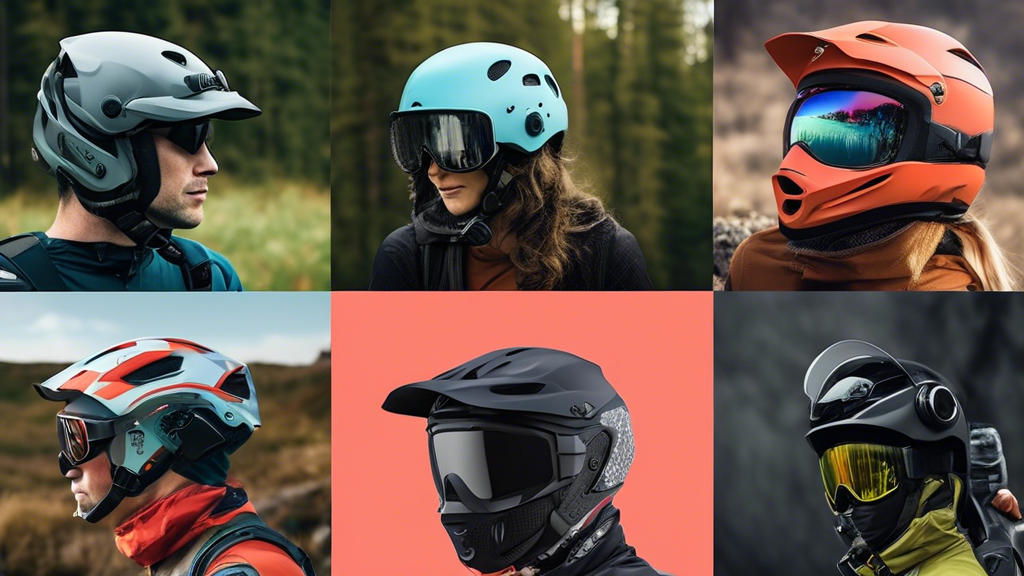
Helmet Position: The classic top mount offers a stable, high perspective but can catch low branches. The side mount provides a great rider’s-eye view but can feel lopsided. The chin mount (on full-face helmets) is the current gold standard for motorsports and MTB, offering a dynamic, head-tracked view that feels incredibly natural and minimizes wind drag.
Mounting Fundamentals: Always use a fresh adhesive pad on a clean, degreased surface. For vibration-heavy activities like motocross, use a reinforced tether strap as a safety leash. A loose mount is the fastest way to ruin your day and your camera.
Core Specifications Breakdown: The Performance Trinity
Beyond the brand name, three technical specs define what your camera can do. Understand these to cut through the marketing.
| Component | Options | Key Characteristics |
|---|---|---|
| Sensor & Resolution | 1/1.9”, 1/2.3”, 4K, 5.3K, 1080p | A larger sensor size (e.g., 1/1.9”) captures more light, drastically improving low-light performance. Higher resolution (5.3K) offers future-proofing and allows you to digitally zoom or crop your footage in post without major quality loss. |
| Stabilization | Digital (EIS), HyperSmooth/RockSteady (Advanced EIS), Gyro-based | This is non-negotiable for helmet cams. Gyro-based stabilization (using data from a physical gyroscope) is superior. It delivers buttery-smooth, natural-looking footage that eliminates high-frequency chatter from bike shocks or footsteps, making amateur footage look professional. |
| Durability & Battery | Standard Sealed, Removable, Enduro-type | Removable batteries are essential for all-day adventures—swap in a fresh one in seconds. True weather-proofing (without an external case) is a must for snow, mud, and rain. “Enduro” type batteries sacrifice some runtime for better performance in freezing temperatures. |
Part 2: The Core System – Managing Your Capture
A helmet camera is a dynamic system, not a set-and-forget gadget. Mastering these control variables is how you guarantee usable, stunning footage in any condition.
Control Variable A: Frame Rate & Resolution
This is the balance between detail and smoothness. For general capture, I default to 4K at 30 frames per second (fps). It provides sharp detail and a natural motion look. When I know I’ll want to slow down a jump or technical move, I switch to 2.7K or 1080p at 120fps. This high frame rate gives me silky smooth slow-motion in editing. The consequence of error is real: filming fast action at 24fps can look choppy, while filming a scenic vista at 120fps can feel unnaturally fluid.
Control Variable B: Field of View (FOV)
FOV defines your perspective. For the most immersive, “you are there” feeling on a mountain bike, I use Wide or SuperView. It captures my handlebars and the trail ahead, emphasizing speed and scale. For vlogging or situations where edge distortion looks odd, like a group conversation, I switch to Linear mode. It crops the image to remove the fisheye effect, making straight lines appear straight. Choose wrong, and your world can look either bizarrely warped or claustrophobically tight.
Control Variable C: Audio & Voice Control
Bad audio ruins good video. The built-in mic is often at the mercy of wind noise. For clear commentary, an external mic adapter with a lavalier mic tucked into your helmet padding is a game-changer. For quick control without fumbling, use voice commands. A simple “GoPro, start recording” when your hands are on the bars is not just convenient—it ensures you never miss the start of the action.
Part 3: Advanced Practices – Optimization in the Field
This is where you transition from passive recorder to active cinematographer. It’s about intentional capture.
Preparation: Protune & Log Profiles: Step out of auto mode. Enabling settings like Protune (GoPro) or LOG color profiles unlocks manual control over exposure, color, and sharpness. It gives you flat, desaturated footage that holds more detail in shadows and highlights, providing massive flexibility for color grading in software like DaVinci Resolve later. This is the single biggest leap toward a professional look.
Ongoing Inputs: Power Management: Conquer battery anxiety. My kit always includes at least three batteries and a portable power bank. For long, static shots, I power the camera directly via USB from the bank in my backpack. I also disable power-hungry features like GPS tagging and wireless connectivity when I don’t need them, easily adding 20% more record time.
Selection & Strategy: Shot Planning: Think like a director. Before a ride, I visualize the key segments: the scenic climb, the technical descent, the group shot at the summit. I pre-set my camera modes for each. As I transition from a shaded forest (which may need a higher ISO setting) to a bright alpine meadow, I proactively hit the shortcut button to switch to a preset optimized for bright light, ensuring perfect exposure throughout.
Part 4: Threat Management – Preventing Lost Footage
Adopt a proactive, engineering mindset. Your goal is to engineer failure out of the system.
Prevention is Your First Defense: My five-point pre-ride check is ritual: 1) Mount tightness (a firm twist check), 2) Lens cleanliness (microfiber wipe), 3) Storage space (format card in-camera), 4) Battery level (full plus a spare), 5) Tether strap secured. This 60-second routine has saved countless recordings.
Intervention: A Tiered Response Plan: When problems strike, stay calm and systematic.
Issue: Camera overheats and shuts off.
Solution: This is common in hot weather filming at high resolutions. Immediately switch to a lower resolution (1080p), ensure the camera is not in a sealed case, and point it into the wind. For a long-term fix, use an external power source to remove the heat generated by battery discharge.
Issue: Footage is corrupt or camera freezes.
Solution: Never turn the camera off immediately. First, try removing the battery to force a hard reset. If the file is corrupt, use dedicated recovery software like Disk Drill, which can often reassemble footage from the card’s raw data.
Part 5: Your Annual Helmet Camera Action Plan
A systematic approach ensures your gear is always adventure-ready and your memories are permanently secured.
| Season/Phase | Primary Tasks | What to Focus On |
|---|---|---|
| Pre-Adventure Season (Spring) | Update all camera and editing software firmware. Physically inspect every mount, buckle, and adhesive base for fatigue. Perform a full discharge/charge cycle on all batteries. | System integrity and testing new features or settings in a controlled environment before you depend on them. |
| Peak Adventure Season (Summer) | Implement the daily pre-ride check. Offload footage after every major outing—never let the card fill up. Clean the camera lens and body with fresh water after exposure to salt, sand, or mud. | Capture efficiency and disciplined data organization. Label files by date and location as you transfer them. |
| Post-Season & Planning (Fall/Winter) | Give all gear a deep clean. Remove batteries for long-term storage. Catalog and back up the year’s footage to two separate locations (e.g., external drive and cloud). Analyze your year’s work: what shots worked, what didn’t? | Analysis, archiving, and strategic planning for next year’s upgrades or accessory purchases based on your actual needs. |
The Reward of Mastered Perspective
True mastery is when the technology disappears, leaving only an extension of your own vision. The journey from selecting the right tool to capturing with confident, intentional control culminates in a profound transformation of your adventures.
You are no longer just a participant; you are the author of your epic. The payoff is a pristine, dynamic library of your life in motion—each clip a perfect echo of the wind, the speed, and the unbridled joy you felt. This tangible legacy, this ability to share the very soul of your experience, is the ultimate reward for any adventurer seeking the best helmet cameras of 2024.