Reviewed by the Digital Helmet Cameras Editorial Team. Based on manufacturer specifications and publicly available user feedback; not independent lab or road testing. Prices and availability change, so check current listings.
Why Chin Mounting Suits the Bell Qualifier
Riders commonly move through a few mounting positions on the Bell Qualifier — crown-mounted adhesive, side mounts clipped to the visor channel — before settling on a chin mount, since a mount aimed too high tends to capture mostly road and sky. Chin mounting is generally considered to give the most usable footage angle on this helmet.
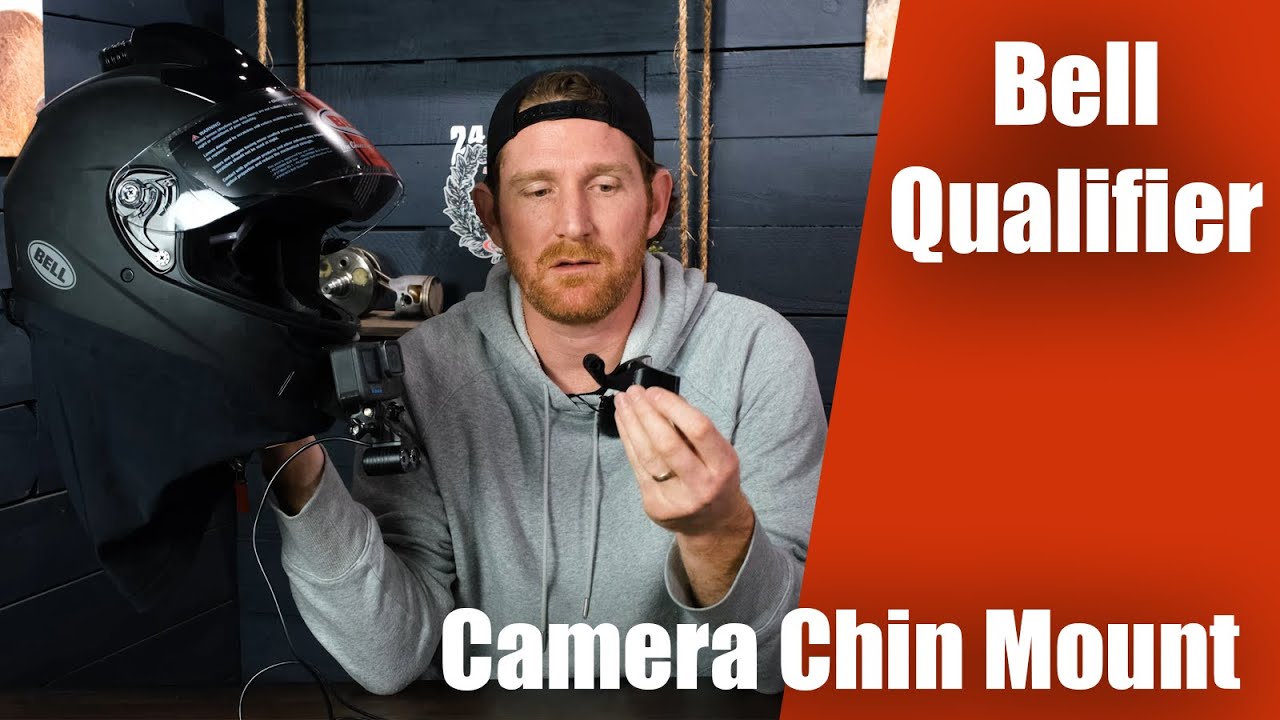
The Bell Qualifier helmet chin mount is designed specifically for this helmet’s chin bar contour. That matters more than it sounds. Generic adhesive mounts that claim universal fit often sit at a slight angle on the Qualifier’s curved chin bar, which means your footage ends up off-horizontal no matter how carefully you align the camera. A purpose-made mount seats flush.
What’s Included and Where to Buy
The most widely used version comes with a curved 3M VHB adhesive base, an adjustable pivot arm, a standard GoPro-style finger mount adapter, and a secondary 1/4″-20 light mount attachment. You can find current options on Amazon. Bell’s accessory page at bellhelmets.com lists OEM-approved mounting options if you want to go that route.
Installing the Mount on the Bell Qualifier
Installation takes about 20 minutes done properly. The 3M VHB adhesive is effectively permanent — once cured, removing it will leave marks on the chin bar. A few things worth knowing before you start:
- Use 70% isopropyl alcohol, not acetone. Acetone can dull the paint and weaken the ABS shell beneath it.
- Do a dry fit first. The Qualifier’s chin bar tapers slightly toward the edges. Hold the mount in position and look through your visor to confirm the camera lands on your natural eye line — not angled down at the road.
- Wait 24 hours before loading a camera. VHB needs a full cure cycle to reach full strength — mounting a camera before the adhesive has cured risks the mount shifting during the first ride.
Camera Compatibility
The mount ships with a GoPro-style prong adapter. For DJI Osmo Action 3 or 4, you’ll need a DJI-to-GoPro adapter or DJI’s own mount plate — both are inexpensive and widely available. For Insta360 (ONE RS, X3, Ace Pro), the standard GoPro prong works directly with Insta360’s included GoPro-compatible baseplates.
What to Expect on a Motorcycle
Based on the mount design and general chin-mount behavior, two things stand out:
Vibration at highway speed: At highway speeds, some high-frequency vibration may show up in GoPro footage unless HyperSmooth is set to its strongest option; DJI’s RockSteady is generally reported to reduce it substantially. The pivot arm introduces a small amount of flex — that’s the tradeoff for adjustability. If you want zero flex, a fixed-arm chin mount is more appropriate for sustained high-speed riding.
Wind noise: The camera sits in relatively clean air at chin height. Wind noise is generally less severe than with top or side mounts, which catch more direct airflow. At 60mph+ you will still want the camera’s wind noise reduction set to high, but chin position is commonly reported to give the cleanest raw audio.
The Secondary Light Mount
The 1/4″-20 light attachment turns the mount into a dual-purpose platform for a compact LED video light on dusk rides. Getting the light angled below the camera’s field of view takes some trial and error — if it sits even slightly too high, it causes direct flare into the lens. For most riders, the light mount is a bonus feature rather than a primary reason to buy.
Verdict: Who Should Buy This
If you ride a Bell Qualifier regularly and want a stable chin mount for action camera footage, the purpose-made fit justifies the price over generic alternatives. The specific contouring to the Qualifier’s chin bar makes a real difference in stability and angle consistency.
If you swap cameras between multiple helmets or want to frequently move the camera between mounts, the permanent adhesive base is a limitation. In that case, pair it with a quick-release plate on top of the pivot arm, such as a Peak Design plate, which makes one-handed camera removal easy.
| What Works Well | Limitations |
|---|---|
| Precise fit to Qualifier’s chin bar contour | Permanent adhesive — no repositioning after curing |
| Eye-level angle produces natural POV footage | Pivot arm flex at high speed without electronic stabilization |
| GoPro-standard interface: works with GoPro, DJI, Insta360 | Light mount requires careful positioning to avoid lens flare |
| Less wind noise than top or side mounts | Cure time means no same-day installation and riding |
For more on chin mounting technique and angle setup, see our full Helmet Camera Mount Guide.