The Vision Beyond the Lens
Remember that epic descent, the crucial play, or the critical inspection where your memory is clear, but the footage is a shaky, distorted mess? That gap between experience and record is closing forever. Helmet cameras are shedding their identity as simple action cams. They are evolving into intelligent perceptual systems, worn on the body but connected to a larger digital ecosystem. Exploring the future of this technology reveals it is becoming the key to unlocking not just documentation, but enhanced safety, deep performance analysis, and truly immersive storytelling across countless facets of life.
Foundational Evolution: The Hardware Leap
The race for better pixels is giving way to a smarter, more integrated physical form. This hardware evolution creates the essential foundation for all future applications.
Sensor & Image Quality Revolution
Resolution is just the start. The future lies in comprehensive visual fidelity. We are moving beyond 4K into 8K and 360-degree spherical capture, providing immense flexibility in post-production. More critically, new stacked CMOS sensors deliver phenomenal low-light performance and drastically reduce motion distortion. Paired with this, stabilization is evolving from software-based cropping to hybrid optical-electronic systems. These systems offer gimbal-like smoothness even during high-impact activities like mountain biking or skiing, without sacrificing field of view.
Form Factor & Integration
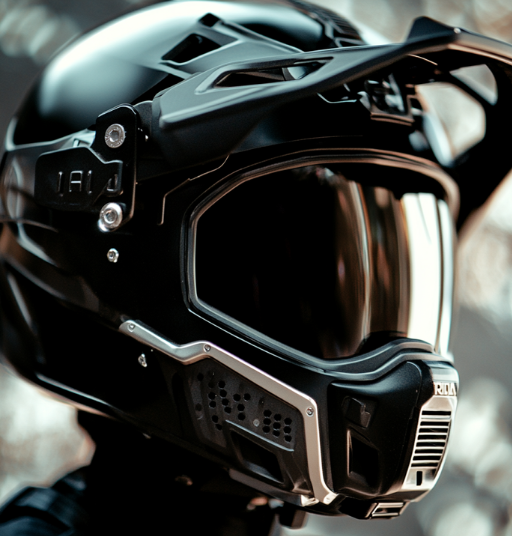
Bulky boxes mounted with straps are becoming obsolete. The trend is toward radical miniaturization and weight reduction, enabling cameras to be seamlessly integrated into helmet shells, visors, and other protective gear. Modular designs will allow users to snap different sensor pods or battery packs onto a universal mount. This shift makes the camera an unobtrusive part of the equipment, not an awkward addition.
Core Component Breakdown
| Component Category | Options | Key Characteristics |
|---|---|---|
| Image Sensor | Traditional CMOS, Stacked CMOS, Advanced BSI | Stacked CMOS is the future: It allows faster data readout for super slow-motion, offers exceptional dynamic range to capture details in shadows and highlights, and minimizes the “rolling shutter” effect common in fast-paced action. |
| Stabilization | EIS (Electronic), OIS (Optical), Hybrid Systems | Hybrid Systems dominate for pros: They combine physical lens movement (OIS) with software correction (EIS). This delivers flawlessly smooth footage in high-motion environments without the severe image cropping of EIS alone. |
| Form Factor | Traditional Mount, Integrated, Modular | Integrated/Modular designs lead: Seamless helmet integration reduces drag and risk. Modularity lets you upgrade the brain (sensor) independently of the mount or battery, future-proofing your investment. |
The Intelligent Core: AI and Data Management Systems
The camera is transforming from a passive recorder into an active, intelligent partner. This intelligence manages the capture and enriches the data.
Automated Control & Scene Recognition
Forget fiddling with settings mid-action. On-device artificial intelligence will power features like auto-framing, which keeps a subject (like a biking partner) centered. It will intelligently adjust exposure as you move from shadow to sunlight and automatically identify and highlight key moments—a landing, a goal, an anomaly—saving hours of review time. Voice and intuitive gesture control will make operation completely hands-free.
Data Overlay & Telemetry Integration
The video is becoming a data canvas. Future cameras will seamlessly embed real-time telemetry from other sensors. Imagine playback that overlays your exact GPS route, speed, heart rate, and even G-forces directly onto the footage. For a motorsports athlete, this creates a rich tool for analyzing technique. For a first responder, it provides an immutable, contextualized record of an event’s timeline and physical demands.
Advanced Applications: Cultivating New Landscapes
The true potential of this technology blooms when it moves beyond recreation into professional and scientific realms.
Professional & Industrial Use
In frontline professions, the helmet camera is a lifeline. Firefighters can stream their point-of-view to incident commanders outside. Police officers enhance transparency and evidence collection. In industry, a field technician can receive remote expert guidance via AR markers overlaid on their live view, or automatically document an inspection hands-free for compliance and reporting.
Sports Science & Training
The subjective “feel” of an athlete meets objective data. A helmet camera provides the precise visual perspective of a skier’s line or a quarterback’s read. Synchronized with biomechanical data from other sensors, coaches can perform unparalleled analysis, correlating body position with outcome in a way never before possible from the athlete’s own viewpoint.
Threat Management: Privacy, Security, and Ethics
The power of pervasive, intelligent recording demands a proactive framework for responsibility. We must build ethics into the technology itself.
Prevention Through Policy & Design
Manufacturers are implementing hardware and software solutions. These include prominent recording LEDs, automatic facial blurring features for public uploads, and robust, end-to-end encryption for data both in transit and at rest. These features are not afterthoughts; they are critical design pillars for professional adoption.
Intervention in Public Discourse & Regulation
Societal norms and laws are evolving. A clear, ongoing public conversation is needed to balance security, transparency, and privacy. This will shape regulations governing recording in sensitive spaces and establish ethical guidelines for the use of continuous wearable footage in workplaces and public life.
The Phased Roadmap Ahead
| Phase | Primary Tech Advancements | Expanding Applications |
|---|---|---|
| Near-Term (1-3 Years) | Ubiquitous 8K/360 capture, advanced AI for automatic highlight tagging and metadata organization. | Mainstream integration of biometric/telemetry overlays for consumers. Standardized deployment for evidence collection and remote guidance in frontline professions. |
| Mid-Term (3-7 Years) | Full Augmented Reality (AR) overlay capability via connected glasses or visor projection. Predictive AI for hazard alerts (e.g., proximity warnings). | Widespread use in assisted living for remote health checks. Advanced, immersive simulators for driver, pilot, and operator training using real-world captured footage. |
| Long-Term Vision (7+ Years) | Non-invasive neural interfaces for intuitive control and focus selection. Holographic or volumetric playback systems. | “Experience archival” for true immersive memory recall. Integrated public safety networks where first responder feeds provide real-time collective situational intelligence. |
The Transformed Perspective
The journey from a simple recording device to an intelligent perceptual system is underway. It is a path defined by hardware that disappears, software that understands, and data that provides context. This evolution promises a future where our point-of-view devices do far more than capture scenes. They will enhance our real-time understanding, protect our well-being, and preserve our most vital experiences with unparalleled fidelity and richness. Exploring the future of helmet cameras, therefore, is not just about watching technology advance. It is about fundamentally enhancing how we see, understand, and interact with our world.