The Vision: Seeing the Rally Through the Driver’s Eyes
You watch a World Rally Car attack a forest stage. From the outside, it’s a blur of controlled aggression—a slide here, a jump there. The commentary tells you it’s impressive, but a disconnect remains. You see the car’s movement, but you don’t feel the driver’s reality: the frantic, sawing at the wheel, the eyes darting from apex to ditch, the intense concentration that borders on clairvoyance. For decades, broadcast technology has shown us the spectacle, but it’s kept us locked outside the cockpit, spectators to a struggle we can’t fully comprehend.
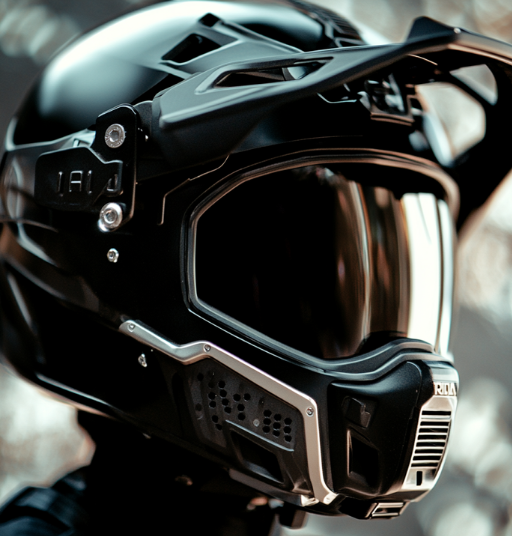
That barrier is now crumbling. The evolution from static, headrest-mounted cameras to dynamic, driver-centric views is reaching its logical zenith. The introduction of a new helmet camera set to enhance WRC broadcasts represents the master key to immersion. This isn’t just another angle; it’s the key to unlocking unprecedented emotional connection and technical understanding, finally placing the viewer directly into the mind and senses of the world’s most daring drivers.
Foundational Choices: The Hardware of Immersion
Capturing the raw, unfiltered truth of rallying requires hardware that disappears. The camera must become an extension of the driver, not a distracting appendage. Every choice in its design is a trade-off between capability and invisibility, building the foundation upon which believable immersion is built.
Selection and Sizing – The Imperative of Miniaturization
Previous generations of helmet cams were often bulky, mounted like external pods. They captured the idea, but not the authentic feeling. The new standard is defined by radical miniaturization and robustness. The camera must be so small and light that a driver forgets it’s there after the first corner. This is non-negotiable for safety and comfort; any added weight or imbalance at the head during high-G maneuvers is unacceptable. The ideal unit is no larger than a matchbox, with a profile that allows seamless integration into the helmet’s aerodynamic shell.
Location and Setup – Integration is Everything
Mounting strategy is tactical. There are two primary philosophies: full integration into the helmet shell or a low-profile external pod. Integration offers the cleanest aerodynamic profile and often the most stable platform, but can limit angle adjustment. External mounts offer flexibility but must combat wind buffeting. The universal constant is the need for a secure, vibration-damped mount. Rally cars transmit hundreds of high-frequency vibrations; a rigid mount turns the footage into an unwatchable, jittery mess. The solution is a specialized damping system that isolates the camera from high-frequency shake while still allowing it to follow the driver’s head movements.
Material and Components – The Core Comparison
The magic lies in the component choices. Each part must perform in an environment that would destroy consumer electronics.
| Component Category | Options & Considerations | Key Characteristics |
|---|---|---|
| Sensor & Image Processor | High Dynamic Range (HDR) CMOS Sensors | Essential for handling the brutal contrast between dark forests and bright sun patches. A standard sensor will either blow out the highlights or lose shadow detail. Advanced HDR processing captures both in real-time. |
| Lens | Ultra-Wide Angle, Fixed Focus | A wide field of view captures the steering wheel, instrument binnacle, and the road ahead, mimicking human peripheral vision. The trade-off is edge distortion, which must be corrected in software to avoid a “fish-eye” effect that feels unnatural. |
| Stabilization | Gyroscopic (Hardware) + Algorithmic (Software) | Hardware stabilization counters large, low-frequency movements like head turns. Software algorithms (like a horizon lock) filter out high-frequency vibration. Used alone, each has flaws; together, they create a smooth, natural perspective. |
| Audio Capture | Directional Microphones with Wind Protection | The target is crisp driver breathing/grunting and clear intercom communication. Omnidirectional mics are useless, overwhelmed by wind and mechanical noise. Directional mics, pointed at the driver’s mouth, paired with advanced noise-gating software, are mandatory. |
| Power & Data | High-Capacity Battery & Wireless/Physical Data Link | Batteries must last a full loop of stages and operate in temperature extremes. Redundant power connections prevent failure. A high-bandwidth data link, likely a physical connection for reliability, is needed to offload huge video files quickly between stages. |
The Core System: Managing the Hostile Capture Environment
A rally car is not a studio. The camera system must actively manage a violently dynamic set of variables to deliver a clean signal. Think of it as controlling a microclimate of chaos.
Dynamic Range & Lighting: Taming the Light Switch
The target is a viewable image whether the car is in a dark Welsh forest or bursting into a sunny Alpine meadow. The consequence of failure is footage that is either a blinding white wash or a featureless black void. The solution lies in the sensor and processor. Modern helmet cams use adaptive HDR that continuously analyzes the scene, adjusting exposure on the fly far faster than a traditional camera. This preserves detail in the shadows of the cockpit while preventing the outside world from blowing out.
Stabilization & Vibration Damping: The Search for Smoothness
The target is a perspective that feels like your own head is in the car—smooth enough to follow, but raw enough to convey violence. Pure, unadulterated footage from a helmet is often nauseating. The solution is a layered approach. Multi-axis gyros inside the camera physically stabilize the lens. This raw feed is then processed by software that distinguishes between intentional head movement (a look to the apex) and destructive chassis vibration, filtering out the latter. The result is immersive, not sickening.
Audio Capture: Isolating the Signal from the Noise
The target is the intimate sound of the sport: the driver’s instructions to the co-driver, their sharp intake of breath before a jump, the precise blip of the throttle. The consequence of failure is audio drowned out by a constant roar of wind, gravel, and transmission whine. The fix is strategic microphone placement—as close to the driver’s mouth as possible—paired with hydrophobic windshields. In the broadcast truck, audio engineers use noise gates to automatically mute the channel when the driver isn’t speaking, ensuring every word that is captured is crystal clear.
Advanced Practices: Optimizing the Narrative Perspective
With the technical capture mastered, the focus shifts to artistry. This is about using the tool to tell the story of the stage.
Preparation – Strategic Camera Placement
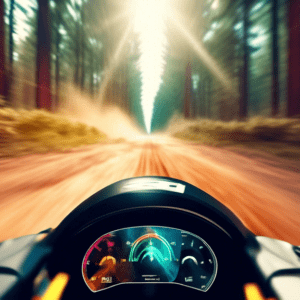
Not all helmet views are equal. The placement dictates the narrative. An over-the-eyebrow, central mount provides the classic “driver’s eye” view, showing the full windshield and wheel. This is ideal for conveying the overall challenge. A mount on the side of the helmet, near the temple, creates a “look-to-apex” shot. It physically shows the driver’s head turning into a corner, aligning the viewer’s gaze with the competitor’s. The best broadcasts will use multiple angles across different drivers to create a rich visual language.
Ongoing Inputs – The Power of Data Integration
Raw footage is powerful; context makes it transcendent. The advanced practice is to synchronize the helmet camera feed with the car’s telemetry data in real-time. When the viewer sees the driver wrench the wheel left, a graphic can overlay the exact steering angle. As the car slides, a throttle input bar can show the delicate modulation required. This fusion of visceral perspective and cold data deepens the viewer’s appreciation for the skill on display, turning a thrilling shot into an educational masterclass.
Selection and Strategy – The Director’s Toolkit
A broadcast director must wield this powerful tool with precision, not overuse. The helmet cam is the spice, not the main course. Its impact is greatest at key moments: the approach to a blind crest, the frantic correction of a massive slide, or the final seconds of a tight Power Stage. Cutting to it during a long, straight transit dilutes its power. The strategy is to deploy it selectively to highlight peak drama and technical brilliance, making those moments unforgettable.
Threat Management: Ensuring Reliability in the Gauntlet
In rallying, failure is not an option for critical broadcast equipment. A proactive, meticulous approach prevents lost footage and dead air.
Prevention: The Ritual of Readiness
Every stage is preceded by a ritual. Technicians perform pre-stage checks: verifying secure mounts, cleaning lenses with anti-fog cloths, and confirming power and data link integrity. Redundancy is key; connections are taped and backed up. The helmet’s interior ventilation is optimized to minimize driver perspiration, a major source of lens fogging. This disciplined routine is the first and best defense.
Intervention – A Guide to Common Issues
Even with perfect prep, problems arise. A clear identification and response plan is vital.
- Problem: Condensation or mud film on the lens.
Likely Cause: Driver perspiration, humidity, or road spray.
Immediate Fix: None during a stage. This is why multiple camera angles are critical.
Prevention: Enhanced helmet ventilation, hydrophobic lens coatings, and tear-off strips on external lenses. - Problem: Intermittent or lost audio.
Likely Cause: A loose microphone connection or wind overwhelm.
Immediate Fix: Switch to a clean radio comms feed if available.
Prevention: Strain-relief on all cables and pre-stage audio level stress tests.
The Broadcast Weekend Roadmap
Success requires a phased, disciplined approach throughout the event.
| Phase | Primary Tasks | Focus On |
|---|---|---|
| Pre-Event (Shakedown) | Final driver fitting and comfort adjustment. Angle calibration for each driver’s seating position. Audio level and clarity checks. Establishing a reliable data offload procedure. | Driver feedback and system reliability. This is the final test in real conditions. |
| Live Stages | Continuous monitoring of incoming feeds. Real-time synchronization of helmet cam views with telemetry graphics. Strategic direction of cuts to helmet cams for production. Monitoring system health (power, temperature). | Capturing the key dramatic and technical moments to enhance the narrative of each stage. |
| Post-Stage / Service | Rapid wireless or physical data offload from the car. Immediate backup of all footage. Battery swap or recharge for the next loop. Quick lens clean and physical inspection of mounts. | Speed and thoroughness. The system must be made ready for the next set of stages within tight time constraints. |
The Transformed Viewing Experience
The journey from a novel camera idea to a fundamental broadcast tool reveals rallying’s true heart. It moves the viewer from passive observer to active participant. This technology closes the final feedback loop, sharing not just the car’s line, but the driver’s mind—the anticipation, the correction, the sheer workload.
Envision the transformed experience: as the car launches into a famous jump, you’re no longer watching from the sidelines. You’re in the helmet, seeing the ground fall away through the windshield, feeling the suspension unload, hearing the co-driver call the next note while the car is still airborne. This is the unparalleled joy and visceral connection this new perspective unlocks. It forges a deeper bond between fan and hero. This new helmet camera set to enhance WRC broadcasts does more than show you the rally. For the first time, it makes you feel the rally, in all its terrifying, beautiful glory.