Balancing Safety and Technology: The Use of Helmet Cameras in Equestrian Sports

Balancing Safety and Technology: The Use of Helmet Cameras in Equestrian Sports

A New Perspective on the Ride

You’ve just had the ride of your life—a flawless jump course, perfect harmony with your horse, a moment of pure connection. Later, you try to describe it to your coach. The words feel flat. You struggle to recall the exact moment your timing was off in that tricky combination last week. This gap between experience and analysis, between feeling and understanding, is a universal challenge in equestrian sports.

Modern helmet cameras bridge this gap. They are not merely recording devices; they are portals to objective insight. The true mastery for today’s equestrian lies not in using the technology, but in seamlessly integrating it. This is the art of balancing safety and technology. When done correctly, it transforms a simple camera into your most powerful tool for security, education, and progress.

Foundational Choices: Selecting Your Equestrian Camera System

The right camera should feel like part of your essential tack—unobtrusive, reliable, and purpose-built. Your initial choices here form the foundation for every benefit that follows. Compromise on safety or suitability, and the tool becomes a liability.

Camera Selection & Form Factor

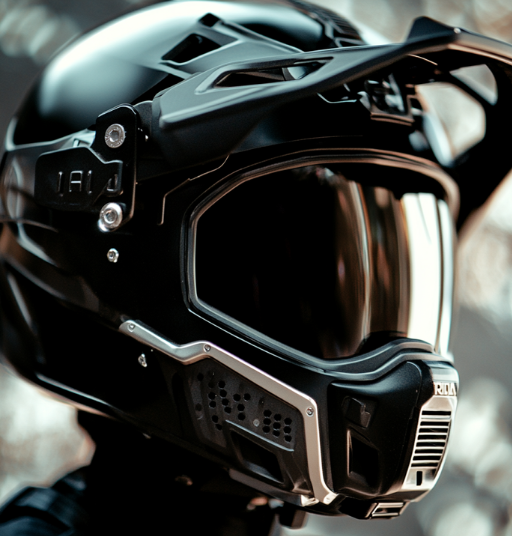
Your riding discipline and personal preference dictate the ideal form. A bullet-style camera is compact and mounts centrally, offering a “rider’s eye” view perfect for analyzing your line and the horse’s ears. A side-mount unit provides a more panoramic view of the horse’s shoulder and your position, invaluable for dressage or flatwork. The newest integrated systems are built into helmet shells, offering the cleanest profile but often at a higher cost and with less flexibility.

Prioritize minimal weight and a low profile. Aerodynamics matter at a gallop, and a top-heavy camera can subtly alter your balance and increase neck strain over time.

See also  Unmissable Action Camera Deals for Black Friday 2024

Mounting & Secure Integration

This is the non-negotiable cornerstone of safety. Never compromise your helmet’s structural integrity. Use only mounts certified or approved by your helmet manufacturer. Common safe attachment points are the fixed, flat sections on the side or front of the helmet, using industrial-strength adhesive pads. Before every ride, perform a firm tug-test on the camera and mount. The camera must be secure enough that a fall or a low-hanging branch cannot dislodge it and create a new hazard.

Core Specifications for the Equestrian

Specification Options & Impact
Video Resolution & Frame Rate 1080p/60fps or 4K/30fps are modern standards. Higher resolution captures critical details like subtle leg movements or jump distances. A higher frame rate (60fps or more) provides smoother slow-motion playback for technical analysis.
Image Stabilization Electronic (EIS) or Optical (OIS). This is critical for equestrian use. It counteracts the jarring motion of trotting, cantering, and jumping, turning shaky, unwatchable footage into a smooth, clear video. Optical stabilization is generally superior.
Battery Life 60+ minutes per charge is essential. A full training session or competition warm-up can easily exceed an hour. Always carry a spare, charged battery. Nothing is more frustrating than a camera dying before your key round.
Audio Quality & Wind Reduction Good audio lets you hear your own cues, your horse’s breathing, and hoofbeats. A dedicated wind noise reduction feature is vital for outdoor riding; without it, audio can become a useless, roaring distraction.
Field of View (FOV) Wide (140°+) vs. Standard (90°-120°). A wide FOV captures more of your peripheral vision and the horse’s entire neck and head, great for overall context. A standard FOV reduces distortion and focuses more narrowly on your immediate line, ideal for jump analysis.

The Core System: Operational Safety and Best Practices

Owning a helmet camera is one thing; operating it safely is an active discipline. This system turns a piece of technology into a responsible partner in your riding.

Pre-Ride Safety Protocol

Make this as routine as checking your girth. The Mandatory Equipment Check has three parts: Secure Mount (the tug-test), Adequate Battery (plus a spare), and Clear Sightlines. Ensure the camera does not protrude into your peripheral vision. Finally, perform a Weight and Balance Assessment. With your helmet on, gently move your head. Does it feel top-heavy? Does it pull to one side? If so, reconsider your mounting position.

See also  Is Gopro Better Than Iphone

In-Ride Awareness & Etiquette

Your primary focus must always be your horse and your environment. The camera is a passive observer. Do not become distracted by checking if it’s recording or adjusting it mid-ride. In group settings, practice good Helmet Camera Etiquette. Inform others you are recording, especially in lessons. At competitions, know the rules—some organizations restrict their use in certain areas or classes. Your technology should never be a distraction or nuisance to other riders, horses, or officials.

Data Security as Safety

Footage, especially of incidents or accidents, is sensitive data. It can be crucial for insurance, legal, or veterinary purposes. Develop a secure protocol: transfer important footage from the memory card to a password-protected computer or cloud drive immediately. Label files clearly with date, horse name, and event. This protects your privacy and creates a valuable, organized archive.

Advanced Practices: Optimization for Training and Analysis

Now we shift from simply recording to actively cultivating skill. This is where the camera repays your investment in safety and setup tenfold.

Strategic Positioning for Analysis

Angle is everything. For jump technique, a center-front mount looking slightly down captures your hands, the horse’s take-off spot, and the fence. For dressage and flatwork, a side mount level with your temple can show your alignment, the horse’s bend, and the uniformity of the circle. Experiment in a safe setting to find the angle that reveals the most useful information for your goals.

The Systematic Review Process

Watching your ride back is a skill. Don’t just watch it passively. Use video player tools to slow down key moments. Watch it three times: first for the overall picture, second for your position (hands, seat, legs), third for the horse (impulsion, expression, straightness). Reviewing with a coach is gold—they can pause and point out micro-moments you would miss alone.

Building a Digital Training Log

Move beyond a folder of random videos. Create a structured digital log. A simple spreadsheet can link to video files and note: Date, Horse, Focus (e.g., “Counter-canter transitions”), Key Observations, and Next Steps. This transforms a collection of clips into a longitudinal progress report. You can visually track the improvement in a movement over months, which is incredibly motivating.

See also  Best GoPro Cameras for Epic Adventures in 2024

Threat Management: Mitigating Risks and Solving Problems

A proactive mindset prevents small issues from becoming major setbacks or safety concerns.

Prevention: Your Primary Defense

Regular Maintenance is key. Inspect adhesive mounts for wear and replace them every few months. Check the camera housing for cracks and ensure seals are clean to maintain water resistance. The cardinal rule: Never make DIY modifications to your helmet to fit a camera. Drilling holes or cutting into the shell catastrophically compromises its ability to protect you in an impact.

Intervention & Problem-Solving Guide

When issues arise, follow a tiered response. For vibration and blur, first ensure your mount is rock-solid. Then, activate the highest level of image stabilization in the camera’s settings. For poor audio, attach a fuzzy wind muff (deadcat) to the microphone. If you experience lost footage or corruption, first try recovering the file with dedicated software. To prevent it, format your memory card in the camera (not your computer) regularly and invest in high-quality, high-speed cards from reputable brands.

Your Annual Camera Calendar

Season/Phase Primary Tasks What to Focus On
Early Season / Conditioning Test and confirm all camera settings after winter storage. Reapply fresh adhesive mounts. Capturing baseline fitness work. Reviewing fundamentals like rhythm and relaxation on the flat.
Competition Season Pre-charge all batteries. Optimize settings for bright, variable outdoor light (adjust exposure). Recording full rounds and tests. Focus on capturing clean, reviewable footage under pressure for post-event analysis.
Late Season / Skill Focus Experiment with new camera angles to tackle specific technical challenges. Deep-dive analysis. Use slow-motion extensively to break down complex movements or jump fixes.
Off-Season / Planning Fully review, label, and archive the year’s footage. Back up everything. Service your camera. Identifying annual patterns and progress. Creating a visual highlight reel and setting goals for the next year.

The Empowered Equestrian

True mastery in the modern equestrian world is this mindful integration. It is the balance between the timeless feel of the ride and the clear-eyed analysis technology provides. It is the confidence that comes from a securely mounted camera, and the profound insight gained from a well-reviewed session.

Your journey begins with a conscious choice for safe, compatible hardware. It evolves into a disciplined practice of operation and review. It culminates in a state of empowered awareness, where you are more connected to your horse, more analytical in your training, and more secure in your practice. The helmet camera, when balanced correctly, does more than record your rides. It deepens them, protects them, and preserves the fleeting moments of partnership that make the sport so extraordinary. It turns experience into understanding, and memory into mastery.

You May Also Like

About the Author: Ricky Williams

Get Your Download Immediately

Get Instant access to our Digital Helmet Camera ebook

You have Successfully Subscribed!