
Reviewed by the Digital Helmet Cameras Editorial Team. Based on manufacturer specifications and publicly available user feedback; not independent lab or road testing. Prices and availability change, so check current listings.
What the Glide Gear POV 100 Actually Is
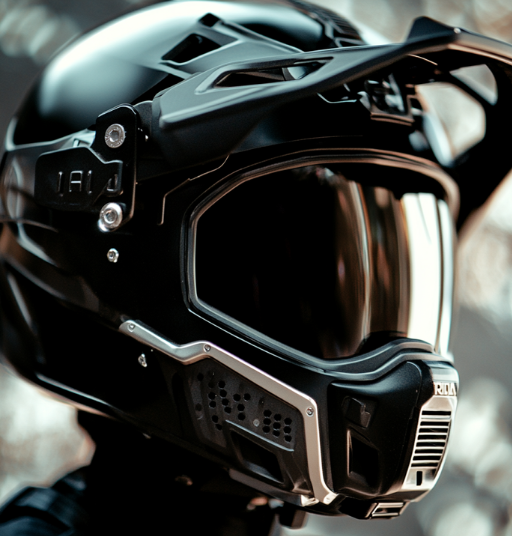
The Glide Gear POV 100 is a helmet mounting rig designed for mirrorless and DSLR cameras — not action cameras. That’s the essential context for this review. It’s built for the rider or filmmaker who wants to mount a Sony ZV-E10, Fujifilm X-S20, or similar compact mirrorless camera to a helmet for footage quality that action cameras can’t match: real depth of field, interchangeable lenses, and sensor performance in low light that no action cam provides.
If you’re looking for a GoPro or DJI helmet mount, this isn’t it. If you want to mount a larger camera to your helmet and get professional-quality POV footage, read on.
You can find the POV 100 on Amazon or directly at glidegear.net.
Build Quality and Design
The POV 100 is machined aluminum with a robust pivot arm and an integrated elastomer vibration isolation puck — the component that makes the difference between usable and unusable footage when mounted to a vibrating vehicle. The mounting interface is standard 1/4″-20 and 3/8″ screws, compatible with virtually any camera quick-release plate system.
The mount attaches to a helmet via a large, flat adhesive base plate or a strap system depending on the version. The adhesive version is more secure for sustained use; the strap version is better if you’re mounting temporarily or across multiple helmets.
Build quality is clearly above consumer-grade accessories. The pivot arm holds adjustment under load — important because a mirrorless camera and lens combination can easily weigh 1-1.5 lbs, which creates leverage on the mount at speed.
What to Expect on a Motorcycle Helmet
This section is based on the mount’s design and general vibration principles, not our own testing. As an illustrative load, consider a compact mirrorless camera such as a Sony ZV-E10 with a small pancake lens, roughly 0.8 lbs in total:
Vibration Isolation
The elastomer isolation puck is designed to reduce high-frequency vibration from the engine and road surface. Without it, a mirrorless camera on a rigid mount produces footage with a characteristic “jelly” from the rolling shutter that’s difficult to fix in post. Isolation like this reduces the effect but does not eliminate it, and it becomes less effective as speed and camera weight increase.
At higher speeds, aerodynamic forces become a factor. A camera and lens can act as a sail, and any mount can flex under sustained buffeting. For highway touring this is a concern; for canyon riding and lower-speed ADV use it matters less.
Weight Distribution
A 1.5 lb camera mounted to a helmet is noticeable, and neck fatigue after extended wear is a commonly reported issue that doesn’t come up with a lightweight action camera like a GoPro. This is a real constraint — the POV 100 is suited for planned filming sessions, not all-day wearing. Budget your usage accordingly.
Footage Quality
When it works, the footage is in a different league from action cameras. Real shallow depth of field blurs the background while keeping your handlebar or a pursuing rider in sharp focus. Low-light handling is dramatically better. The ability to swap lenses — from a wide 16mm to a 35mm telephoto — gives you creative options that no action camera ecosystem can match.
Setup on a Motorcycle Helmet
- Choose a full-face or adventure helmet with a reinforced crown area. The POV 100’s base plate needs a flat, solid surface — flip-up helmets and open-face lids won’t work well.
- Mount the base plate centrally for weight balance. Off-center placement adds asymmetric neck load.
- Adjust the pivot arm extension to position the lens just above your helmet’s visor line, pointed at your natural eye-level horizon.
- Always use a safety tether from the camera body to your helmet strap or chin bar. A dropped mirrorless camera at speed is a serious road hazard.
- Route cables cleanly if using power or an external monitor — hook-and-loop straps along the helmet’s edge work well.
Camera Settings for Motorcycle POV
Manual mode is essential for consistent motorcycle footage with a mirrorless camera. Key starting settings:
- Shutter speed: At least 1/500s to freeze road texture and eliminate rolling shutter jitter
- Aperture: f/5.6–f/8 for deep depth of field (critical when your focus distance changes constantly at speed)
- ISO: As low as light permits — keep under 800 for clean footage
- Autofocus mode: Continuous AF with face/subject tracking if your camera supports it; zone AF otherwise
Who Should Buy the POV 100
The POV 100 is the right tool for a specific type of rider: someone who is filming motorcycle content professionally or seriously, wants footage quality that action cameras can’t deliver, and is willing to manage the weight and planning that a larger camera demands.
It is not the right tool for everyday riding footage, long-distance touring, or anyone who wants a camera they can forget about while riding.
| Strengths | Limitations |
|---|---|
| Compatible with mirrorless and DSLR cameras | Weight causes neck fatigue on long wearing sessions |
| Vibration isolation puck designed for lower-speed riding | Possible aerodynamic flex at sustained highway speeds |
| Solid aluminum construction handles the load | Significantly more complex setup than action cam mounts |
| Standard 1/4″-20 interface — works with any camera | Requires permanent or semi-permanent helmet modification |
| Footage quality that action cameras can’t match | Not suited for all-day wearing or casual use |
If you’re considering the POV 100 for cinematic motorcycle content, also look at alternatives like the SmallRig helmet mount systems designed for mirrorless cameras.