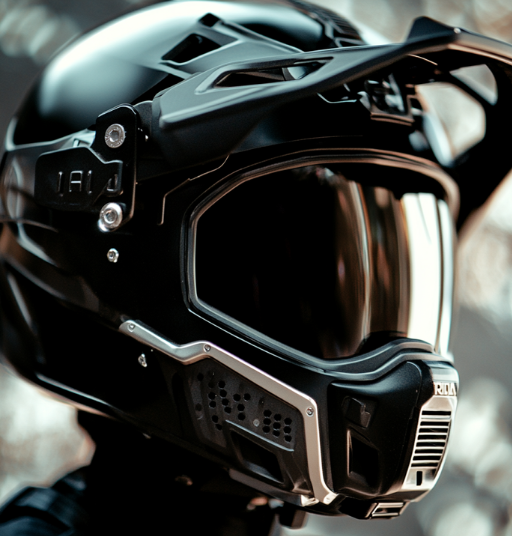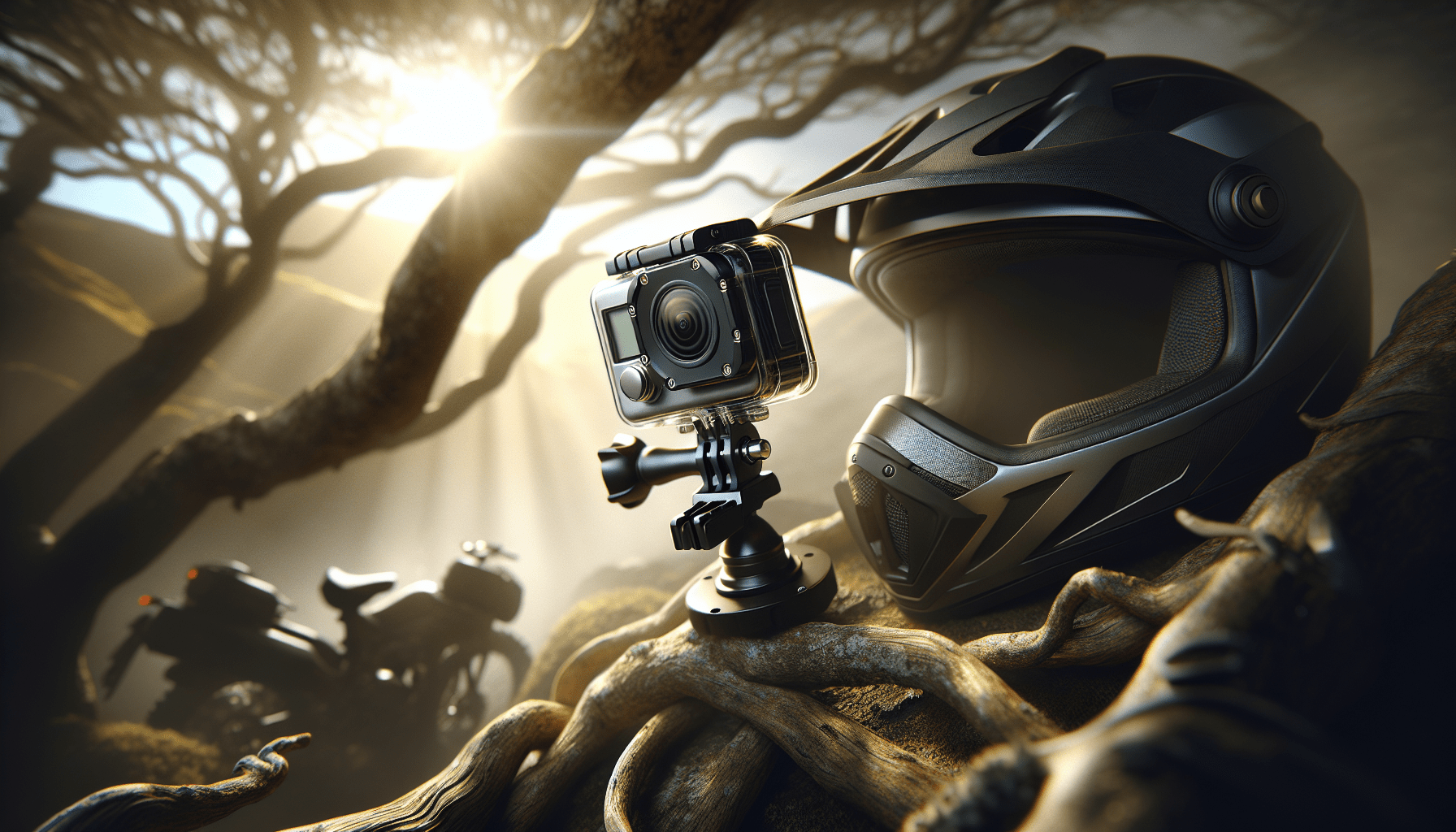
See What You Live: The Vision of First-Person Immersion
You’ve felt the frustration. That perfect line down a mountain trail, the raw speed of a motocross jump, or the unscripted magic of a backcountry ski run—it fades. Memory blurs the details. A phone in your pocket or a camera on a tripaw misses the true, visceral perspective. The experience becomes a story you tell, not one you can relive.
This is the gap the action helmet camera fills. It is the tool for capturing life from the inside out, turning participant into storyteller. Mastering this tool is not about gadgetry; it is the key to building a powerful, immersive archive of your life in motion. It transforms fleeting moments into tangible legacies for review, sharing, and pure, unadulterated nostalgia.
Foundational Choices: The Hardware of Perspective
Your camera and its mounting are the unshakable foundation. Compromise here, and every other technique will struggle to compensate. This is where your vision becomes hardware.
Part A: Camera Selection and Core Specs
Begin by defining your “why.” Is it for casual vacation snippets or for professional skill analysis where every frame matters? Your goal dictates your needs.
Resolution & Frame Rate, Decoded: 4K at 30 frames per second (fps) delivers stunning detail for cinematic playback. But if you dream of buttery slow-motion to analyze your form, prioritize high frame rates like 1080p at 120fps or higher. You often cannot have both maximum resolution and maximum slow-mo, so choose based on your primary output.
The Stabilization Imperative: This is non-negotiable. Built-in Electronic Image Stabilization (EIS)—marketed as HyperSmooth, FlowState, or RockSteady—is what transforms shaky, unwatchable footage into smooth, professional-looking video. It electronically counteracts bumps and vibrations. Do not buy a helmet camera without a proven, modern stabilization system.
Part B: Mounting, Location, and Orientation
Where you place the camera defines the story’s viewpoint. A poorly angled mount ruins otherwise perfect footage.
Helmet Position Mastery: The top mount offers a god’s-eye overview, great for context. The side mount approximates your natural sight line, feeling more personal. For cycling and motorsports, the chin mount is often king—it provides the most dynamic, forward-focused view that closely matches where you are looking. Always secure mounts with the provided adhesives on a clean, flat surface, and use a tether cable as a safety backup.
Tactical Setup: Spend time before your activity to get the horizon level. Use the camera’s app preview to fine-tune the angle, ensuring it’s capturing what you intend, not just the sky or your handlebars.
Part C: Component Breakdown & Comparison
Beyond megapixels, these core components define performance in real-world conditions.
| Component Category | Options | Key Characteristics |
|---|---|---|
| Sensor Size | Standard, Large | Larger sensors capture significantly more light. This is essential for clear video in dawn, dusk, or forested trails. If you operate in low light, prioritize this spec. |
| Durability & Housing | Basic, Rugged | A rugged housing is waterproof, shockproof, and dustproof. It is mandatory for mountain biking, skiing, or industrial use. Basic bodies may only be splash-resistant. |
| Audio Capability | Built-in Mic, External Mic Port | Built-in mics are convenient but capture overwhelming wind noise at speed. An external port allows you to connect a wind-protected lavalier mic—critical for clear voice-overs, instructions, or comms audio. |
| Battery System | Fixed, Swappable | Swappable batteries are a game-changer. They allow for all-day recording by carrying spares, unlike fixed-battery models that require recharging via cable. |
The Core System: Actively Managing Your Capture
A helmet camera is a dynamic capture system, not a set-and-forget device. Controlling its key variables is what separates usable footage from exceptional content.
Control Variable: Field of View (FOV)
The FOV determines how much of the scene the camera captures. Wide or SuperView captures the maximum environment, creating an immersive, sometimes distorted “action hero” feel. Linear mode corrects this distortion, making straight lines appear straight—ideal for urban scenes or where geometry matters. Narrow zooms in on a subject, simulating a longer lens. The consequence of error is a distorted fisheye look that distracts, or a narrow crop that misses the action happening beside you.
Control Variable: Power & Memory Management
Your adventure ends when your camera dies. Use high-capacity “Enduro” batteries for cold weather. Carry a compact power bank for mid-day USB-C top-ups. Most critically, adopt the 80% Rule: never fill a memory card completely. Always format the card in the camera before a new outing, and carry multiple, high-endurance microSD cards as spares. Running out of space is a preventable tragedy.
Control Variable: Exposure & Color
Full auto mode can cause the exposure to “hunt” in dappled light, flickering as you move. For consistent footage, use semi-manual controls. Lock the ISO to a low value (e.g., 100-400) on bright days to prevent grain. Use a flat color profile like ProTune or LOG if you plan to color grade in editing—it preserves more detail in shadows and highlights. This proactive control prevents the camera from making poor automatic decisions in challenging light.
Advanced Practices: The Art of POV Storytelling
Now, shift from passive recording to intentional cinematography. This is where you craft a narrative, not just a clip.
Preparation: The Pre-Activity Ritual
This five-minute check is sacred. Clean the lens with a microfiber cloth. Verify all batteries are charged and memory cards are formatted. Select your frame rate and resolution based on today’s goal: 4K for scenic beauty, 60fps+ for high-action sequences. A failure here can ruin an entire day’s capture.
Ongoing Inputs: Capturing for the Edit
Think like an editor while you ride, climb, or ski. Use the “3-Shot Rule” for dynamic sequences: 1) Your primary helmet POV, 2) A secondary angle like a handlebar or chest mount, and 3) A static “hero” shot from a tripod or rock you pass. This variety is editing gold. Use the camera’s quick capture button or voice commands to tag highlights during the action, saving you hours of sifting through footage later.
Selection & Strategy: The Post-Process Workflow
Mastery extends to the computer. Implement a consistent file management system: sort by date and activity. Use the highlight tags you created in the field to quickly find your best clips. If you shot in a flat color profile, apply a basic color correction (adjusting contrast and saturation) and a subtle “look” to make your footage pop. This efficient workflow turns raw captures into a finished story.
Threat Management: Protecting Your Perspective
Adopt a proactive, not reactive, stance. Your enemy is lost footage.
Prevention: The Daily Discipline
Before every use, check mount integrity for cracks or loose parts. Use a tempered glass lens protector—it’s a cheap sacrifice to save an expensive lens. When not in use, store the camera and batteries in a dry, padded case. This ritual prevents the vast majority of failures.
Intervention: A Tiered Troubleshooting Guide
When problems arise, act methodically.
Problem: Foggy lens inside the housing. Solution: Use anti-fog inserts or a dab of cat litter in the housing. Ensure the camera and housing are at the same (room) temperature before sealing it in cold environments.
Problem: Camera overheating and shutting down. Solution: Never leave the camera in direct sunlight when idle. In hot, dry conditions, use a “skeletal” open housing that allows for airflow, if the activity permits.
Problem: Unwanted vibration or “jello effect” in footage. Solution: First, check all mount connections are wrench-tight. If it persists, add a stabilizing arm or “floaty” between the mount and camera to dampen high-frequency vibrations. Adhesive foam tape can also work as a damper.
Your Action Plan: A Seasonal Roadmap
Adapt your approach to the conditions and your goals throughout the year.
| Season / Phase | Primary Tasks | What to Focus On |
|---|---|---|
| Spring & Summer (High Activity) | Test new mounting angles; deep-clean housing seals and ports; organize and back up the growing media library from winter. | Capturing dynamic action in abundant light. Experiment with creative shots. |
| Fall & Winter (Harsh Conditions) | Apply full waterproof housing; switch to low-light optimized settings (larger FOV, higher ISO tolerance); manage batteries by keeping spares in an inner pocket for warmth. | Preparation for moisture and cold. Preserving battery life and capturing clean footage in flat, low-contrast light. |
| Off-Season / Planning | Review year’s footage, catalog best clips; service and update camera firmware; research and purchase any new mounting solutions for next year. | Analysis and preparation. Using your footage to review and improve skills, and updating your toolkit. |
Your Life, in Perspective
The journey from choosing a piece of hardware to mastering first-person storytelling is a profound shift. It moves the camera from a passive recorder on your helmet to an extension of your perception. The core principle is intentionality—controlling the variables, planning the shots, and managing the system to serve your vision.
By exploring the world of action helmet cameras with this depth of understanding, you build more than a video folder. You build a vivid, first-person archive of your capability, your joy, and your unique path through the world. This practice enriches your life, sharpens your skills through honest review, and allows you to share your experiences with an authenticity that no third-person camera can match. The ultimate reward is the unparalleled joy of revisiting your own journey, not as a memory, but exactly as you lived it—heartbeat, breath, and all.