Reviewed by the Digital Helmet Cameras Editorial Team. Based on manufacturer specifications and publicly available user feedback; not independent lab or road testing. Prices and availability change, so check current listings.
What Matters for Motorcycle Riders
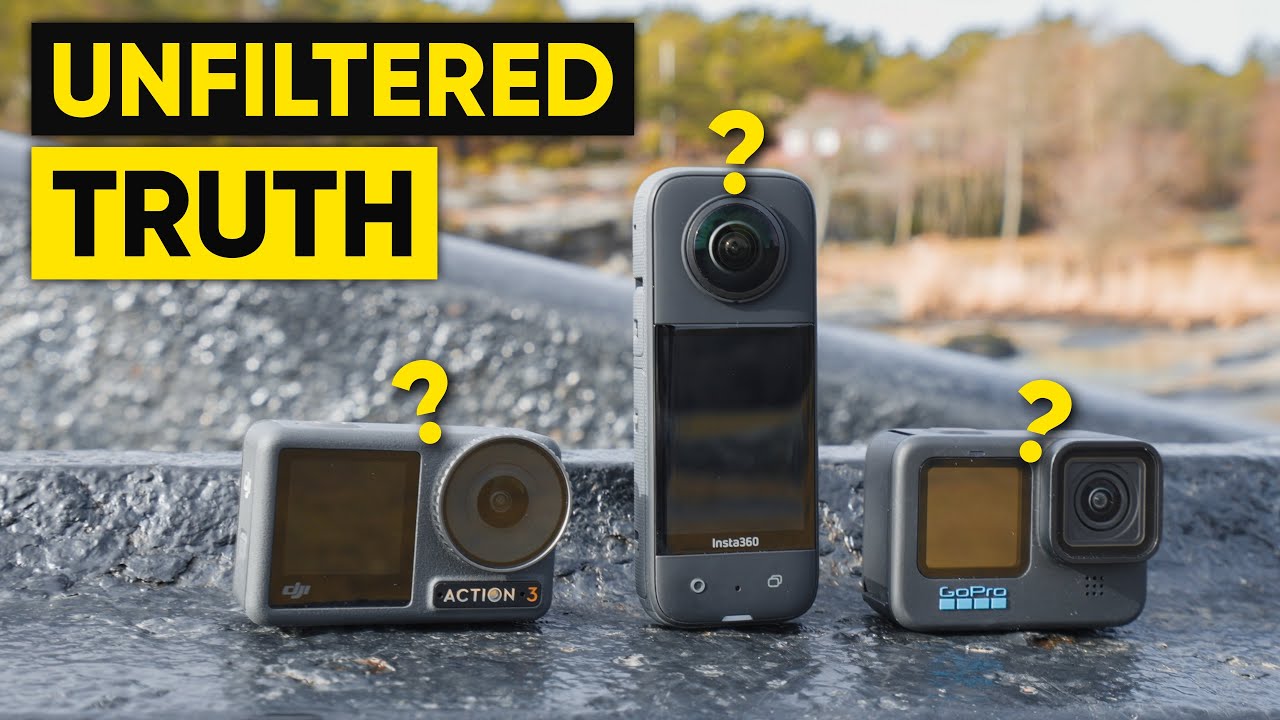
This comparison looks at the DJI Osmo Action 3, the Insta360 X3 and the GoPro Hero 11 Black side by side, not just by which has the highest spec on paper but by which is designed to hold up to daily riding. It draws on manufacturer specifications and publicly available owner feedback; we have not run our own head-to-head test.
All three are older models. Check current lineups from DJI, Insta360 and GoPro before buying; this comparison is best used as a value guide.
DJI Osmo Action 3
Strengths
The magnetic mount system is one of the Action 3’s standout features for motorcycle use. It is designed to make swapping the camera between a helmet and a handlebar mount quick, even with gloves on, and it is generally described as faster than the mounts on the other cameras here.
DJI has shipped firmware updates that improved stabilization since launch, and HorizonSteady mode is reported to handle aggressive lean angles well, which matters on winding roads where you are constantly banking through corners.
Limitations
Low-light performance is the Action 3’s most commonly reported weakness. Dawn starts and tunnel passages are reported to produce more noise than the GoPro and more still than the Action 4. For riders who do a lot of early-morning or late-evening riding, this is a real limitation.
The companion app (DJI Mimo) is stable but basic. For anything beyond quick previews and simple edits, expect to move files to a desktop.
Insta360 X3
Strengths
The ability to decide on framing after the ride is a genuine advantage of 360° footage. When something unexpected happens, such as wildlife crossing or a scenic moment, the X3 captures the whole scene, which can turn footage that would otherwise be discarded into well-composed clips in post.
Insta360’s mobile app offers AI-assisted Auto Frame, which tracks movement and produces edits automatically. For sharing on social media without desktop editing time, this is the fastest workflow of the three cameras.
Limitations
The dual-lens bubble design calls for a protective case for serious motorcycle use, since gravel, road grit and low-speed tip-overs threaten the lenses. With a case, the camera is bulkier than either competitor and more aerodynamically intrusive on the helmet.
Battery life in 360° mode is the shortest of the three, at roughly 60-65 minutes by published and user-reported figures, so a full riding day means more battery management. Single-lens 4K mode extends runtime but loses the reframing advantage.
Low-light 360° footage tends to show more grain than single-lens mode, since the dual-lens design limits sensor size per lens.
GoPro Hero 11 Black
Strengths
The ecosystem is the Hero 11’s biggest advantage. Third-party mounts, lens mods and accessories are widely available. The Max Lens Mod gives a 177° field of view that approaches the X3’s immersiveness for a fraction of the bulk, and the accessory library means you can solve almost any mounting challenge without custom solutions.
In low light, GoPro’s larger sensor is generally reported to give the Hero 11 the cleanest footage of the three, with better dynamic range and less noise at dawn or in shaded forest roads.
Limitations
Touchscreens on most action cameras become less responsive in cold weather or with gloves, and the Hero 11 is no exception. Set modes before you ride.
Charging speed is the weakest of the three. On long days, topping up a battery during a rest stop takes longer than with DJI’s fast-charge system.
Which Camera for Which Rider
| Rider Type | Suggested Camera | Why |
|---|---|---|
| Daily commuter and weekend rider who wants minimal hassle | DJI Osmo Action 3 | Quick mount swaps, HorizonSteady stabilization, fast charging on the go |
| Content creator who publishes riding footage regularly | Insta360 X3 | Reframe after the ride; saves footage you would otherwise discard |
| Rider who prioritizes footage quality in all light conditions | GoPro Hero 11 Black | Strong low-light reputation, most complete accessory ecosystem |
Based on published specifications and owner feedback: the DJI Osmo Action 3 suits daily riding best, the GoPro Hero 11 is the strongest choice for dawn and mountain riding where low light matters, and the Insta360 X3 is worth the extra bulk specifically for content that will be edited and shared, where the reframing workflow pays off.
Check current pricing: DJI Osmo Action 3 on Amazon | Insta360 X3 on Amazon | GoPro Hero 11 Black on Amazon
See also our GoPro vs DJI vs Insta360 comparison for a comparison that includes newer models.