Techalogic DC-1 Review: Is This the Best Helmet Camera for Your Adventures?
You crest the mountain pass, the view takes your breath away, but your hands are glued to the handlebars. A driver makes a sudden, dangerous maneuver, and later, their account differs wildly from yours. These moments—the breathtaking and the critical—demand an impartial witness. A subpar helmet camera fails you with blurry footage, dead batteries, or confusing controls. The right one transforms your experience, turning every ride into a documented journey and a protected venture. Mastery begins not with the ride, but with the device you choose to record it. This deep dive into the Techalogic DC-1 examines whether its engineering and features provide the reliable foundation required to be a top-tier helmet camera.
Foundational Choices: The Hardware Breakdown
Your helmet camera’s physical form and core specifications are the bedrock of your recording experience. Compromises here lead to frustration in the field. The DC-1’s design choices dictate its comfort, durability, and ultimate usefulness.
Design & Form Factor: Sleekness vs. Substance
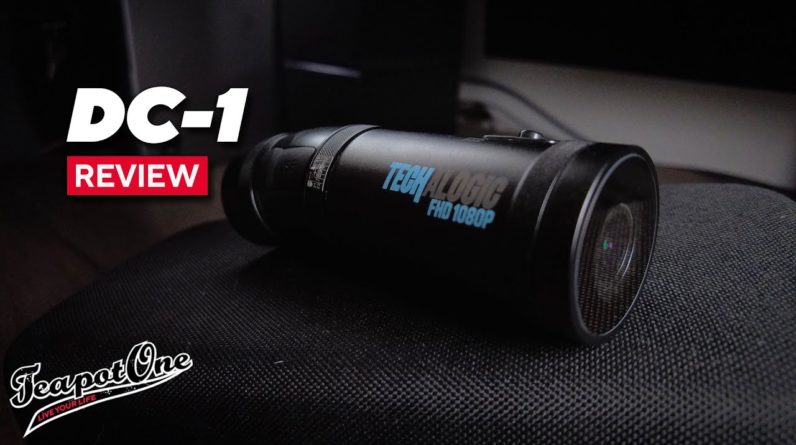
The DC-1 adopts a compact, rectangular profile common to modern action cameras. Its weight is manageable for helmet mounting, though a chin mount often provides the most stable and immersive perspective. The included mounting system is robust, featuring a locking mechanism to prevent accidental detachment. True peace of mind for adventure riders comes from its waterproof housing, which shields the core unit from rain, mud, and spray. This isn’t a bulky rig; it’s a streamlined tool designed to integrate with your gear, not dominate it.
Core Imaging Specifications: The Eye of the System
Image quality is non-negotiable. The DC-1 captures video up to 4K resolution, providing the clarity needed to read street signs or license plates. For smoother motion, 1080p at 60 frames per second is available. Its wide field of view ensures you capture not just the road ahead, but crucial peripheral context. Performance in varying light is competent, handling daylight well, though like most cameras in its class, low-light scenarios introduce more visual noise. The sensor provides the raw data; the camera’s software controls determine how usable that data becomes.
Key Components & Comparison Table
| Component | Options & Specs | Key Characteristics |
|---|---|---|
| Video Quality | 4K, 2.7K, 1080p | 4K offers exceptional detail for evidence or editing, but files are large. 1080p/60fps is ideal for balanced quality and smooth playback. Always match resolution to your storage and purpose. |
| Battery Life | Advertised ~90 minutes (varies) | Real-world life depends heavily on resolution, stabilization use, and temperature. For long tours, purchasing spare batteries is a mandatory strategy, not an option. |
| Storage | MicroSD (up to 128GB recommended) | You must use a high-endurance, high-speed card (Class 10/U3). The loop recording feature automatically overwrites old footage, ensuring you never miss an incident because the card was full. |
The Core System: Management and Control
A helmet camera is a dynamic recording system, not a set-and-forget gadget. Mastery comes from understanding and controlling its key variables. The DC-1’s handling of audio, stabilization, and connectivity defines its day-to-day performance.
Audio Capture: The Unseen Narrative
The built-in microphone picks up engine sounds and your voice adequately, but wind noise at speed is a persistent challenge. The DC-1 includes basic wind reduction, but for clear audio, your best option is to use an external microphone port. Connecting a lavalier mic inside your helmet transforms the audio from a chaotic roar into a clear narrative of your ride, capturing your commentary and the ambient sounds without distortion.
Stabilization: Taming Vibration and Shock
Electronic Image Stabilization (EIS) is the most critical feature for watchable footage. It counteracts the high-frequency vibrations of a motorcycle or the bumps of a mountain bike trail. The DC-1’s EIS is effective for general use, smoothing out the jarring shakes that plague unstabilized footage. For the smoothest possible result, combining EIS with a well-damped helmet mount—like a chin mount—creates a professional, stable viewpoint.
User Interface & Connectivity: Glove-Friendly Operation
The physical buttons on the DC-1 are sizable and offer tactile feedback, making them operable with riding gloves—a crucial design win. The companion mobile app allows for wireless control, live preview, and easy file transfers. This connectivity turns your phone into a remote viewfinder for perfect frame alignment and a convenient portal for sharing clips directly from the trail.
Advanced Practices: Optimization and Use
Technical specifications are just potential. Real-world mastery is about deploying the camera strategically to capture flawless footage effortlessly.
Preparation: The Art of the Mount
Mounting position is everything. A chin mount offers the most natural, first-person perspective that mirrors your head movements. A side mount is easier to access but can feel disconnected. Wherever you place it, ensure every clamp and adhesive surface is clean and secure. I perform a firm tug-test before every significant ride. This simple, 10-second ritual prevents catastrophic failure.
Ongoing Management: The Recording Strategy
Set your resolution based on need: 4K for detail-critical evidence or editing, 1080p for everyday rides and longer recording times. Always enable loop recording in 5 or 10-minute segments. This partitions your footage into manageable files and guarantees the camera is always recording. Manage power by treating batteries as consumables; carry two spares in a protective case and cycle through them.
Strategic Features: Leveraging the Tools
Voice control allows you to start/stop recording or snap a photo hands-free—invaluable when you need to keep your focus on the path. The waterproof housing unlocks all-weather riding without anxiety. WiFi is for setup and transfer, not constant use, as it drains the battery rapidly. Understand each feature’s purpose and cost to deploy them intelligently.
Threat Management: Problem Prevention
Adopt a proactive mindset. Your goal is to eliminate points of failure before you roll out.
Prevention: The Pre-Ride Checklist
Your ritual should be unwavering: inspect the mount security, clean the lens with a microfiber cloth, verify battery charge, and confirm available storage space on the memory card. This sixty-second checklist is the strongest insurance against a “camera fail” when you need it most.
Intervention: Troubleshooting Essentials
If the camera freezes, a small reset button is your first tool. Failed recordings often trace back to a slow or corrupted memory card—never skimp here. Regularly check the manufacturer’s website for firmware updates; these can resolve bugs and improve performance. Understanding these basic interventions restores control quickly.
The Verdict: A Practical Roadmap
| Rider / User Type | Primary Benefit | Consider the DC-1 If… |
|---|---|---|
| The Daily Commuter | Reliable, set-and-forget evidence camera. | Your priority is simple, automatic operation with loop recording to protect you on your daily travels. |
| The Adventure Tourer | Rugged, weatherproof capture for long days. | You need a durable unit with good battery life (and spares) to document multi-day trips in all conditions. |
| The Aspiring Content Creator | High-resolution, stabilizable footage for editing. | You want very good 4K video and stabilization as a foundation for creating engaging ride videos, without the premium price of flagship brands. |
The principle holds true: the best helmet camera is the one you trust completely. The Techalogic DC-1 builds that trust through solid fundamentals—good image quality, effective stabilization, a robust mount, and critical features like loop recording. It may not have every bell and whistle of cameras costing twice as much, but it executes the core mission with competence. For riders seeking a reliable, high-performance witness that transforms chaotic moments into clear, actionable records, the DC-1 is a compelling and capable choice. It brings a tangible peace of mind, turning every journey into a documented story you can prove, share, and relive.