
Your Story, Perfectly Framed
You crest the ridge, and the world falls away beneath your wheels. The perfect line through the trees, the spray of a mountain stream, the sheer focus before a drop—these moments are pure feeling. Yet, trying to describe them later often leaves you grasping for words. The magic evaporates. A generic camera phone fails, producing shaky, disjointed clips that can’t convey the speed or the scale.
The right helmet camera changes everything. It becomes your first-person narrator, a tool that captures not just video, but perspective, adrenaline, and memory. Choosing incorrectly, however, leads to frustration: missed shots, dead batteries, and footage so unstable it’s unwatchable.
Selecting your helmet camera is the foundational act of visual storytelling. It is the key to transforming fleeting adventure into a cinematic, visceral legacy you can relive and share. This guide is your system for making that choice with confidence.
Foundational Choices: The Core Hardware
Your camera is the engine of your capture system. Its inherent capabilities set the ceiling for everything you record. We’ll break down the critical specs and forms that define your experience.
Part A: Selection & Core Specs
Match these technical pillars to the intensity of your adventure.
Image Stabilization: This is non-negotiable. Modern electronic image stabilization (EIS) or hyper-smooth algorithms are what make handlebar vibration and head movement disappear. Look for this feature first; it separates usable footage from a nauseating mess.
Video Resolution & Frame Rate: This is your detail-versus-drama dial. 4K resolution at 30 or 60 frames per second (fps) captures stunning environmental detail. For buttery-smooth slow motion that dramatizes a jump or crash, prioritize high frame rates like 1080p at 120fps or 240fps.
Durability & Mounting: Your camera must survive the environment. A rugged, waterproof build is standard, but the mounting ecosystem is equally vital. A secure, versatile array of helmet, chin, and chest mounts from the manufacturer ensures you can capture the perfect angle.
Part B: Form Factor & Lifestyle Fit
Where and how you wear the camera is a crucial lifestyle decision.
Traditional Action Cams (GoPro-style): These are the versatile powerhouses. They offer the highest performance, best stabilization, and a vast universe of third-party accessories. The trade-off is a small, separate device you must mount and manage.
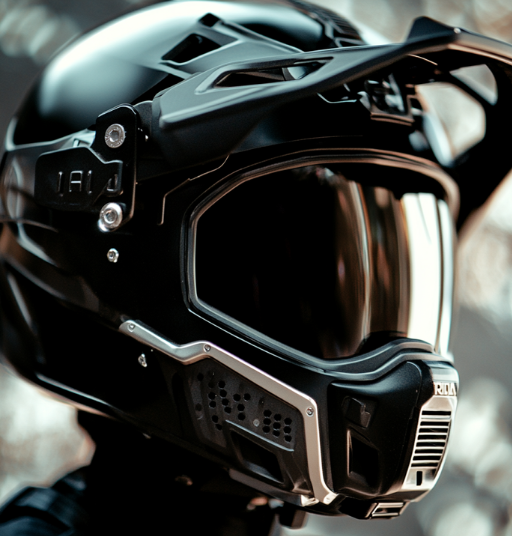
Integrated Camera Helmets: Convenience is king here. The camera is built seamlessly into the helmet’s chin bar or visor, offering a streamlined, always-ready solution. However, you sacrifice flexibility in camera angles and upgrading the tech independently of your helmet.
Ultra-Compact & Modular Cams: These prioritize minimalism and discreet mounting on goggles or helmet straps. They are incredibly lightweight and low-profile but often make compromises on battery life and ultimate image quality.
Part C: Decoding Your Options
| Form Factor | Ideal Use Case | Key Trade-offs |
|---|---|---|
| Traditional Action Cam | High-intensity sports (MTB, motocross, skiing), maximum creative control, post-production editing. | Highest video quality and stabilization. Requires separate purchase and management of mounts/accessories. Can be bulky on certain helmet positions. |
| Integrated Camera Helmet | Cycling commuters, adventure motorcyclists, anyone valuing ultimate convenience and a clean look. | Unbeatable convenience and integration. Camera angle is fixed. Upgrading camera tech means buying a new helmet. Audio quality can be compromised by helmet shell. |
| Ultra-Compact / Modular | Trail running, climbing, ski goggles, or as a secondary, discreet angle camera. | Extremely lightweight and low-profile. Battery life and sensor size are limited. Video stabilization is often less advanced than traditional action cams. |
The Core System: Managing Your Capture
A great helmet camera is a dynamic tool. Actively managing these control variables ensures you get the shot, no matter the conditions.
Control Variable 1: Field of View (FOV)
Your FOV setting dictates the feel of your footage. A Wide or SuperView FOV captures everything around you for an immersive, dizzying sense of speed. Use it for tight tree runs or capturing your bike’s handlebars. A Narrow or Linear FOV reduces distortion and focuses on the trail ahead, providing a more cinematic, stable-looking frame, perfect for open landscapes.
Control Variable 2: Audio Fidelity
Wind noise is the arch-nemesis of helmet camera audio. The built-in microphone will often deliver a roaring mess. For clear commentary or engine sounds, you need a plan. Tools: Use a waterproof case with a dedicated external microphone port and a lavalier mic tucked into your helmet padding. Simple adhesive windslips over the camera’s mic ports can also dramatically reduce low-level wind roar.
Control Variable 3: Power & Capture Management
Battery life is always less than advertised, especially in 4K and cold weather. Your solution is redundancy and smart modes. Always carry spare batteries or a compact USB power bank. Use voice control to start/stop recording without fumbling. For long journeys, employ looping record mode or TimeWarp hyperlapse to conserve space and battery while still capturing the essence of the ride.
Advanced Practices: The Craft of Capture
Now we shift from choosing the tool to mastering the craft. This is where good footage becomes great storytelling.
Preparation: Mounting Mastery
Where you place the camera defines the story. A chin mount offers the most intuitive, bike-handling-focused view. A helmet side mount can include a glimpse of your face and reactions. A chest mount provides a incredibly stable, grounded perspective. Whichever you choose, the rule is absolute: tight is right. A loose mount creates high-frequency jitter that no stabilization can fix.
Ongoing Inputs: Settings for the Scene
Create a pre-adventure checklist. If you plan to color-grade your footage, set your camera to a Flat or Log color profile (like Protune) for maximum editing flexibility. For ready-to-share clips, use the standard vibrant profile. Manually set your exposure compensation: increase it (+)+) for dark forests, decrease it (-) for bright snow or sand to prevent a washed-out, featureless sky.
Selection and Strategy: Filming with Intent
Shoot with your future edit in mind. Capture a 10-second establishing shot of the trailhead or landscape. Then, switch to your primary POV for the action. Finally, get a reaction shot—a fist bump or a smile at the end. Also, use the photo burst mode during breaks; you’ll often grab a stunning high-resolution still that’s better than a frame grab from video.
Threat Management: Protecting Your Perspective
A proactive mindset saves your gear and your priceless footage. Prevention is always simpler than the cure.
Prevention: The First and Best Defense
Use a replaceable lens protector or guard—it’s cheaper than a new camera. Perform regular firmware updates from the manufacturer; they fix bugs and improve performance. Before every ride, do a moisture check on seals and a tug-test on all mounts. Format your memory card in the camera regularly to prevent file corruption.
Intervention: Common Problem Guide
Fogging inside the case: Caused by temperature/humidity shifts. Use anti-fog inserts or apply an anti-fog treatment to the inside of the lens. Overheating: Common during long 4K recordings in hot weather. Manage record times, use lower resolution for long clips, and avoid leaving the camera in direct sun when not recording. Corrupted files: Almost always related to the memory card. Use high-endurance, high-speed cards from reputable brands and format them in-camera frequently.
Your Action Plan: The Pre-Adventure Checklist
| Phase | Primary Tasks | What to Focus On |
|---|---|---|
| Pre-Purchase | Define your primary use (e.g., MTB downhill vs. touring). Set a total budget for camera + essential mounts + at least one spare battery and card. | Non-negotiable core specs: Modern Image Stabilization and sufficient resolution for your needs. |
| Gear Setup | Charge all batteries. Format memory card in-camera. Install latest firmware. Perform a secure mount test on your helmet. | System reliability. Ensuring every component is ready and secure. |
| Post-Adventure | Immediately offload footage to your computer. Recharge all batteries. Clean the lens and camera body with a microfiber cloth. Inspect mounts for wear. | System maintenance and archiving. Preparing your kit for the next adventure without last-minute panic. |
Ready for the Drop
The perfect helmet camera is a harmonious balance: technical prowess meets rugged reliability, all seamlessly integrated into the flow of your adventure. You began facing a maze of options. Now, you are informed by purpose—you understand how to select the foundational hardware, manage its critical controls, and optimize your technique to capture with intent.
The trail, the slope, the open road is no longer just a moment in time. It is a perspective preserved, a story you can tell with the clarity and impact it deserves. Your digital memory bank is ready. Now, go hit record. The unparalleled joy of sharing your unique view of the world awaits.