From Missed Moments to Cinematic Memory
You crest the mountain trail, lungs burning and heart pounding. The view is breathtaking, and the descent promises pure adrenaline. But later, your shaky, grainy phone footage fails to capture the speed, the focus, the sheer scale of the moment. The memory fades into a blur.
The right helmet camera changes everything. It transforms you from a passive spectator into the author of your own epic. It permanently locks your unique perspective with cinematic clarity, turning fleeting experiences into lasting legacies.
Mastering the choice of your helmet camera is the foundational key. This isn’t just about buying gear; it’s about building your personal capture system—the core tool for unlocking not just footage, but stories worthy of endless replay.
Foundational Choices: Selecting Your Camera Core
Your camera is the engine of your entire system. This initial choice dictates the quality of your footage, your comfort, and your creative potential. Choose wisely to build a solid foundation.
Part A: Selection and Form Factor
Your first major decision is the camera type itself, which dictates how it integrates with your kit.
True Helmet Cams: These are ultra-compact, lightweight units often built directly into a mount or strap. They are designed for minimal drag and a low profile. I find them ideal for sports like road cycling, climbing, or skiing where every gram and bit of wind resistance matters.
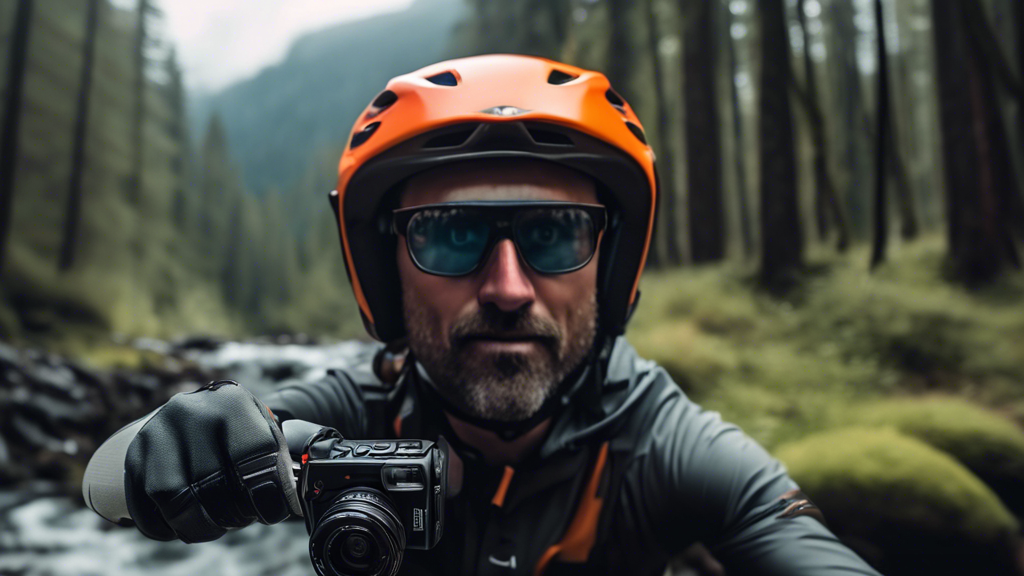
Action Cam on a Mount: This is a versatile action camera (like a GoPro or Insta360) adapted to your helmet via a universal mount. It offers superior image quality, stabilization, and features at the cost of slightly more bulk. This is my go-to for mountain biking or motocross, where the trade-off for better video is worth it.
The Verdict: A dedicated helmet cam is ideal for aerodynamics and seamless integration, while an adapted action camera is better for multi-sport use and accessing the absolute top tier of video performance.
Part B: Mounting and Integration
Where and how you mount the camera is as critical as the camera itself. A poor mount ruins great hardware.
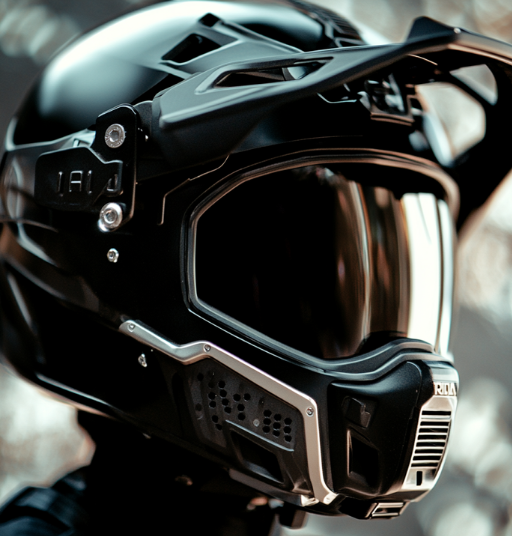
Placement: The top of the helmet provides a classic, high perspective but can catch low-hanging branches. A side mount offers a more natural, over-the-shoulder view. For motorsports or biking, a chin mount (on a full-face helmet) has become the gold standard—it provides an incredibly stable, immersive point-of-view that closely matches your eye line.
Orientation: Always perform a test fitting before an adventure. Record a short clip while holding your head in a normal riding position to ensure the horizon is level. There’s nothing worse than footage permanently tilted at a 15-degree angle.
Part C: Core Specifications Decoded
These technical specs are not just marketing jargon; they are the levers of control for your final video. Understand them to match the camera to your adventure.
| Component Category | Options | Key Characteristics |
|---|---|---|
| Video Resolution & Frame Rate | 4K/30fps, 2.7K/60fps, 1080p/120fps |
|
| Image Stabilization | Electronic (EIS), Optical (OIS), HyperSmooth/RockSteady |
|
| Field of View (FOV) | Wide, SuperView, Linear, Narrow |
|
The Core System: Actively Managing Your Capture
A helmet camera is a dynamic recording system, not a set-it-and-forget-it gadget. Proactively managing its key variables is what separates a saved memory from a technical failure.
Power & Endurance: The Lifeline
The Target: Battery life that comfortably outlasts your longest planned activity.
Consequences of Error: The camera dies at the peak moment. I’ve learned this the hard way, reaching a summit with a dead device.
Control Methods: Always assess rated battery life while recording, not on standby. For adventures over an hour, use cameras with swappable batteries and carry two spares in a protective case. For ultra-endurance, pair your camera with a compact external battery pack tucked in a pocket.
Audio & The Soundscape
The Target: Clear voice narration and immersive ambient sound, without deafening wind roar.
Consequences of Error: Beautiful video ruined by a constant, overwhelming “WHOOSH” that drowns out all other audio.
Control Methods: The waterproof case itself is a first-line wind muffler. For clear voice, I often add a secondary, tiny lavalier microphone. I route the wire inside my helmet and clip the mic near my mouth, connecting it directly to the camera for crystal-clear commentary.
Environmental Defense
The Target: A camera that operates flawlessly in rain, dust, mud, and freezing cold.
Consequences of Error: A permanently destroyed, water-logged, or sand-gritted piece of electronics.
Control Methods: Know the IPX waterproof rating (IPX8 means submersible). For extreme conditions like deep powder or heavy rain, use a dedicated dive housing. In cold weather, lithium batteries fail quickly; keep spares in an inner pocket close to your body warmth until needed.
Advanced Practices: Optimizing Your Capture Workflow
Now we shift from hardware to the art and science of the craft. This is where you transition from recording to truly capturing.
Preparation: The Pre-Adventure Protocol
Media: Never cheap out on the memory card. Use high-endurance, high-speed microSD cards (V30 rating minimum). Format the card in the camera before each major outing to prevent file corruption.
Settings Presets: Don’t fiddle with menus on the trail. Create and save custom modes for different activities. My “MTB Downhill” preset is always 2.7K/60fps, SuperView, Boost Stabilization. My “Scenic Hike” preset is 4K/30fps, Linear mode, standard stabilization.
Ongoing Inputs: During the Adventure
Efficient Control: Use voice commands (“GoPro, start recording!”) or a paired remote/wrist control to start and stop recording without ever touching the camera. This is crucial for safety and consistency.
Frame Your Shot: Before you start, do a 30-second test clip. Check that the mount angle captures what you want—like the tip of your skis or your handlebars—and that the horizon is level in your natural stance.
Selection Strategy: For Continuous Storytelling
Multi-Angle Setup: Elevate your edits by pairing your helmet cam with a second camera on a chest or handlebar mount. This gives you immediate cutaway shots that make your final video dynamic and professional.
The 3-Shot Rule: For any key scene or feature, consciously aim to capture: 1) Your helmet POV, 2) A static, tripod-style shot of the location, and 3) A “follow-cam” shot of your partner tackling the same section. This gives you all the footage you need to build a compelling narrative sequence.
Threat Management: Preventing Catastrophe
Adopt a proactive stance. Your goal is to avoid failure before it happens, ensuring your system is always ready.
Prevention: The Best Medicine
Cleanliness: After every outing, use a soft lens brush or cloth to clean the lens and microphone/speaker ports. Grime here directly degrades quality.
Inspection: Make a pre-ride checklist: Mount tightness, battery level, available storage space, lens for smudges. This 60-second habit saves days of regret.
Quarantine: Test new settings, mounts, or accessories on a short, low-risk local outing first. Never debut new gear on a once-in-a-lifetime trip.
Intervention: A Troubleshooting Guide
Problem: Foggy lens inside the housing.
Response: This is condensation. Use commercial anti-fog inserts inside the case, or apply a dab of an anti-fog gel (like “Cat Crap”) to the inside of the lens. Always seal the housing in a warm, dry environment.
Problem: Camera overheats and shuts down.
Response: Common when recording 4K in hot weather inside a waterproof case. Remove the case if you’re in a dry, non-splash risk environment. When stopped, never leave the camera in direct sunlight; put it in a bag or shade.
Your Seasonal Helmet Camera Maintenance Calendar
| Season/Phase | Primary Tasks | What to Focus On |
|---|---|---|
| Pre-Season (Spring/Fall) |
|
System readiness and reliability. Ensuring everything is modern, secure, and holds charge. |
| Peak Season (Summer/Winter) |
|
Capture consistency and data management. The rhythm of daily preparation to never miss a shot. |
| Off-Season |
|
Gear preservation and story editing. Reflecting on the adventures captured and preparing the archive. |
Becoming the Author of Your Adventure
The ultimate helmet camera is not merely the one with the highest specs. It is the one you have with you, configured correctly, and use reliably. It becomes an extension of your intent.
This journey—from choosing core specifications to mastering in-field capture and proactive maintenance—culminates in a profound shift. You are no longer just a participant. Revisit that mountain trail. Now, as you descend, you are also the director. Your helmet camera is your personal archive of courage, beauty, and pure joy. It is the key to preserving every turn, every jump, every quiet vista for a lifetime of replay. Master this system, and you master the art of memory itself.