The Ultimate Guide to Finding the Best Helmet Mount for Your Mobile: A Comprehensive Review of Top Options for Motovloggers
You lean into a perfect sweeper, the world tilting on its axis. The sensation is pure freedom. Later, you eagerly hit play, ready to share that moment. But the footage betrays you—a jittery, chaotic mess that makes viewers seasick. The thrill is gone, lost in the blur. This frustration ends today. The chasm between forgettable clips and professional, immersive motovlogs isn’t bridged by a better phone. It’s conquered by the single most critical piece of gear in your setup: the helmet mount. This is your masterclass. Consider this guide the definitive blueprint for transforming shaky disappointment into rock-solid, cinematic perspective. Your mobile is capable; your mount is the key that unlocks its potential.
Foundational Choices: The Hardware of Mounting
Every great structure needs an unshakable foundation. In motovlogging, that foundation is your mount. A poor choice here undermines your entire investment in cameras and editing software. We break down this cornerstone into three critical parts.
Part A: Selection and Mounting Type
Your desired storytelling angle dictates your mount’s location. Each position creates a distinct visual language.
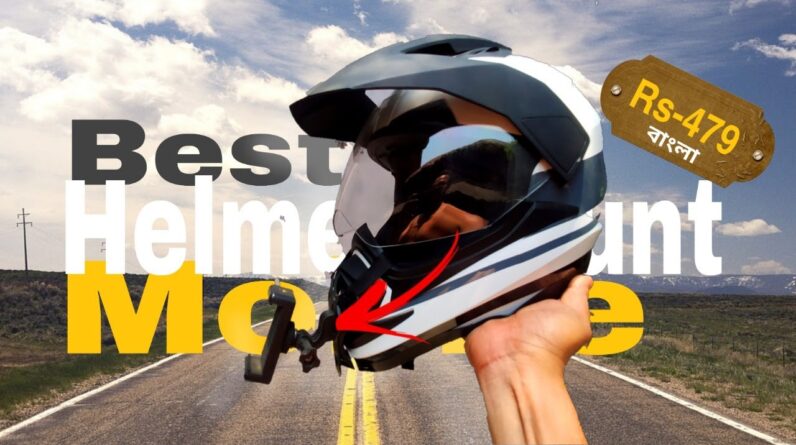
Chin Mount: The professional standard. It provides a dynamic, first-person view that mirrors your line of sight, creating an immersive “you are there” feeling. It integrates cleanly with most full-face helmets. The challenge is ensuring a secure fit on the helmet’s complex curvature.
Side Mount: Ideal for a conversational, “over-the-shoulder” vibe. It’s excellent for vloggers who frequently address the camera directly. Be mindful of increased wind drag and potential imbalance on the helmet.
Top Mount: Offers supreme stability and a versatile, high vantage point. However, it can appear less integrated with the rider’s perspective and is more susceptible to catching low-hanging branches or garage doors.
Part B: Location and Adhesion
Precision in placement is non-negotiable. First, prepare the helmet surface. Clean the mounting area thoroughly with high-percentage isopropyl alcohol to remove all wax, oils, and dirt. This step is the difference between a mount that holds for years and one that fails on the first bumpy road.
Next, consider orientation and angle. Before peeling any adhesive, temporarily hold the mount in place. Sit on your bike in your riding position. Have a friend check the phone’s preview screen to ensure the horizon is level and the frame captures the road ahead without excessive handlebar or dash.
Part C: Material and Mechanism
A mount is a system of components. Understanding each part’s role allows you to choose the perfect assembly for your needs.
| Component Category | Primary Options | Key Characteristics |
|---|---|---|
| Adhesive Base | 3M VHB Tape, Suction Cup, Strap-on | 3M VHB: Permanent, ultra-strong chemical bond. Best for dedicated setups. Requires perfect surface prep. Suction Cup: Removable and reusable. Works only on perfectly smooth, non-porous surfaces. Risk of failure in temperature extremes. Strap-on: Non-destructive and versatile. Can slip or vibrate if not extremely tight; may not be suitable for heavier phones. |
| Arm / Extension | Rigid Arm, Flexible Gooseneck, Short Stub | Rigid Arm: Provides fixed reach and excellent stability. Choose length carefully—longer arms increase leverage and vibration. Flexible Gooseneck: Allows infinite angle adjustment. Prone to transmitting high-frequency vibration and can droop over time. Short Stub: Maximizes stability by minimizing leverage. Offers the least flexibility for framing adjustments. |
| Phone Clamp | Spring-Loaded, Screw-Tightened, Magnetic | Spring-Loaded: Quick on/off. Must be checked for grip strength, especially with slick phone cases. Screw-Tightened: Most secure and adjustable grip. Slower to operate. Magnetic: The fastest mounting system. Requires a metal plate on your phone or case. Ensure the magnet is strong enough for high-vibration environments. |
The Core System: Stability and Vibration Control
Think of your mount not as a static bracket, but as a dynamic system managing kinetic energy. Your motorcycle generates a symphony of vibrations; your mount’s job is to silence it. The enemy is not large movements, but high-frequency buzz that turns detail into mush.
Achieving Rock-Solid Stability
Your target is zero high-frequency shake. The consequence of failure is unwatchable, blurry footage that destroys professional credibility. Your first line of defense is mechanical integrity. Use the shortest, most rigid arm that achieves your desired camera position. Ensure the phone clamp grips the center mass of your device, not just the edges. For top-heavy setups, consider adding a small counterweight on the opposite side of the helmet to balance the load.
Advanced Vibration Damping
For high-performance bikes or rough roads, basic rigidity isn’t enough. You need to absorb vibration. This is where dedicated damping systems come in. Proprietary solutions like vibration-damping balls or flexible rubber arms act as a filter, isolating your phone from high-frequency buzz. The method is simple: introduce this damped joint between the helmet’s adhesive base and the rigid arm holding your phone. In a pinch, a section of dense foam between the mount and helmet can serve as a basic DIY damper.
Advanced Practices: Optimization for Motovlogging
With a stable platform secured, we shift from engineering to the art of capture. This is where workflow efficiency and strategic planning elevate your content.
Preparation & Setup
Balance your phone in the clamp before tightening it down. A phone that’s off-center can strain the clamp and impair the internal optical image stabilization (OIS). Plan your cable management for external microphones or power banks. Use short cables and secure loose loops with hook-and-loop straps to prevent snags and wind noise.
Operational Workflow
Develop a one-handed routine to start and stop recording while gloved. Muscle memory is key. Invest in a mount with a reliable quick-release mechanism. The ability to swiftly remove your phone at fuel stops or for adjustments is a major quality-of-life upgrade.
Selection & Strategy
Not all mounts fit all helmets. A chin mount designed for a sharply curved sportbike helmet may not contact properly on a rounder adventure helmet shell. Read reviews specific to your helmet model. For serious creators, a strategy of primary and backup mounts is wise—perhaps a permanent chin mount for action and a removable side mount for commentary.
Threat Management: Problem Prevention and Solutions
Adopt a proactive mindset. A mount failure doesn’t just ruin a clip; it can mean a lost or destroyed phone. Prevention is always simpler than crisis management.
Prevention: The Proactive Protocol
Before every ride, perform the “tug test.” Firmly attempt to twist and pull the mounted phone. Establish a maintenance schedule. I replace my 3M VHB adhesive base every 12 months, regardless of apparent condition, because adhesion degrades over time with UV exposure and temperature cycles.
Intervention: Diagnosing Common Failures
Problem: Adhesive Failure. The mount detaches from the helmet.
Solution: This is almost always due to poor surface prep. Start over. Clean with alcohol, apply a promoter primer (often sold with high-performance tapes), and allow the new adhesive to cure for a full 24 hours before use.
Problem: Arm Loosening. Joints become wobbly, causing drift.
Solution: Apply a drop of blue (medium-strength) thread locker to screw threads during assembly. Conduct a monthly check to re-tighten any fasteners.
Problem: Persistent Phone Vibration. Footage still has a high-frequency buzz.
Solution: First, re-balance the phone in the clamp. If it persists, you need to introduce a damping element. Add a proprietary vibration damper or ensure your phone’s OIS is enabled and functional.
Your Motovlogging Mounting Checklist
| Phase | Primary Tasks | What to Focus On |
|---|---|---|
| Research & Purchase | Analyze your helmet’s shape and curvature. Read verified purchase reviews. Confirm phone-and-case compatibility with clamp dimensions. | Choosing the correct mounting type (chin, side, top) to achieve your desired narrative perspective. |
| Installation & Test | Degrease helmet surface with alcohol. Apply mount at optimal viewing angle. Perform static tests, then a short, low-speed test ride to check stability. | Achieving perfect, bubble-free adhesive contact and calibrating the camera angle to your natural riding posture. |
| Ongoing Operation | Pre-ride security check (tug test). Post-ride wipe-down of mount and phone. Bi-annual inspection of all adhesive and mechanical joints. | Consistent, reliable performance. Proactive replacement of consumable parts (like adhesive pads) before they fail. |
The journey from a simple sticky pad to a mastered filming platform is the journey from hobbyist to storyteller. This control over your perspective is ultimate control over your narrative. You began seeking to cure shaky footage. You will finish by commanding a rock-solid portal into your world on two wheels. Your helmet mount is the silent, steadfast partner in every adventure. When chosen and mastered, it disappears, leaving only the smooth, immersive story of the road. The engine is waiting. Now, go capture its song, flawlessly.