
Seeing Through the Smoke: The Helmet Camera as a Lifeline
The world inside a structure fire collapses into a roar of noise and a wall of blinding smoke. Disorientation sets in fast. Precious seconds vanish as a search team struggles to relay a victim’s location over the radio, or as a crew misses the telltale crack of a compromised beam. In this chaos, information is the most critical resource—and it’s often the first casualty. The modern solution is a deceptively simple one: a camera mounted on a helmet. But this is no passive recorder. When mastered, it becomes an active safety and command system, a real-time lifeline cutting through the opacity. This is how a disciplined firefighter transforms a piece of hardware into a guardian. This firefighter’s helmet camera saved lives—here’s how.
Foundational Choices: The Hardware of Helmet Cams
Selecting a helmet camera is your first act of operational intelligence. It is not an accessory; it is Personal Protective Equipment for information. Your choices here form the unshakable foundation for everything that follows.
Selection & Specifications: Beyond the Basic Lens
Forget consumer-grade specs. Your environment demands purpose-built ruggedness. Start with certifications: NFPA compliance for heat and flame resistance is non-negotiable, as is a high IP rating for water and dust intrusion. The critical performance specs are low-light capability, a wide field of view (to capture your peripheral environment), and a battery life that exceeds your SCBA cylinder. Controls must be intuitive and glove-compatible—you cannot fumble with tiny buttons in zero visibility.
Mounting & Integration: Secure and Streamlined
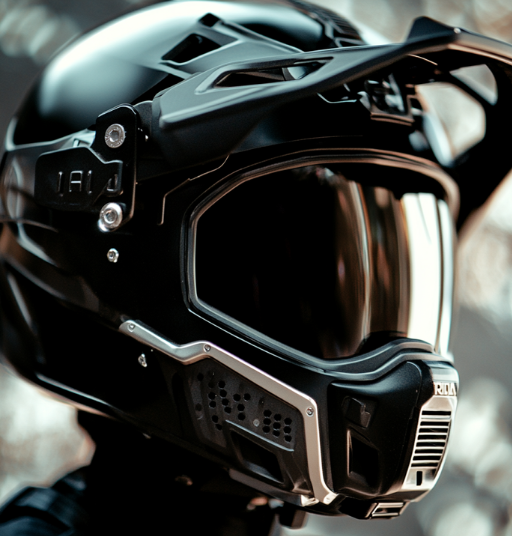
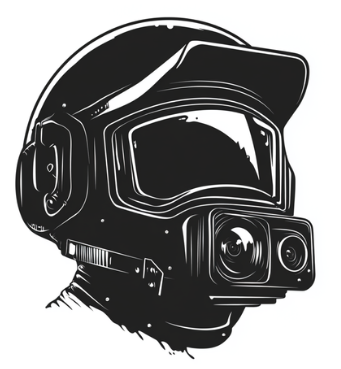
Where and how you mount the camera is a tactical decision. A central helmet mount offers a stable, head-referenced view but can snag. A mask-mounted position provides a true “firefighter’s eye” perspective but must not interfere with your seal or vision. Whichever you choose, secure cable management is vital. Loose wires are entanglement hazards. The ideal system integrates seamlessly, feeling like a natural extension of your helmet and SCBA pack.
Component Comparison: Core Technology Choices
| Component Category | Key Options | Key Characteristics |
|---|---|---|
| Image Sensor | Standard vs. Thermal Imaging | Standard: Excellent for general scene documentation and post-incident review in visible light conditions. Thermal Imaging Camera (TIC): Sees through smoke by detecting heat signatures. Revolutionary for identifying victims, locating the seat of the fire, and spotting thermal anomalies like overheating walls. |
| Connectivity | Recording-Only vs. Live Stream | Recording-Only: Captures footage for after-action review and evidence. A foundational tool. Live Stream Capability: Transmits real-time video to the Incident Commander or Safety Officer. This transforms the camera from a recording device into a remote reconnaissance and safety asset, allowing command to see unseen hazards. |
| Audio | Internal Mic vs. SCBA Integrated | Internal Microphone: Often captures muffled, unusable audio through the helmet. SCBA Integrated Audio: Taps directly into your facepiece microphone. This provides crystal clear radio traffic and breathing sounds, which are critical for accountability and physiological monitoring during rehab. |
The Core System: Operational Protocols & Active Use
A helmet camera is a dynamic system, not a set-and-forget gadget. Its life-saving power is unlocked through disciplined protocols before, during, and after the incident.
Pre-Incident: Your ritual must be as automatic as checking your air. A daily checklist: battery charge, available memory, lens cleanliness. A weekly signal test for live-stream units. This is operational readiness.
On-Scene Activation: Discipline dictates when to roll. Standard operating procedure might mandate activation for all structure fires, but officers must also use discretion. The key is the “eyes-on” discipline: the camera captures what you look at. Train yourself to scan methodically—your footage becomes a map of your observational focus.
Real-Time Life-Saving Applications
This is where theory meets the heat. In a zero-visibility search, a thermal imaging helmet camera paints a ghostly outline of a victim on your display, guiding you directly to them while you maintain two hands on a hose line or tool. For Command, the live stream from an interior crew allows the Safety Officer, stationed outside, to spot a collapsing ceiling truss that the interior team cannot see, enabling an immediate evacuation order. During a Mayday, the accountability officer can visually verify the last known location and status of a downed firefighter, making rapid intervention faster and more precise.
Advanced Practices: Data as a Tool for Mastery
The camera’s value extends far beyond the fireground. Its recorded data becomes your most powerful tool for collective improvement.
Post-Incident Analysis: The After-Action Review is transformed. Instead of relying on memory, you reconstruct the incident timeline with visual certainty. You can identify fire spread patterns, critique ventilation tactics, and review communication gaps. This objective record turns subjective debriefs into precise learning moments.
Training & Preparedness: Use archived footage to create immersive “what would you do?” drills for your crew. There is no better training tool than real-world scenarios from your own response area. It builds pattern recognition and decision-making speed under stress.
Evidence & Investigation: For fire investigators, helmet camera footage provides unambiguous visual evidence of conditions on arrival, fire behavior, and potential points of origin. It can corroborate or refute witness statements and protect departments from liability with factual documentation.
Threat Management: Ethical & Practical Pitfalls
With this powerful tool comes significant responsibility. A proactive stance on policy prevents catastrophic missteps.
Prevention (Policy is Key): Clear, written SOPs are your first defense. They must dictate authorized use, strict patient and civilian privacy protocols, and data handling procedures. Crucially, training must emphasize that the camera aids situational awareness—it does not replace it. You must never fixate on a screen at the expense of your direct sensory connection to the environment.
Intervention: Be prepared for the downstream challenges. Data security is paramount; footage is a sensitive record. Establish a clear chain of custody for potential evidence. Have a protocol for managing public records requests that balances transparency with privacy laws and ongoing investigation integrity.
The Action Plan: A Firefighter’s Camera Protocol Calendar
| Phase | Primary Tasks | What to Focus On |
|---|---|---|
| Daily / Pre-Shift | Visual inspection, battery level check, lens wipe, functional test. | Readiness. Ensuring the system is operational the moment the alarm sounds. |
| Post-Incident | Secure download to a dedicated system, initial review with crew, tag critical footage segments. | Preservation and Learning. Capturing insights while the event is fresh and securing data for future use. |
| Monthly / Quarterly | Full system diagnostic, firmware updates, cleaning of ports and connectors, conduct a training drill using archived footage. | System Integrity and Tactical Improvement. Maintaining the hardware and actively using its data to elevate crew proficiency. |
The Unblinking Guardian: A Partnership in Preservation
The journey transforms a mounted gadget into an integrated command-and-safety asset. It is a force multiplier for safety, intelligence, and accountability. Return now to that initial scene of chaos—the blinding smoke, the fractured communication. Reimagine it with the clarity this tool provides: a thermal silhouette guiding a rescue, a live-streamed warning averting a collapse, a recorded timeline revealing truths for tomorrow’s call. Through disciplined selection, protocol, and review, technology becomes a steadfast partner. It extends your vision, archives your experience, and guards your crew. This is the profound transformation. This firefighter’s helmet camera saved lives—here’s how it continues to build a legacy of smarter, safer firefighting every day.