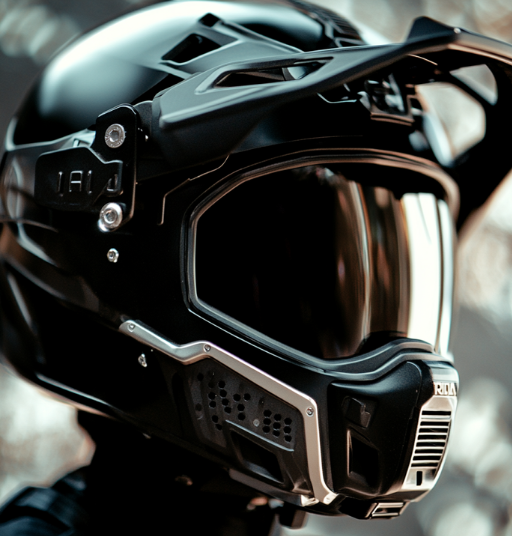

Here are five helmet cameras worth considering, ranked by category so you can match the right camera to how you ride. Rankings use published specifications and the four factors covered in the FAQ below (stabilization, waterproofing, battery life and mount compatibility), not hands-on testing.
Models covered: the cameras named in this guide. Manufacturers release new models regularly, so check current lineups, specifications and prices on the manufacturer pages before buying.
How These Are Ranked
Every camera on this list is evaluated against published manufacturer specifications for the conditions that matter most to motorcycle riders: daily commuting, mountain passes, gravel roads, and track use.
1. Best Overall: GoPro Hero 13 Black
Price: $399 | Resolution: 5.3K60 / 4K120 | Stabilization: HyperSmooth 6.0 | Battery: ~75 min at 4K60
The Hero 13 Black is the best all-round helmet camera for most motorcycle riders. HyperSmooth 6.0 is widely regarded as the most effective electronic stabilization in its class — on rough roads and at highway speeds, the footage is reported to stay smooth without the artificial, over-processed look of some competing systems. The lens mod system (standard, wide, anamorphic) gives it creative flexibility no other action camera matches.
The waterproof to 33ft / 10m rating, impact-tested chassis, and breadth of compatible mounts make it the most versatile camera in this list. For a rider who wants one camera that handles everything from daily commuting to track days to touring, the Hero 13 Black is the recommendation.
Best for: All-round motorcycle use, content creation, track days
2. Best Value: DJI Osmo Action 3
Price: $99-$149 | Resolution: 4K120 | Stabilization: RockSteady 3.0 | Battery: ~90 min at 4K60
At roughly one-third the price of the Hero 13 Black, the Osmo Action 3 delivers approximately 80% of the performance. 4K120 slow motion, dual screens, magnetic mounting, 16m waterproofing, and better cold-weather battery life than any GoPro at any price. It has a strong reputation as a reliable cold-weather camera among motorcycle commuters, per DJI’s published cold-weather battery specifications and user reports.
Full details in our DJI Osmo Action 3 review.
Best for: Budget riders, cold climate commuting, daily use
3. Best for Low Light: Insta360 Ace Pro 2
Price: $349 | Resolution: 4K120 / 8K30 | Stabilization: FlowState | Battery: ~80 min at 4K60
The Ace Pro 2 uses a 1/1.3 inch sensor — the largest in any action camera at this price — and the difference in low-light performance is clearly visible. Early morning commutes through tunnels and dusk riding on shadowed canyon roads all look meaningfully better on the Ace Pro 2 than on the GoPro or DJI. The Leica-tuned lens produces excellent colour accuracy and sharpness.
Best for: Riders who film in variable light, content creators wanting quality footage with minimal editing
4. Best 360 Degree: Insta360 X4
Price: $499 | Resolution: 8K360 | Stabilization: FlowState 360 | Battery: ~81 min at 8K30
The X4 captures everything around you simultaneously. For incident documentation where you do not know which direction a hazard will appear from, and for content creation where you reframe footage in post-production, this changes how you approach filming a ride entirely. The trade-off is that footage requires post-processing before it looks its best, and the stitching seam is visible at certain angles.
Best for: Content creators, riders wanting full-coverage incident documentation
5. Best Always-On Recording: INNOVV H5
Price: ~$250 | Resolution: 4K front / 1080p rear | Recording: Loop recording, auto start/stop | Power: Wired to bike battery
The INNOVV H5 is a fundamentally different product: permanently mounted, wired to the battery, starts recording automatically when you start the bike, and loop-records with front and rear cameras simultaneously. The G-sensor saves a protected clip automatically on impact. For riders whose primary need is accident documentation rather than content creation, it removes all the friction of remembering to charge and mount a camera every ride.
Best for: Commuters, safety-focused riders, anyone who wants always-on protection without daily management
Full Comparison
| Camera | Price | Max Res | Best Feature | Main Compromise |
|---|---|---|---|---|
| GoPro Hero 13 Black | $399 | 5.3K60 | Lens ecosystem, stabilization | Battery life, cold weather |
| DJI Osmo Action 3 | $99-$149 | 4K120 | Value, cold weather battery | Older stabilization vs current flagships |
| Insta360 Ace Pro 2 | $349 | 8K30 | Low-light sensor quality | Processing-heavy footage |
| Insta360 X4 | $499 | 8K360 | 360 degree full coverage | Stitching seam, post-processing required |
| INNOVV H5 | ~$250 | 4K front | Always-on, dual channel | Not portable, no content creation use |
For help choosing based on your riding style and budget, try our AI helmet camera recommender tool.
Frequently Asked Questions
What is the best motorcycle helmet camera?
Among the models compared here, the GoPro Hero 13 Black is the strongest all-round choice on those criteria. For budget riders, the DJI Osmo Action 3 is the best value. For always-on accident protection, the INNOVV H5 is worth considering alongside an action camera.
What should I look for in a motorcycle helmet camera?
Stabilization quality, waterproofing, battery life, and mount compatibility are the four most important factors. See our full buying guide for a detailed breakdown of each.
How do I mount a camera to my motorcycle helmet?
Chin, top, and side mounting are the three main options. Our mount guide covers all three with specific recommendations by riding style.
Reviewed by the Digital Helmet Cameras Editorial Team. Compiled from manufacturer specifications. Prices are approximate and change often; check current listings.
Official resources: GoPro Hero 13 Black | DJI Osmo Action 3 | Insta360 Ace Pro 2.