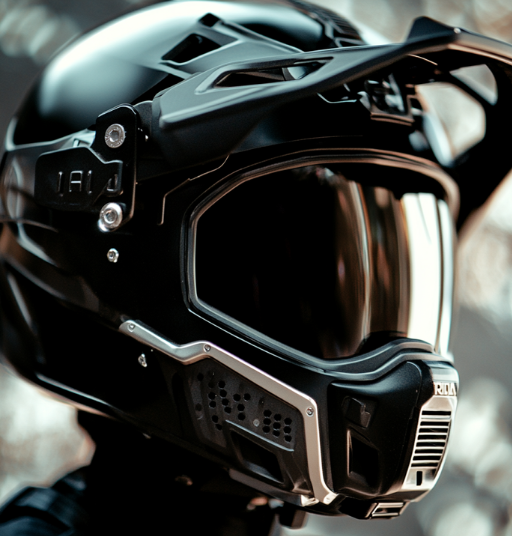

A head camera goes by several names depending on the industry and use case. Understanding the terminology helps when searching for cameras, mounts, and accessories — and knowing the differences between camera types helps you buy the right one. This guide clarifies the terminology and helps you navigate to the right product for your needs.
What Is a Head Camera Called?
The most common terms for cameras worn on or attached to the head:
- Helmet camera / helmet cam — most common term for cameras mounted on sport or motorcycle helmets. Used in motorcycling, cycling, skiing, snowboarding, and equestrian sports.
- Action camera — broader term for compact cameras designed for active recording. An action camera becomes a helmet camera when mounted on a helmet. GoPro, DJI Osmo Action, and Insta360 make action cameras that riders use as helmet cameras.
- POV camera — “Point of View” camera; emphasises the first-person perspective aspect. Used more often in filmmaking and production contexts.
- Head-mounted camera — clinical/technical term; used in medical, police, and professional contexts for cameras that mount directly to the head rather than a helmet.
- Body camera / bodycam — more commonly refers to cameras worn on the torso (law enforcement, sports). Chest mounts and body cameras overlap with head cameras in some use cases.
- Dashcam (motorcycle) — specifically refers to cameras used for safety/incident documentation that record in continuous loops. The Techalogic DC-1 bridges helmet camera and motorcycle dashcam.
How Action Cameras Became Helmet Cameras
When GoPro launched in 2004, it was marketed primarily as a wrist-mounted surfing camera. Helmet mounting became popular as riders discovered that GoPro’s small form factor and wide-angle lens created compelling first-person footage. The term “GoPro” became synonymous with helmet cameras in the same way “Hoover” became synonymous with vacuum cleaners.
Today, “action camera” and “helmet camera” are largely interchangeable — the same physical product serves both descriptions, with the use case determined by the mount.
Types of Head/Helmet Cameras Explained
Action Cameras (General Purpose)
Designed for any active sport. Compact, waterproof, wide-angle, with electronic stabilization. Examples: GoPro Hero 13 Black (~$399), DJI Osmo Action 5 Pro (~$269), Insta360 X5 (~$499).
Ideal for: Riders who want the best image quality and use the camera across multiple activities.
Purpose-Built Motorcycle Cameras
Designed specifically for motorcycle helmet use. May include features like dual lenses, loop recording, or integration with helmet audio systems. Examples: Techalogic DC-1 (~$199), INNOVV H5, Sena 50C (camera + comms).
Ideal for: Commuters and riders who prioritise safety documentation.
360-Degree Cameras
Capture a spherical image in all directions simultaneously. The Insta360 X5 and Insta360 ONE RS 1-inch 360 Edition are the leading options. Footage is reframed in post-production to choose the viewing angle.
Ideal for: Content creators who want flexible, dynamic footage.
Integrated Helmet Cameras
Cameras built into the helmet or integrated invisibly. The INNOVV H5 mounts inside the visor housing. The Sena 50C combines a Bluetooth communication system with an integrated camera. These are purpose-built systems with limited upgrade paths.
Ideal for: Riders who want invisible camera integration and don’t want external hardware.
What to Call Your Camera When Searching for Accessories
When searching for mounts, cases, and accessories, use these terms to find what you need:
| What You Want | Best Search Term |
|---|---|
| Helmet mount for GoPro | “GoPro helmet chin mount” or “GoPro motorcycle helmet mount” |
| Helmet mount for DJI | “DJI Osmo Action helmet mount” or “DJI chin mount” |
| Universal mount | “action camera chin mount” or “POV camera helmet mount” |
| Motorcycle-specific camera | “motorcycle helmet camera” or “motorcycle dashcam helmet” |
| Safety/insurance documentation | “motorcycle helmet dashcam” or “dual lens motorcycle camera” |
The Three Decisions Before You Buy
Regardless of what it’s called, buying the right head camera comes down to three questions:
- What are you using it for? — safety documentation, content creation, technique analysis, or all three?
- What helmet do you have? — full-face, open-face, or modular determines which mounts work
- What’s your budget? — genuine quality starts at ~$150; the best cameras are ~$299–399
Our free Camera Recommender handles all three questions in 60 seconds and gives you a specific camera recommendation with current pricing and where to buy it.
Frequently Asked Questions
What is a GoPro used for on a motorcycle?
Three primary uses: recording rides for YouTube/social content, documenting incidents for insurance claims, and analysing riding technique via slow-motion playback. GoPro’s size, waterproofing, and stabilization make it the most versatile option for all three.
Is there a difference between an action camera and a helmet camera?
An action camera is the hardware; a helmet camera describes how it’s mounted. The same GoPro Hero 13 is an action camera in general, and a helmet camera when mounted to a helmet. Some cameras are designed specifically for helmet use (Techalogic DC-1, INNOVV H5) and aren’t typically used for other activities.
What camera do motorcycle police use?
Law enforcement motorcycle units typically use Axon Body cameras, Reveal Media RS cameras, or purpose-built police body camera systems — not consumer action cameras. These have encrypted storage and specific legal evidence requirements that consumer cameras don’t meet.
Official resources: GoPro official website | DJI action cameras | Insta360 official website.