Your Unblinking Co-Pilot: The Vision
You see the car begin to drift into your lane. Your heart rate spikes. You brake, swerve, and the moment passes. But the adrenaline lingers, mixed with frustration. How do you explain that near-miss? It’s your word against a driver who likely never even saw you. Now, imagine a different scenario. You crest a mountain pass as the sun breaks through the clouds, a view so perfect you wish you could share it. A helmet camera transforms both experiences. It is the objective witness that validates your reality and the creative tool that preserves your adventure. This isn’t about filming every trip; it’s about fundamentally changing your relationship with the road. A helmet camera is essential gear, transforming you from a vulnerable rider into a documented, protected, and actively improving motorcyclist.
Foundational Choices: Selecting Your “Digital Eyewitness”
Your camera is the foundation. The right choice ensures your footage is usable, stable, and reliable when it matters most.
Form Factor & Mounting: The Foundation of Footage
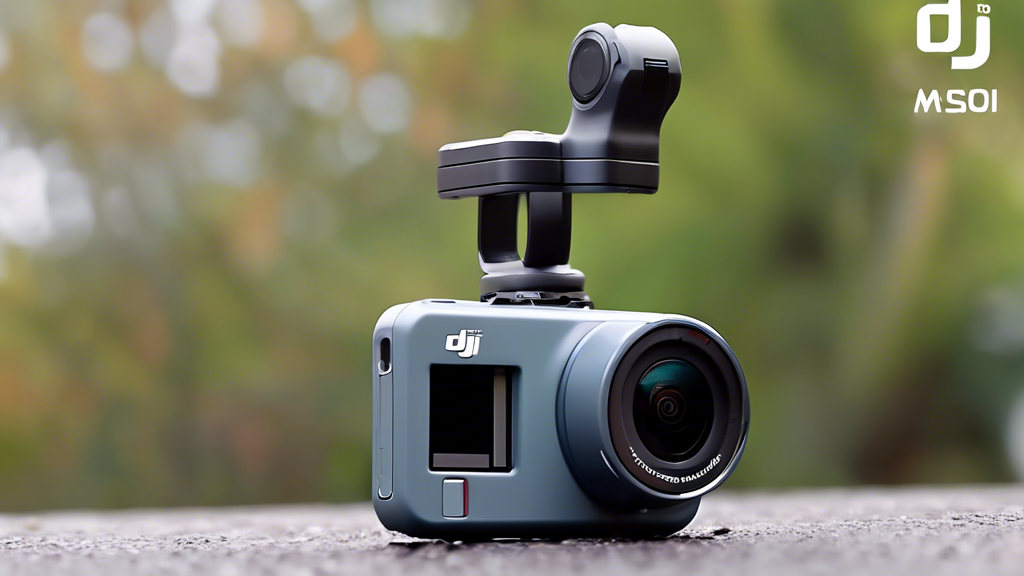
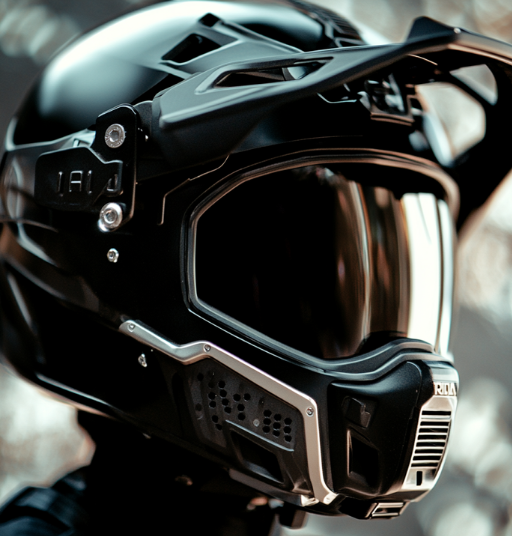
Where you place the camera is as critical as the camera itself. A poor mount creates shaky, useless video. The chin mount, positioned centrally on the helmet’s front, offers the most natural perspective, mimicking your field of view with minimal wind resistance. A side mount is easier to access but can create a skewed angle. A top mount provides a unique high perspective but significantly impacts aerodynamics. Your priority must be a secure, permanent mount designed for your specific helmet model. A camera that flies off is a safety hazard and a total failure of the system.
Core Specifications: Seeing What You See
Resolution, frame rate, and field of view determine what your camera captures. For critical detail like license plates or road signs, 2.7K or 4K resolution is invaluable. For general use, 1080p offers excellent quality with smaller file sizes. A high frame rate, like 60 or 120 frames per second (fps), is your secret weapon. It allows you to slow down footage smoothly, perfect for analyzing a close-call or the precise moment of a technique. Field of view is crucial. A super-wide or wide view captures the peripheral context—the car approaching from a side street, your lane position. A narrow view loses this vital information.
The Durability & Ecosystem Table
| Component Category | Options | Key Characteristics |
|---|---|---|
| Weatherproofing | Basic vs. Full Waterproof Housing | Basic: Withstands rain and road spray. Waterproof Housing: Essential for all-weather riders; allows submersion but adds bulk. |
| Battery Life | 1-2 hrs vs. 2+ hrs vs. External Power | Dictates your recording window. For long tours, you need spare batteries or a USB power bank. A 90-minute commute needs a camera that lasts at least two hours. |
| Connectivity (Wi-Fi/GPS) | Basic vs. Built-in GPS/Bluetooth | Basic: File transfer only. GPS/Bluetooth: Enables app control, remote start/stop, and overlays your route and speed on the video. This is critical for legal evidence and trip logging. |
The Core System: Managing Your Evidence & Memories
A helmet camera is an active system. Proper management ensures it’s ready when you are.
Control Variable 1: Power & Storage
The Rule: Never start a ride with less than 50% battery and 50% free storage space. The consequence of failure is absolute: a dead camera captures nothing. Build a ritual. When you hang up your helmet, plug in the camera. Keep a pre-formatted spare SD card in your jacket. This discipline guarantees your digital eyewitness is always on duty.
Control Variable 2: Angle & Perspective
The Ideal Target: A level horizon, with a sliver of your motorcycle’s handlebars or the bottom of your visor in frame for context. Footage pointing at the sky or just the asphalt is worthless for review or evidence. Use your camera’s mobile app for a live preview to fine-tune the angle before permanently locking the mount. I spent a week with my camera pointed too high, recording beautiful clouds but missing the traffic lights. A five-minute setup saves hours of useless footage.
The Surprising Benefit: Beyond Crash Evidence
While crash protection is the headline, the transformative value of a helmet camera lies in these often-overlooked applications.
Skill Analysis & Self-Coaching
This is the game-changer. Review your footage after a spirited ride or track day. Watch your line through a corner. Analyze your body position and brake application. You will see mistakes and opportunities invisible from the saddle. It is the most powerful, objective riding coach you can own, accelerating your progression into a smoother, safer, and more confident rider.
The Ultimate Trip Log
With GPS-enabled models, every ride is automatically geotagged. You are not just capturing video; you are creating a living map of your journey. Relive that epic coastal run with your exact route and speed overlaid. Share the file with a friend so they can ride the same perfect line through the canyon. It turns memories into data and rides into shareable experiences.
A Tool for Community & Advocacy
Your camera gives you a voice. Capture patterns of dangerous driving—the repeated close passes, the distracted drivers—and share the footage (with plates blurred) with traffic safety organizations. Create “how-to” videos for new riders or breathtaking scenic compilations that celebrate motorcycling. You move from being an individual on the road to a contributor to the riding community.
The Powerful Legal Guardian
This is the non-negotiable core benefit. In a collision or insurance dispute, your footage establishes fault objectively. It protects you from fraudulent “crash for cash” schemes and the common “I didn’t see him” defense. It is unbiased, immutable evidence. This single function justifies the investment and is why every motorcyclist needs a helmet camera as standard equipment.
Advanced Practices: Optimizing Your Recordings
Mastery means tailoring the tool to your mission.
Preparation: Settings for the Mission
Create a pre-ride mental checklist. Scenic mountain run? Prioritize high resolution (4K) for detail. Urban commute with high incident risk? Use a high frame rate (60fps) for clear slow-motion and enable loop recording to automatically overwrite old files. Set up voice commands so you can start recording a specific incident without taking your hands off the bars.
Ongoing Inputs: File Management Rituals
Data is a liability if you lose it. Establish a weekly ritual. Offload your footage, organize it by date and route, and back it up to an external drive or cloud service. Delete the trivial files from your card and format it in the camera for maximum reliability. This habit ensures that the one clip you desperately need is never lost to a corrupted memory card.
Threat Management: Preventing Failure
Proactive maintenance keeps your system reliable.
Prevention: Routine Maintenance
Make lens cleaning as habitual as wiping your visor. A single smudge ruins all footage. Before each ride, give the camera mount a firm twist to check for looseness. In wet weather, ensure all sealing doors are firmly closed. This 30-second inspection prevents 100% of common failures.
Intervention: Troubleshooting Guide
Problem: Shaky footage. Solution: Check and tighten the mount at all connection points.
Problem: Camera overheats and shuts down. Solution: Avoid leaving it in direct sunlight when parked; ensure vents are clear.
Problem: Corrupted files. Solution: Always format the SD card using the camera’s menu, not your computer.
The Rider’s Action Plan: Your First 30 Days
| Phase | Primary Tasks | Focus On |
|---|---|---|
| Week 1-2: Setup & Habit | Permanently secure your chosen mount. Charge the camera every night. Hit record at the start of every ride, no matter how short. | Getting a level, useful camera angle. Making the act of recording an automatic reflex. |
| Week 3-4: Engagement & Use | Review 10 minutes of footage each week. Experiment with one new feature (e.g., photo mode, a different field of view). | Actively analyzing your riding in a few key corners. Saving and sharing one beautiful scenic clip. |
Ride Documented, Ride Protected
A helmet camera rebalances the equation of the road. It moves you from a state of potential vulnerability to one of documented authority and creative engagement. You begin with a simple mount and a charging habit. You progress to analyzing your technique, logging your journeys, and contributing to the safety of the riding community. The ultimate reward is a profound peace of mind—the knowledge that your story can be told, your experience shared, and your rights protected. It doesn’t just record your ride; it enriches and safeguards your entire life on two wheels.