Reviewed by the Digital Helmet Cameras Editorial Team. Based on manufacturer specifications and publicly available user feedback; not independent lab or road testing. Prices and availability change, so check current listings.
The Setup: How This Comparison Works
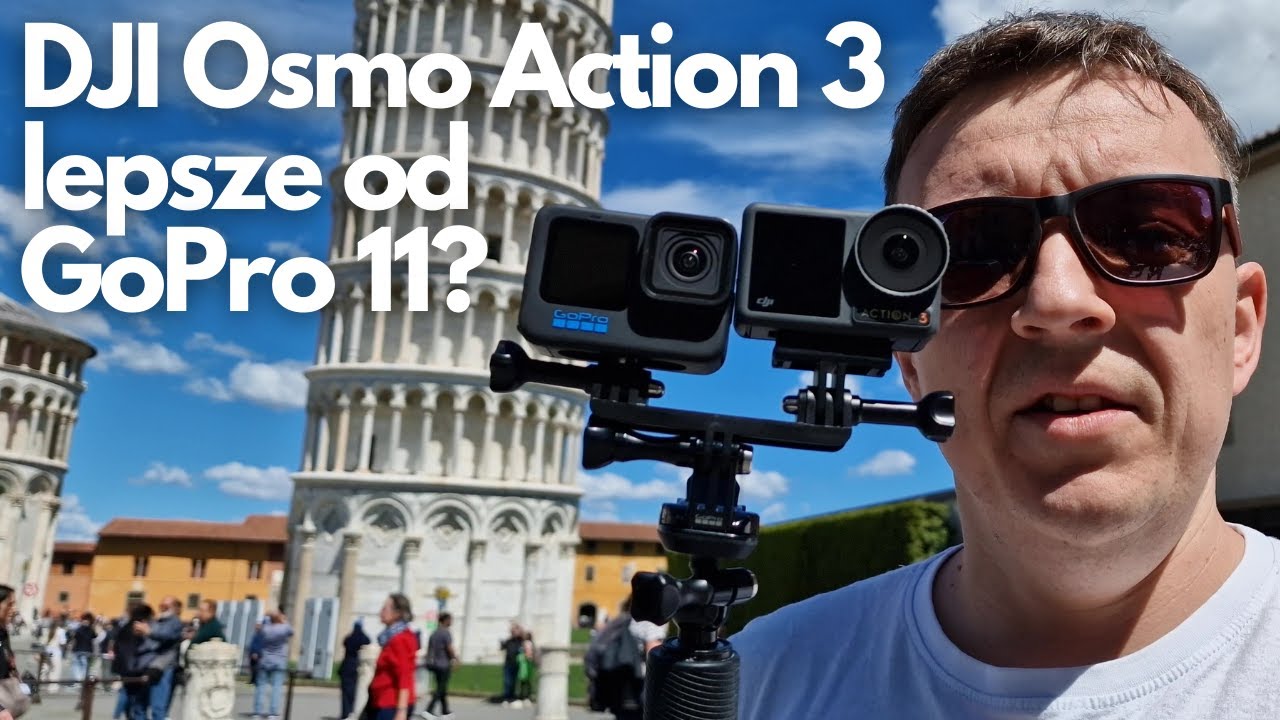
This comparison looks at the DJI Osmo Action 3 and GoPro Hero 11 Black using published specifications and reported owner experience, across the conditions that matter most for motorcycle use: highway commuting, canyon roads and multi-day touring.
Both cameras are now at least a generation behind their successors, so they are often available at lower prices than at launch. Check current availability and pricing; this is best read as a value comparison of older models.
Hardware and Mounting
The physical experience of these two cameras couldn’t be more different as a motorcycle rider.
The Osmo Action 3 uses a magnetic quick-release system. The camera snaps onto the mount baseplate and locks with a quarter-turn. With gloves on, this is noticeably faster than most GoPro mounts. Swapping the camera between a helmet and a handlebar mount during a stop is designed to be a quick, one-handed job. The front-facing screen is also larger and more readable in direct sunlight than the Hero 11’s.
The Hero 11 Black uses GoPro’s classic finger-pin mount. It’s the universal standard — compatible with the widest range of third-party accessories, cases, and mounts available anywhere. If you have existing GoPro mounts, that ecosystem lock-in is real value. The trade-off is that removing and reattaching the camera with gloves requires more dexterity.
Image Quality
The Hero 11’s 8:7 sensor ratio is genuinely useful for motorcycle content creators who publish across platforms. You can film once and crop vertically for Instagram Reels or horizontally for YouTube without quality loss. That’s a practical workflow advantage if you’re creating content rather than just capturing personal footage.
In good light, both cameras produce excellent footage. GoPro has a slight edge in highlight retention — on bright canyon roads with deep shadows, the Hero 11 recovers more sky detail. The Action 3’s color science is more natural straight out of camera; the GoPro’s default color is more saturated, which looks good for social sharing but requires more grading if you want a cinematic look.
In low light — early morning canyon runs, tunnels, or dusk highway riding — the Hero 11 has a meaningful advantage. Its larger sensor pixels produce cleaner footage in low-contrast conditions than the Action 3.
Stabilization: Where They Differ Most
Both cameras have excellent stabilization by any objective standard. The character is different:
HyperSmooth 5.0 (GoPro) is almost aggressively smooth. On rough chip-seal roads, it produces footage that feels gimbal-mounted. Some riders find this looks artificial; others love it. The horizon lock is effective but doesn’t handle aggressive lean angles as well as DJI’s.
RockSteady 3.0 (DJI) produces footage that feels more natural — a subtle sense of motion is preserved while jitter is removed. The horizon lock in HorizonSteady mode is better at maintaining a level frame during aggressive cornering and lean angles. For canyon riding where you’re constantly banking, the Action 3’s horizon handling is generally considered more reliable.
Battery Life and Charging
At 4K60fps, both cameras are rated for around 65-70 minutes per charge. The real difference is charging speed: the Action 3’s proprietary fast-charging dock brings a battery to 80% in 18 minutes — enough to top off during a fuel stop — while GoPro’s standard USB-C charging takes closer to an hour for a full charge.
Spare Action 3 batteries are cheaper than GoPro’s Enduro batteries, though GoPro’s Enduro significantly extends cold-weather runtime — a consideration if you ride in temperatures below 40°F.
Audio Quality
Both cameras have wind noise reduction that works at reasonable speeds. Above 60mph, neither is truly clean without a foam windscreen. The Hero 11 has a slight edge on the built-in microphones at high speeds. If you’re using the cameras for solo footage without commentary, it doesn’t matter much. If you narrate your rides, the GoPro is marginally better without external mic accessories.
Both support external microphones via USB-C adapter. GoPro’s Media Mod ecosystem is more polished if you want an integrated external mic solution.
Who Should Buy Which Camera
| You Should Buy the DJI Osmo Action 3 If… | You Should Buy the GoPro Hero 11 Black If… |
|---|---|
| You swap mounts frequently during rides | You have existing GoPro mounts and accessories |
| You prioritize fast battery charging on touring days | You want maximum accessory and mount ecosystem options |
| You ride in cold weather regularly (battery swap is easier with gloves) | You publish content across multiple platforms (vertical + horizontal) |
| Natural color science matters to you without heavy grading | You regularly ride at dawn, dusk, or in low-light conditions |
| You prioritize horizon stability during aggressive cornering | You want the most aggressive stabilization for rough roads |
You can find the DJI Osmo Action 3 on Amazon and the GoPro Hero 11 Black on Amazon. Both manufacturers — DJI and GoPro — also sell directly with bundle options worth checking.
For comparisons that include newer models (Action 4, Action 5 Pro and Hero 13), see our best motorcycle helmet camera rankings.