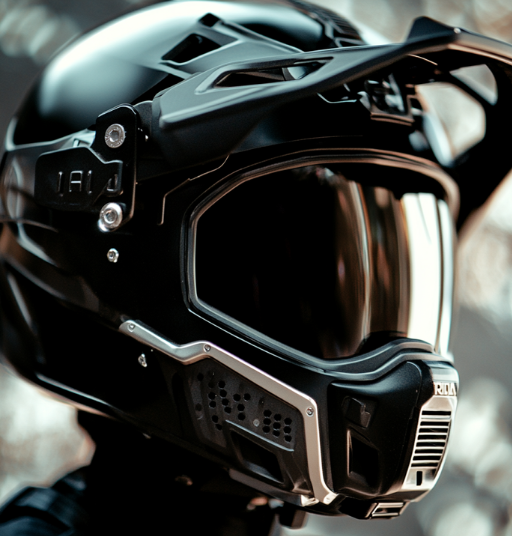

The mount is more important than most riders realise. A high-end camera in a poor mount position produces worse footage than a budget camera mounted correctly. This guide covers every mounting option for helmet cameras — the positioning trade-offs, the hardware that works, and which combinations produce the best results for each riding type.
The Four Main Mount Positions
1. Chin Mount
Position: On the chin bar of a full-face helmet, pointing forward.
Best for: Motorcycle road riding, track days, motocross, mountain biking
Perspective: Close to the rider’s eye line — the most natural, immersive POV
Advantages:
- The chin bar acts as a natural vibration damper — smoother footage than top mounts in many conditions
- Camera is sheltered from wind by the chin bar, reducing wind noise and aerodynamic drag
- Lower risk in a crash — the chin bar protects the camera rather than the camera protruding beyond the helmet
- Best perspective for showing what the rider sees through the visor
Disadvantages:
- Full-face helmets only (without adapter brackets)
- Camera can pick up visor reflections if aimed slightly upward
2. Top Mount
Position: On the top of the helmet, as far forward as the slope allows.
Best for: Cycling, skiing, snowboarding, open-face motorcycle helmets
Perspective: Elevated, overhead-ish view — shows more of the environment around the rider
Advantages:
- Works with any helmet style
- Elevated perspective shows more scenery, better for landscape/environment showcase
- Standard for cycling and snow sports
Disadvantages:
- More aerodynamic drag at highway speeds — can cause discomfort and fatigue on long rides
- More exposure to vibration without chin bar buffer
- In a crash, the camera is exposed and can catch on the ground
3. Side Mount
Position: On the side of the helmet, usually at the temple or ear area.
Best for: B-roll, creative angles, slow-speed activities
Perspective: Offset angle — interesting for variety but unnatural as a primary POV
Advantages:
- Unique angle for variety in edited content
- Can capture rider’s face in frame alongside the road
Disadvantages:
- Significant aerodynamic leverage at speed creates vibration and neck fatigue
- Not suitable as a primary mount for sustained riding above 60 km/h
4. Inside Helmet (Integrated)
Position: Built into the helmet or mounted behind the visor internally.
Best for: Maximum aerodynamics, professional race documentation
Examples: INNOVV H5, Sena 50C with integrated camera
Advantages:
- Zero aerodynamic impact
- No external hardware visible
- Camera is fully protected
Disadvantages:
- Limited to purpose-built systems; not compatible with standard action cameras
- Lower image quality than external cameras in most cases
Mount Hardware: What to Buy
For GoPro Cameras
| Mount | Position | Price | Best For |
|---|---|---|---|
| GoPro Helmet Chin Mount | Chin | ~$50 | Full-face motorcycle helmets |
| GoPro Vented Helmet Strap | Top | ~$20 | Vented helmets, open-face |
| GoPro Curved Adhesive Mount | Top/side | ~$8 | Smooth-shell helmets |
| RAM Mounts + GoPro adapter | Any | ~$35 | Maximum security, track use |
| Peak Design Sports Chin Mount | Chin | ~$60 | Premium, quick-release ecosystem |
For DJI Cameras
| Mount | Position | Price | Best For |
|---|---|---|---|
| DJI Helmet Chin Mount | Chin | ~$29 | DJI magnetic system, full-face helmets |
| ULANZI U-400 | Chin | ~$18 | Budget option, secure for riding |
| Telesin Chin Mount (DJI) | Chin | ~$15 | Best value, adequate for road use |
Helmet Compatibility: Which Mounts Work With Which Helmets
Shoei GT-Air 2, NXR2, X-14: Most chin mounts compatible. GoPro Helmet Chin Mount fits well.
Arai RX-7V, Corsair-X: Arai’s shell geometry can make some chin mounts tighter. Test fit before committing. ULANZI U-400 typically fits well.
Bell Race Star Flex DLX: GoPro Helmet Chin Mount designed with Bell helmets in mind — excellent fit.
AGV Pista GP RR, K6: Most chin mounts compatible. The more rounded chin bar shape gives good clearance.
Shark Spartan GT: Chin mount compatible; the narrow chin bar profile means some mounts need light spacers.
Open-face / three-quarter: Top mounts only. GoPro Vented Helmet Strap is the standard solution.
Anti-Vibration Solutions
For motorcycles with significant engine vibration (large V-twins, high-revving singles, older inline-fours with worn engine mounts):
- GoPro Anti-Vibe Mount (~$20) — rubber-isolated mount designed for exactly this problem. Insert between camera and chin mount base.
- Vibration-absorbing foam pad (~$5–8) — cut to size and place under any adhesive mount to add a vibration buffer layer.
- Switch to chin mount from top mount — the chin bar naturally absorbs more vibration than the top of the helmet.
Using Our Mount Advisor Tool
Every helmet and camera combination is slightly different. Our free Mount Advisor tool takes your helmet brand, model, camera, and riding type and recommends the specific mount hardware that produces the best results for your exact setup.
Frequently Asked Questions
Will a chin mount fit my full-face helmet?
Most chin mounts include multiple adapter plates to fit different chin bar profiles. The GoPro Helmet Chin Mount and ULANZI U-400 both fit 90%+ of full-face helmets. Check our Mount Advisor for your specific helmet model.
Can I use a GoPro mount with a DJI camera?
Yes — DJI cameras include a GoPro-compatible adapter in the box. This opens the entire GoPro mount ecosystem to DJI camera users.
Is it safe to use adhesive mounts on a helmet?
Adhesive mounts can technically void some helmet certifications under strict ECE/DOT interpretations. For daily riding this is usually not a concern. For racing where helmet certification matters to regulations, use a mount that doesn’t adhere to the helmet shell (chin mounts that clamp to the chin bar).
Official resources: GoPro official mount accessories | DJI Osmo Action mount accessories.