From Missed Moment to Masterpiece: The Helmet Camera Revolution
You lean into the turn, the world blurring at the edges of your focus. The light is perfect, the move is flawless—a moment of pure, exhilarating flow. Later, you try to describe it. Words fail. That visceral feeling is gone, preserved only in your fading memory. This is the silent frustration every rider, skier, and adventurer knows: the epic moment lost because your hands were busy controlling the action, not capturing it.
The digital helmet camera is the solution. It is far more than a simple recorder; it is your first-person witness, your robotic film director mounted on your head. It frees you to fully immerse yourself in the experience while it diligently preserves the view from your eyes. But simply turning it on yields shaky, poorly lit clips that no one wants to watch. True mastery transforms that raw potential into cinema.
Mastering your digital helmet camera is the key. It is the disciplined process of turning random, chaotic footage into compelling, high-quality stories. It is the difference between a forgetable video and a legacy you’ll revisit for years.
Building Your Foundation: Hardware and Mounting
Your entire filming enterprise rests on two pillars: the camera you choose and the way you attach it to the world. Compromise here, and you fight an uphill battle for quality before you even hit record.
Camera Selection: Sensor, Resolution, and the Feature Set
Choosing a camera is about matching its core capabilities to your ambition. A budget model captures the event; a well-chosen tool captures the emotion and detail.
Sensor Size: Think of this as the camera’s film plate. A larger sensor captures more light and information. For action cameras, this is the single biggest determinant of image quality, especially in challenging light like forest trails or dusk.
Resolution & Frame Rate: These are your creative dials. 4K resolution captures stunning detail for scenic rides. High frame rates like 120fps at 1080p create buttery-smooth slow motion for analyzing a trick or dramatizing a jump. Many riders standardize on 2.7K or 4K at 60fps—a superb balance of detail and smoothness.
Non-Negotiable Features: Advanced Electronic Image Stabilization (like Hypersmooth or RockSteady) is essential. It turns bumpy handlebar footage into gimbal-smooth tracking shots. Voice control allows you to mark highlights hands-free. These are not luxuries; they are fundamental tools for the modern creator.
Mounting Philosophy: The Science of Perspective and Stability
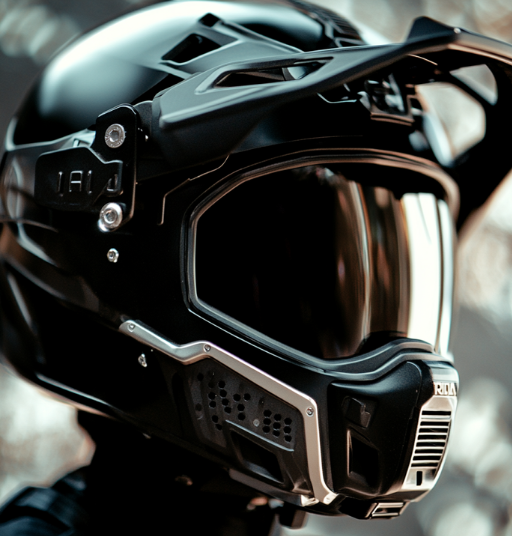
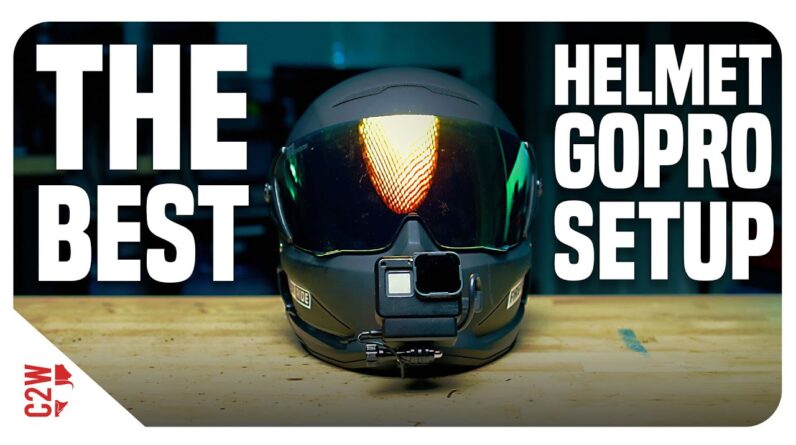
Where and how you mount the camera is your first directorial decision. The classic top-of-helmet mount offers a high, inclusive perspective but can catch low-hanging branches. The chin mount has become the gold standard for motorcycle and MTB riders: it provides a natural, head-tracked view that feels exactly like your vision, with superior aerodynamics and stability.
Your goal is a rock-solid connection. Clean the mounting surface with alcohol, use the adhesive mount designed for your helmet’s curvature, and let it cure for 24 hours before use. A loose mount introduces high-frequency vibration that no stabilization can fully correct, ruining an otherwise perfect clip.
| Component Category | Options | Key Characteristics |
|---|---|---|
| Image Sensor | Small Sensor Large Sensor (e.g., 1/1.7”) |
Standard in entry-level models. Perfectly good in bright daylight. Superior low-light performance and color depth. Provides a wider dynamic range—critical for scenes with both shadows and bright sky. |
| Stabilization | Digital / Electronic Advanced (e.g., Hypersmooth) |
Basic software cropping. Can reduce image quality and field of view. Uses gyroscopic data for real-time adjustment. Delivers remarkably smooth footage essential for biking, skiing, or any dynamic movement. |
| Primary Mount | Helmet Top Chin Bar Side/Chest |
Classic, high perspective. Can feel detached and catches wind/branches. Natural, first-person view. Excellent stability and aerodynamics. The preferred choice for immersive POV. Unique angles for variety. Chest mounts show handlebar movement; side mounts offer a third-person feel. |
The Core System: Managing Your Dynamic Studio
With your hardware secured, you now command a mobile film studio. Master these in-camera variables to consistently capture professional-grade footage, regardless of the chaos around you.
Field of View (FOV): Directing the Audience’s Eye
The FOV setting controls how much of the scene your camera captures. Wide or SuperView captures an immense, immersive sphere—perfect for capturing everything around you on a scenic climb. It can distort edges. Linear or Narrow crops out the extreme edges, removing distortion and providing a more “normal,” cinematic look ideal for technical trails where the focus is the path ahead. I default to Linear for most riding; it feels most like human vision.
Frame Rate & Resolution: The Speed and Detail Dial
This is your strategic choice. Your selection dictates your creative options in post-production.
- For Maximum Detail: Use 4K at 30 or 60fps. This is your master setting for beautiful landscapes and general riding where you want the highest fidelity.
- For Silky Slow Motion: Use 1080p at 120fps or higher. This sacrifices some detail for the ability to slow time by 4x, perfect for emphasizing a jump, crash, or technical move. Mismatching happens when you film fast action in low frame rates—it will look choppy. Or when you try to pull a still image from low-resolution footage—it will be blurry.
Exposure and Color: Controlling Light and Mood
Auto-exposure often fails in high-contrast action scenes, blowing out the sky or drowning the trail in shadow. Take control. Use your camera’s ProTune or LOG flat color profile. This captures a flatter, less saturated image that retains far more detail in shadows and highlights, giving you immense power to color-grade in editing. In very bright conditions, a simple Neutral Density (ND) filter screws onto your lens. It acts like sunglasses, allowing you to use slower shutter speeds and achieve motion blur in wheels and trails, which looks far more natural and professional.
Advanced Practices: The Art of POV Storytelling
Now we shift from technical settings to the craft. This is where you evolve from a recorder to a storyteller.
Preparation: The Non-Negotiable Pre-Ride Ritual
Great footage starts before you leave the garage. My ritual is absolute: format memory cards in the camera, charge all batteries to 100%, clean the lens with a microfiber cloth, and perform a physical tug-test on every mount. This five-minute routine has saved me from countless “card full” or “dead battery” disasters at the peak of a ride.
Ongoing Inputs: Audio and In-the-Moment Composition
Video is half the experience; audio is the other half. The built-in microphone often captures only wind roar. A simple wired lavalier mic tucked into your helmet liner captures your breathing, your reactions, and clear commentary. Use voice commands to mark highlights—shouting “That was awesome!” creates a chapter point in your footage for easy finding later. Even in a POV shot, be mindful of composition. Glance toward a trailside feature to guide the viewer’s eye; it creates a more engaging scene than a static, dead-ahead stare.
Editing Strategy: From Hours of Clips to a Five-Minute Epic
This is where your story is built. First, use multiple angles if possible. A chin-mount POV paired with a handlebar or rear-facing shot creates professional dynamism. When editing, sequence shots to establish a narrative: a wide scenic shot sets the location, the POV shows the challenge, and a slow-motion close-up emphasizes the triumph. Finally, integrate data overlays from your bike computer or GPS watch—a small map or speed graph in the corner adds authentic context and stakes to your journey.
Threat Management: A Proactive Defense
Corrupted files and lost moments are heartbreak. Adopt a preventative mindset to keep your system reliable.
Prevention: The Culture of Care
Always format your memory card in the camera after transferring files. This ensures file system compatibility. Keep firmware updated for bug fixes and new features. Store cameras and batteries in a dry, room-temperature environment. Use a protective lens cover or case when not filming. These simple habits build a fortress of reliability around your gear.
Intervention: The Tiered Troubleshooting Guide
When problems strike, follow this escalating response plan:
- Basic Reset: Power cycle the camera. Remove and reinsert the battery.
- Media Check: Try a different, high-speed, branded memory card (V30 rating or higher). Corrupted cards are the most common failure point.
- Deep Clean: Perform a full factory reset and reinstall the latest firmware via the manufacturer’s app.
- Seek Support: If the issue persists, contact support with your specific error codes. Avoid amateur “fixes” that could void your warranty.
| Phase | Primary Tasks | What to Focus On |
|---|---|---|
| Pre-Ride / Preparation | Charge all batteries. Format memory cards in-camera. Secure and angle all mounts. Set intended resolution/frame rate. Clean lens. | System readiness and a clear mental plan for the shots you want to capture. |
| During the Ride / Capture | Use voice commands to tag highlights. Switch cameras/angles if using multiple mounts. Monitor battery life for long rides. | Seamlessly capturing key moments and supplemental “B-roll” footage (scenic shots, details) without breaking your flow. |
| Post-Ride / Processing | Offload and organize footage immediately. Back up raw files to a second drive. Perform a quick edit of the best 90-second highlight reel. | Preservation of your assets and rapid sharing of a compelling teaser to engage your audience while the experience is fresh. |
Your Legacy, Perfectly Framed
A digital helmet camera, mastered, is more than a gadget. It is a tool for intentional, controlled storytelling from the most compelling perspective possible—your own. The journey moves from selecting the right sensor and securing it firmly, through the disciplined management of light and frame rate, to the final art of weaving clips into a narrative that stirs emotion.
The transformation is profound. The frustration of the missed moment is replaced by the profound satisfaction of reliving your journey exactly as you felt it: the glance at the summit, the tension before the drop, the rush of speed through the trees. You are not just recording an activity; you are preserving a feeling, building a legacy of your adventures, and sharing a vision of the world that only you have. That is the unparalleled joy of mastery.