Best Budget Action Cameras for Motorcycle Riders: Top 5 Under $200

✅ TOP 5 Best Budget Action Cameras 2023

You do not need to spend $400 to get a genuinely capable helmet camera. The budget end of the action camera market has become competitive enough that $150-$200 buys stabilization and image quality that used to require a flagship model. Here are five options at this price point, compared on published specifications. Prices are approximate and change often.

Models covered: the cameras named in this guide. Manufacturers release new models regularly, so check current lineups, specifications and prices on the manufacturer pages before buying.

1. DJI Osmo Action 3 — Best Overall Under $200

Price: $99-$149 | Resolution: 4K120 / 1080p240 | Stabilization: RockSteady 3.0 | Waterproof: 16m without housing

The Osmo Action 3 is a compelling budget action camera for motorcycle riders. At roughly $99-$149 (older stock is often discounted below its launch price), it offers 4K120 slow motion, dual front and rear screens, magnetic mounting, and a 16-metre waterproof rating that is deeper than GoPro’s at this price point.

Cold weather battery performance is its strongest card against GoPro at this price. DJI rates the Osmo Action 3 for reliable operation down to -20°C, and user reports back this up in sub-zero conditions. Battery life at 4K60 is approximately 90 minutes in normal conditions, per DJI’s published specifications. Full details in our DJI Osmo Action 3 review.

2. GoPro Hero (2024) — Best GoPro Under $200

Price: $199 | Resolution: 4K30 / 1080p60 | Stabilization: HyperSmooth 6.0 | Waterproof: 10m without housing

GoPro’s entry-level Hero (2024) at $199 brings HyperSmooth 6.0 — the same stabilization engine as the $399 Hero 13 Black — to a budget body. For motorcycle use where stabilization is the most important technical specification, this is a strong value proposition. The compromises are real: 4K30 maximum, no front screen, and a smaller sensor than the Black models. For a rider who wants clean, stable riding footage at a reasonable price without caring about slow-motion, it is the right GoPro to buy.

3. Insta360 GO 3S — Best Compact Option

Price: $179 | Resolution: 4K30 | Stabilization: FlowState | Weight: 35g camera module

The Insta360 GO 3S is genuinely tiny — 35 grams for the camera module — making it the least intrusive helmet camera you can buy. It uses a magnetic attachment system and sits flush against a helmet surface. Trade-offs: the small sensor means lower image quality than the cameras above in anything other than bright daylight, and the 45-minute battery life limits it for long rides. Best suited for riders who want a camera that is barely there, not for those prioritising raw footage quality.

4. Akaso Brave 8 — Cheapest Capable Option

Price: $80-$100 | Resolution: 4K60 | Stabilization: EIS | Waterproof: 10m with housing

If $150 is still too much, the Akaso Brave 8 at $80-$100 is the best of the very budget options. It shoots 4K60, has basic electronic stabilization, and is waterproof to 10m with the included housing. Important caveat: the stabilization is noticeably inferior to GoPro HyperSmooth or DJI RockSteady. At highway speeds, footage will have more micro-jitter. For slow speed filming or occasional use this is acceptable, but for regular riding documentation the DJI Osmo Action 3 is a meaningfully better tool.

5. GoPro Hero 12 Black (Discounted) — Best Value If On Sale

Price: $200-$280 (watch for sales) | Resolution: 5.3K60 / 4K120 | Stabilization: HyperSmooth 6.0

The Hero 12 Black has been succeeded by newer models, so it is often available at a lower price than at launch. If you can find it at a substantial discount, it is one of the better-value flagship options and is worth comparing with the base Hero (2024).

Which Should You Buy?

For most motorcycle riders at this price point: DJI Osmo Action 3 at $99-$149. The combination of 4K120, dual screen, magnetic mounting, cold weather performance, and 16m waterproofing at that price is genuinely difficult to beat. If you are committed to the GoPro ecosystem or already own GoPro mounts, the Hero (2024) at $199 is the right call.

See our full best helmet camera guide for the complete ranking including premium models above $200.

Frequently Asked Questions

What is the best action camera under $150 for motorcycles?

The DJI Osmo Action 3 at $99-$149. 4K120, magnetic mounting, dual screen, and 16m waterproofing make it the clear choice at this price.

Is it worth spending more than $200 on a helmet camera?

For most riders, no. The jump from $200 to $400 buys higher resolution and better low-light performance — improvements that matter for content creators but are invisible in daily riding documentation footage.

Are cheap action cameras reliable enough for accident documentation?

Yes, if you use a camera from a reputable brand (DJI, GoPro, Insta360). Avoid no-name cameras — their continuous recording reliability is not tested to the same standard.

Reviewed by the Digital Helmet Cameras Editorial Team. Compiled from manufacturer specifications; prices are approximate and change often; check current listings.

Official resources: DJI Osmo Action 3 official page | GoPro Hero 11 Black.

DJI Action Camera Review: Osmo Action 3, 4 & 5 Pro for Motorcycle Riding

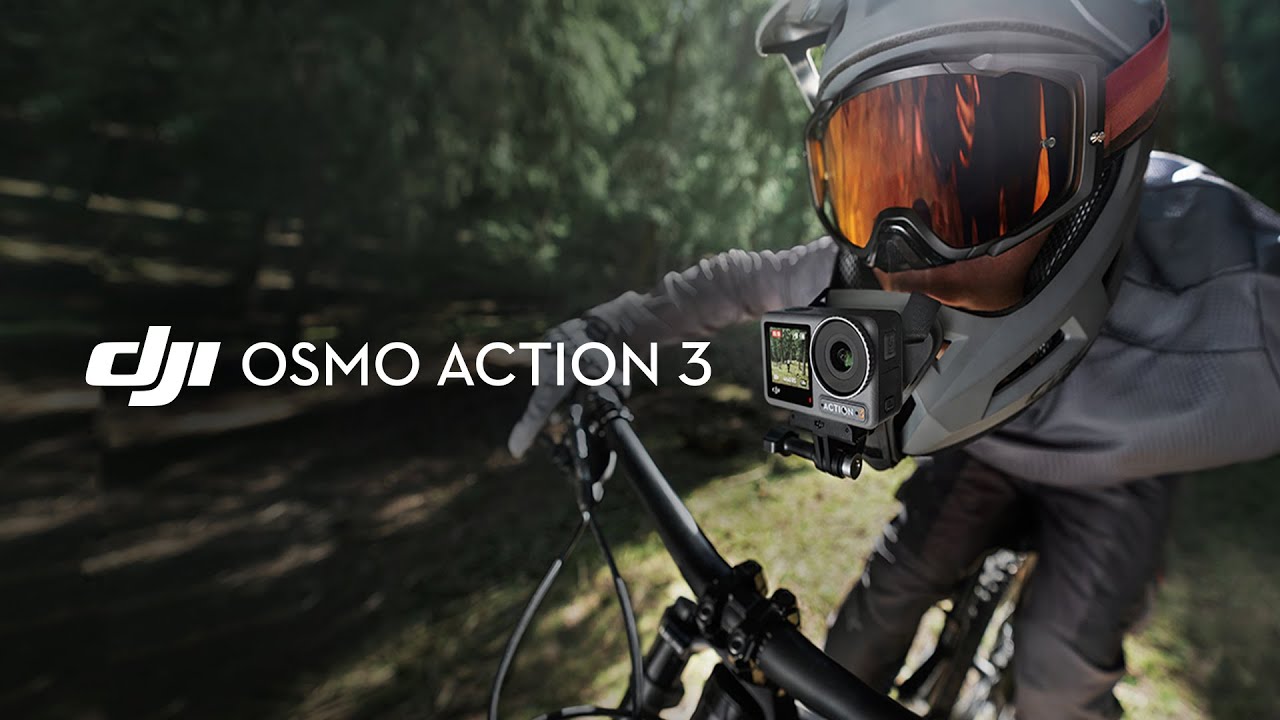
DJI - Introducing DJI Action 2

DJI entered the action camera market in 2019 and has consistently challenged GoPro’s dominance with better battery life, competitive stabilization, and a dual-screen design that makes setup easier. This guide covers every current DJI action camera worth considering for motorcycle helmet use, their specifications, and who each camera is best suited to.

DJI has released newer Osmo Action models since this comparison was written (the Osmo Action 6 is now listed on DJI’s site). The models below remain useful for value comparisons, but check DJI’s current lineup and specifications before buying.

DJI Action Camera Lineup: Models Compared

Model Max Resolution Battery Life Sensor Price
Osmo Action 5 Pro 4K/120fps ~130 min (4K/60fps) 1/1.3″ ~$269
Osmo Action 4 4K/120fps ~100 min (4K/60fps) 1/1.3″ ~$199
Osmo Action 3 4K/120fps ~95 min (4K/60fps) 1/1.7″ ~$149

DJI Osmo Action 5 Pro: Best DJI Camera for Motorcycle Use

Key Specifications

  • Sensor: 1/1.3 inch — the largest in any action camera at this price point
  • Max video: 4K/120fps, 2.7K/120fps, 1080p/240fps
  • Stabilization: RockSteady 4.0 with Horizon Steady
  • Battery capacity: 1,950 mAh — largest action camera battery currently available
  • Battery life: ~130 min at 4K/60fps; ~160 min at 1080p/60fps
  • Waterproof: 20m without housing — best-in-class waterproofing
  • Weight: 179g with battery
  • Dual screen: 2.25″ rear touchscreen + 1.3″ front screen
  • Price: ~$269 (camera only), ~$369 (Adventure Combo)

Why Motorcycle Riders Choose the Action 5 Pro

Battery life: 130 minutes of 4K/60fps recording is the most of any action camera in this price range. For touring riders, this means a complete morning ride without battery changes. For commuters, it covers a full week of daily commutes (30 min × 5 days) on a single charge.

1/1.3-inch sensor: A larger sensor captures more light, which translates to better dynamic range. For motorcyclists who ride at dawn and dusk, or through areas with rapid light changes (tunnel exits, tree-lined roads), the Action 5 Pro handles these conditions better than smaller-sensor cameras.

20m waterproofing: Industry-leading for an action camera without a housing. Riding in heavy rain, river crossings on adventure bikes, and water sports are all handled without any additional case.

Best Settings for Motorcycle Use

Standard road riding:

  • 4K / 60fps
  • RockSteady 4.0 ON
  • Horizon Steady ON
  • Wide FOV
  • D-Cinelike colour profile (if editing) / Standard (if uploading direct)

Long-distance touring:

  • 2.7K / 60fps (saves ~30% storage and battery vs. 4K)
  • RockSteady ON, Horizon Steady ON
  • Loop recording not available — manage storage manually or use a 256GB card

Track days / performance riding:

  • 4K / 120fps
  • RockSteady Standard (Boost mode has limitations at 4K/120fps)
  • Normal FOV (less distortion for technique analysis)

DJI Osmo Action 4: The Value Sweet Spot

The Action 4 dropped to ~$199 after the Action 5 Pro launched — making it exceptional value. It uses the same 1/1.3-inch sensor as the Action 5 Pro, shoots 4K/120fps, and has RockSteady 3.0 stabilization. The main differences vs. the Action 5 Pro:

  • Battery life: ~100 min vs. 130 min (Action 5 Pro wins)
  • Stabilization: RockSteady 3.0 vs. 4.0 (marginal in real-world use)
  • Waterproofing: 18m vs. 20m (irrelevant for motorcycle use)
  • Price: ~$70 less

Verdict: If battery life isn’t a deciding factor (rides under 90 minutes), the Action 4 at $199 represents better value than the Action 5 Pro at $269.

DJI Osmo Action 3: Best Budget DJI Camera

Now available for ~$149, the Action 3 remains one of the best value motorcycle cameras on the market. It doesn’t have the 1/1.3-inch sensor of the newer models (it uses 1/1.7-inch), but the 160-minute battery life at 1080p is still best-in-class at its price point. For riders who don’t need 4K or the best low-light performance, the Action 3 covers all practical riding scenarios.

DJI vs. GoPro: The Honest Comparison

The two-brand rivalry is genuine — both are excellent, and the “right” choice depends on priorities:

Priority Choose DJI Choose GoPro
Battery life ✅ DJI wins
Low-light performance ✅ DJI (larger sensor)
Dual screen ✅ DJI standard
Max resolution ✅ GoPro (5.3K vs. 4K)
Mount ecosystem ✅ GoPro has more options
Modular accessories ✅ GoPro Media Mod, lenses
Stabilization in vibration Equivalent Equivalent

Use our Camera Recommender tool to get a specific GoPro vs. DJI recommendation based on your riding style — it takes 60 seconds and factors in the details that matter for your situation.

Mounting DJI Action Cameras on a Motorcycle Helmet

DJI’s magnetic quick-release system uses a proprietary mount but includes a GoPro-compatible adapter, so the full GoPro mount ecosystem is available.

Recommended mounts for DJI cameras:

  • DJI Helmet Chin Mount (~$29) — designed for DJI cameras specifically; quick magnetic release
  • ULANZI U-400 Chin Mount (~$18) — budget alternative; secure, compatible with DJI magnetic system
  • Telesin Helmet Chin Mount for DJI (~$15) — best value option
  • Any GoPro mount + DJI GoPro adapter — opens the full GoPro accessory range

Frequently Asked Questions

Is DJI Osmo Action 5 Pro better than GoPro Hero 13?

For battery life and low-light performance: yes. For maximum resolution, mount ecosystem, and modular accessories: no. They are roughly equivalent for the core use case of 4K/60fps motorcycle footage with stabilization. Your decision should come down to which secondary features matter more to you.

Does the DJI Osmo Action camera work underwater?

The Action 5 Pro is rated to 20 metres without housing — suitable for swimming, snorkelling, and rain riding. The Action 4 is rated to 18 metres. Neither requires an additional underwater housing for the conditions motorcycle riders typically encounter.

Can I use the DJI Mimo app for remote control while riding?

The DJI Mimo app connects over Wi-Fi and provides remote control, live preview, and settings adjustment. It’s not safe to use while riding — use it at the start/end of a ride for framing and settings confirmation. The front-facing screen on DJI cameras allows on-helmet framing checks without the app.

Official resources: DJI Osmo Action 3 | DJI Osmo Action 4 | DJI Osmo Action 5 Pro.

What Is a Digital Helmet Camera? Complete Guide for Motorcycle Riders

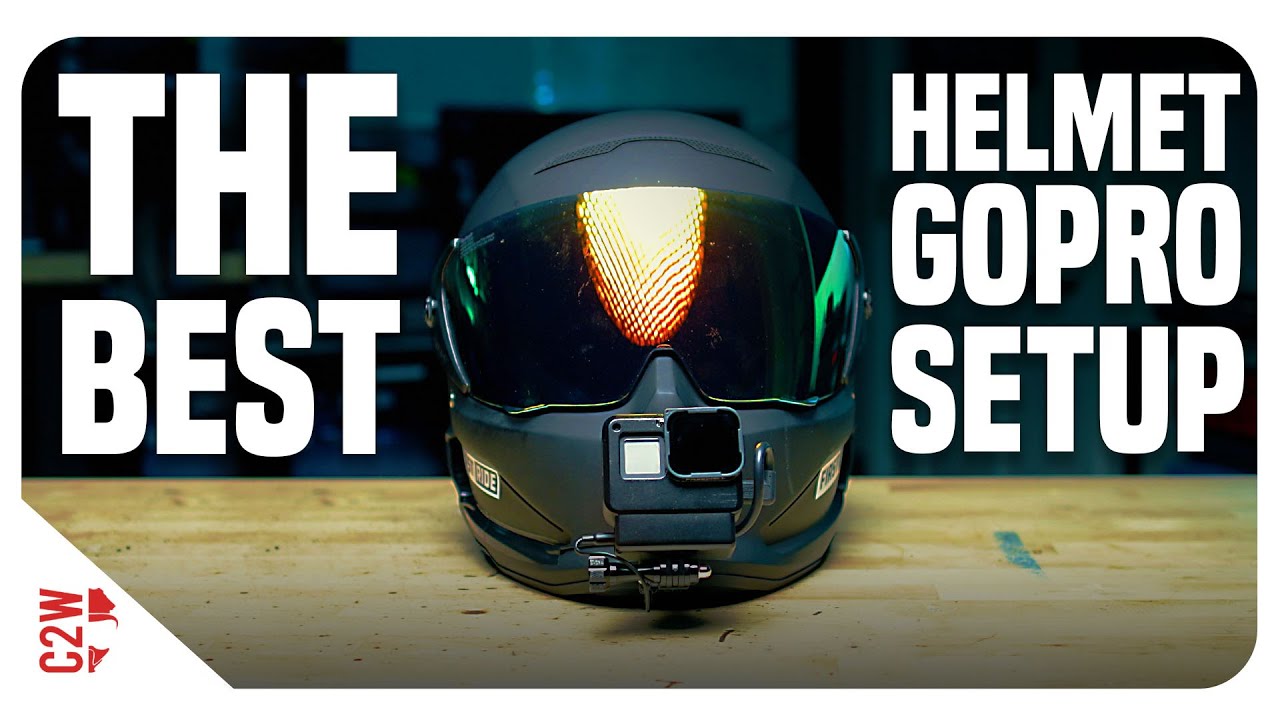
THIS is THE BEST Helmet GoPro Setup!! | Motorcycle Helmet Camera

A helmet camera turns every ride into footage you can watch, share, and learn from. Whether you’re a daily commuter who wants protection in case of an incident, an adventure rider documenting remote roads, or a motovlogger building an audience on YouTube, a helmet camera changes how you experience and remember riding. This guide explains exactly what helmet cameras are, how they work, and how to choose the right one.

What Is a Digital Helmet Camera?

A digital helmet camera is a compact action camera or purpose-built device mounted to a motorcycle, cycling, or sports helmet to record point-of-view video footage. The camera captures your perspective — what you see through the visor — creating first-person footage that’s become one of the most popular formats in motorcycle and action sports content.

Modern helmet cameras are waterproof, shock-resistant, and capable of recording in 4K resolution with electronic image stabilization that compensates for vibration, bumps, and camera movement. They’re small enough to mount without significantly affecting aerodynamics and light enough that you don’t feel them during a ride.

The Main Types of Helmet Cameras

General-Purpose Action Cameras

The most common type. Cameras like the GoPro Hero 13 Black, DJI Osmo Action 5 Pro, and Insta360 X5 are designed for any action sport but are widely used for helmet mounting. They offer the best image quality, the widest accessory ecosystems, and the most mount options.

Best for: Riders who want the best image quality and use the camera across multiple activities.

Purpose-Built Motorcycle Cameras

Cameras designed specifically for motorcycle use. Examples include the Techalogic DC-1 (dual-lens front/rear recording) and INNOVV H5 (integrated into the helmet). These prioritise continuous recording, loop recording, and incident detection over cinematic quality.

Best for: Commuters and riders who want always-on safety recording without managing files.

360-Degree Cameras

Cameras with lenses on both sides that capture a complete 360° sphere. The Insta360 X5 is the leading example. You choose your viewing angle in post-production, which allows you to reframe any shot after the fact. A 360° camera on a helmet can simultaneously capture front, side, and rear perspectives from a single recording.

Best for: Content creators who want maximum flexibility and the ability to create dynamic, reframeable footage.

How to Choose a Helmet Camera

Step 1: Define Your Primary Use Case

Use Case Recommended Camera Type Key Feature
Daily commuting / safety recording Purpose-built (Techalogic DC-1) Loop recording, dual lens, simple operation
YouTube motovlogging Action camera (GoPro Hero 13) 4K quality, HyperSmooth, mic compatibility
Adventure touring Action camera (DJI Osmo Action 5 Pro) Battery life, waterproofing, dual screen
Track days / racing Action camera (GoPro Hero 13) 120fps, GPS overlay, proven durability
Instagram Reels / TikTok content 360° (Insta360 X5) Reframeable footage, invisible selfie stick

Step 2: Know Your Helmet Type

Your helmet determines what mounting options are available:

  • Full-face: All mount options available — chin mount (best), top mount, side mount
  • Open-face: Top mount and side mount only; chin mounts require a half-visor extension bracket
  • Modular/flip-front: Top mount works well; chin mount requires compatible chin bar adapter
  • Half helmet: Top mount only; limited to cameras with compact form factors

Step 3: Set a Realistic Budget

The honest breakdown by budget tier:

  • Under $100: Generic no-name cameras — avoid for motorcycle use. Stabilization fails at speed and quality is inadequate.
  • $150–200: GoPro Hero (entry-level), older Insta360 GO 2, Techalogic DC-1. Acceptable for commuting and basic documentation.
  • $200–300: DJI Osmo Action 3/4, GoPro Hero 12. The value sweet spot — genuine 4K stabilization at a reasonable price.
  • $300–400: GoPro Hero 13 Black, Insta360 GO 3S. The best all-round cameras for most riders.
  • $400–500: Insta360 X5, DJI Osmo Action 5 Pro. Premium options for serious content creators.

Key Specifications Explained

Image Stabilization

The most important spec for motorcycle use. Modern EIS systems (GoPro HyperSmooth, DJI RockSteady) analyse motion thousands of times per second and digitally compensate. Look for cameras with named stabilization systems — generic “EIS” without a version number usually means basic or ineffective stabilization.

Waterproofing

Look for IP67 or IP68 rating, or the manufacturer’s stated depth rating without a housing. The GoPro Hero 13 and DJI Osmo Action 5 Pro are both waterproof to 10–11 metres without any additional case.

Field of View

Measured in degrees. Wider = more of the scene captured, but more fisheye distortion at the edges. For motorcycle use, 120°–135° (Wide/Linear setting) gives an immersive view without excessive distortion. SuperWide (155°+) is better for action sports where context matters more than accuracy.

Popular Helmet Camera Brands

  • GoPro — the original action camera company; widest accessory ecosystem; Hero 13 Black is the current flagship
  • DJI — dominant drone manufacturer; Osmo Action 5 Pro has the best battery life in class
  • Insta360 — pioneers of 360° cameras; X5 and GO 3S are their flagship action cameras
  • Techalogic — UK-based motorcycle specialist; DC-1 is the leading purpose-built motorcycle helmet camera
  • INNOVV — motorcycle-specific cameras; H5 integrates inside helmet; K6 is a motorcycle dashcam system
  • Sena — primarily Bluetooth headsets; 50C integrates camera and comms in one unit

Getting Started: Next Steps

If you’re new to helmet cameras, the fastest route to the right camera is our AI Camera Recommender — it takes 60 seconds, asks about your helmet type, riding style, and budget, and gives you a specific recommendation with current pricing.

Already know which camera you want? Check our Mount Advisor tool to find the best mount for your specific helmet and camera combination.

Frequently Asked Questions

Are helmet cameras legal?

In most countries and US states, yes — there are no laws specifically banning helmet cameras. Audio recording laws vary by state. Some jurisdictions have specific rules about protruding objects on helmets. See our dedicated legal guide for details.

Will a helmet camera affect my helmet’s safety rating?

Adhesive mounts that bond to the helmet shell can technically void some helmet certifications under strict interpretation. Chin mounts that clamp to the chin bar without modifying the shell generally do not. If certification integrity is critical (racing regulations, insurance), use a mount that doesn’t modify the helmet.

How much storage do I need?

At 4K/60fps, most action cameras record approximately 4–5 GB per hour. A 128GB card gives you 25–30 hours of recording — adequate for any ride. Use a V30-rated microSD card (SanDisk Extreme or Samsung PRO Endurance) to avoid recording errors at high bitrates.

Official resources: GoPro action cameras | DJI action cameras | Insta360 action cameras.

DJI Osmo Action 3 Setup Guide: Best Settings & Mounting for Motorcycle Riders

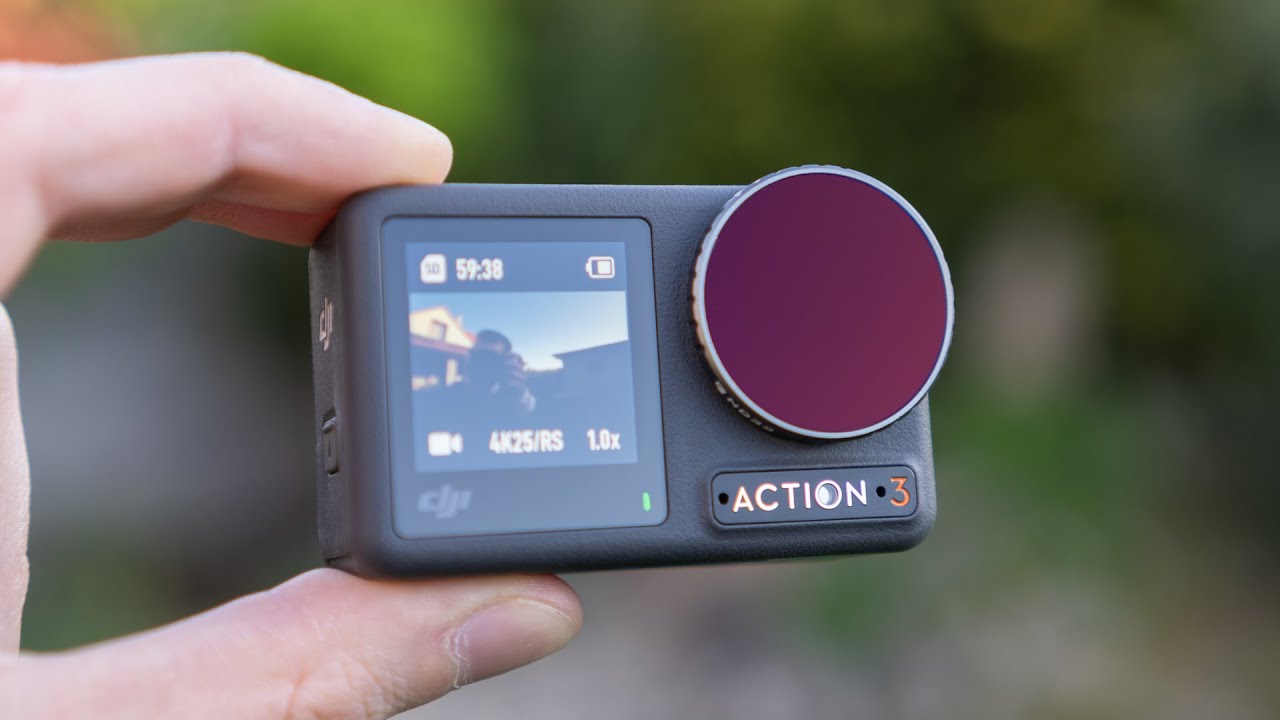
DJI - This is Osmo Action 3

You’ve got a DJI Osmo Action 3 mounted on your helmet and you’re getting shaky, washed-out, or audio-ruined footage. The camera is capable of excellent results — but the default out-of-box settings are not optimised for motorcycle use. This guide walks through setup, settings, and the specific adjustments that make the difference between amateur and professional-looking ride footage.

Step 1: Choose the Right Mount Position

Before touching a single camera setting, your mount position determines 80% of your footage quality. The wrong position means no amount of stabilization or settings will save it.

Chin Mount (Recommended for Most Riders)

Position: on the chin bar of a full-face helmet, centred or slightly offset.
Why it works: Close to your eye line, sheltered from wind by the chin bar (reducing both noise and vibration), and the most natural perspective for viewers.
Best chin mounts for the Action 3: DJI Helmet Chin Mount ($29), ULANZI U-400 (~$18), Telesin Chin Mount (~$15).

Top Mount (Open-Face and Modular Helmets)

Position: on the top of the helmet, as far forward as possible without exceeding the helmet’s slope.
Why it works: The only practical external option for open-face and modular helmets. Elevated perspective shows more road and scenery.
Downside: More aerodynamic drag at speed; slightly more vibration without the chin bar buffer.

Step 2: Core Camera Settings for Riding

Open the DJI Mimo App First

Before your first ride, connect the Action 3 to the DJI Mimo app (iOS/Android) and update firmware. DJI regularly releases stabilization improvements via firmware — skipping this means potentially running outdated stabilization software.

The Settings That Matter

Resolution and Frame Rate
Set: 4K / 60fps for all standard riding. This gives smooth motion and enough resolution for cropping.
For slow-motion analysis of technique: 2.7K or 1080p / 120fps. True 4K/120fps is not available on the Action 3 (it was added on the Action 4).

Stabilization
Turn on: RockSteady 3.0. This is the electronic stabilization — it must be manually enabled each time, it doesn’t default to ON.
Also enable: Horizon Steady. This runs independently from RockSteady and keeps the horizon level even if the camera tilts. Set to ±45°.

Field of View
Use: Wide (not Ultrawide) for road riding. Ultrawide creates barrel distortion that makes straight roads look curved, and at high speeds the visual distortion becomes disorienting. Switch to Ultrawide for off-road or adventure riding where the wider view adds context to the terrain.

Shutter Speed
The shutter speed rule for video: set to double the frame rate.
At 60fps → use 1/120s
At 120fps → use 1/240s
This gives natural motion blur that matches how our eyes perceive movement. Using a faster shutter makes motion look stuttery; slower makes it look smeared.

ISO
In full daylight: Set ISO max to 800.
Overcast/changing light: 3200.
Dawn/dusk/night riding: 6400.
Lower ISO = less grain in bright conditions. Higher ISO = more light in dark conditions but more noise in the image.

White Balance
Leave on Auto for most riding — the Action 3’s auto white balance is reliable. Set it manually (5600K) only if you’re recording in artificial light (underground car parks, tunnels) where auto tends to drift.

Color Profile
Normal colour: if you’re posting footage directly to Instagram/YouTube without editing.
D-Cinelike: if you’re colour grading in DaVinci Resolve or Premiere. This flat profile retains more dynamic range for post-production.

Step 3: Fix Audio — The Most Overlooked Issue

Internal microphone performance degrades significantly above 80 km/h due to wind noise. Your options:

  • Option A (best): DJI Mic Mini — clips inside the helmet liner near your chin, connects wirelessly to the Action 3. Clear audio at any speed. ~$89.
  • Option B: Foam windscreen — a custom-fit foam cover over the Action 3’s built-in microphone reduces wind noise by ~50%. Third-party covers cost ~$5–10 on Amazon.
  • Option C: Record audio separately — Bluetooth headset audio (Sena, Cardo) recorded from inside the helmet, synced in editing. Best quality but requires editing work.

Step 4: Pre-Ride Checklist

Run through this before every ride to avoid wasting storage or missing footage:

  1. Check battery level — charge if below 50% for rides over 45 minutes
  2. Confirm microSD has enough free space (4K/60fps uses ~4GB/hour)
  3. Confirm stabilization (RockSteady) is ON — it doesn’t persist between power cycles in some firmware versions
  4. Check mount security — pull gently on the camera in all directions
  5. Start recording, check the front screen confirms the footage looks level and framed correctly
  6. Verify audio is picking up correctly with a 10-second test clip

Step 5: Getting Better Footage on the Ride

Vary your speed when filming interesting scenery — faster looks more dramatic; slowing down makes landscape shots feel cinematic. If you have a passenger or ride with others, a following shot at constant speed looks professional.

Use the DJI Mimo app’s timelapse mode for layby shots while you take a break — the camera handles the rest and you get a cinematic landscape clip.

Don’t stop recording at every red light — the urban environment at a standstill is actually interesting context for ride content. Let it roll.

For personalised settings based on your specific riding conditions, use our free Footage Settings Optimizer tool — enter your camera model, typical riding conditions, and content goals to get exact recommended settings.

Frequently Asked Questions

Why is my Osmo Action 3 footage shaky even with RockSteady on?

Most likely causes: (1) RockSteady wasn’t applied at recording — it must be turned on before recording starts, not after. (2) The mount is loose — check that the Action 3 is fully clicked into the mount and the mount itself is secure to the helmet. (3) High-frequency vibration from a specific engine type can occasionally defeat EIS — try a secondary anti-vibration mount pad under the base.

How do I transfer footage from the Action 3 to my phone?

Connect via the DJI Mimo app over Wi-Fi. Enable the Action 3’s Wi-Fi from the settings menu, find it in your phone’s Wi-Fi list (named “DJI_Action3_XXXX”), then open Mimo to access and transfer files. Transfer speed over Wi-Fi is around 10–15 MB/s, so a 4GB clip takes about 4–5 minutes.

Can I use the Osmo Action 3 in rain?

Yes — it’s waterproof to 11 metres without any additional housing. Rain riding is not a concern. Clean the lens after a wet ride with a microfibre cloth to prevent water spot residue.

Official resources: DJI Osmo Action 3 user manual and downloads | DJI Store.

DJI Osmo Action 3 Review: Best Value Motorcycle Helmet Camera

DJI Osmo Action 3 - Ready To Ride

The DJI Osmo Action 3 launched in September 2022 and disrupted the action camera market by delivering genuinely competitive stabilization and the longest battery life in its class — at a lower price than GoPro. Now available for around $149–169, it represents exceptional value for motorcycle riders. Here’s an honest, spec-accurate review.

The Osmo Action 3 is an older model and DJI has since released newer Osmo Action cameras. This review is best read as a value comparison; check availability and DJI’s current lineup before buying.

Camera reviewed: DJI Osmo Action 3 | Typical price: roughly $149–169 (varies; check the current listing)

DJI Osmo Action 3: Full Specifications

Spec Osmo Action 3
Sensor 1/1.7-inch, 12MP
Max Video 4K/120fps, 2.7K/120fps, 1080p/240fps
Stabilization RockSteady 3.0 + Horizon Steady
Field of View 155° (Ultrawide) / 122° (Wide) / 86° (Normal)
Battery Life ~160 min at 1080p/60fps — longest in class
Waterproof 11m without housing
Dual Screen Yes — 2.25″ rear + 1.4″ front
Weight 145g with battery
Operating Temp -10°C to 40°C
Current Price ~$149–169 (Adventure Combo ~$199)

Why Motorcycle Riders Are Choosing the Osmo Action 3

Battery Life That Outlasts Long Rides

At 160 minutes of recording at 1080p/60fps, the Osmo Action 3 is the only action camera in this price range that can handle a full morning ride without a battery change. GoPro Hero 11 manages ~70 minutes at comparable settings. For touring riders, commuters, and anyone who doesn’t want to stop mid-ride to swap batteries, this is the deciding factor.

At 4K/60fps, expect around 95 minutes — still significantly better than the competition. A USB-C power bank connection extends recording indefinitely.

RockSteady 3.0: Real Stabilization Performance

DJI’s RockSteady 3.0 electronic image stabilization handles motorcycle vibration effectively at highway speeds. The Horizon Steady mode keeps the horizon level through ±45° of camera tilt — useful when mounts settle or shift over long rides.

Manufacturer claims and published comparisons suggest the Osmo Action 3 and GoPro Hero 11 (HyperSmooth 5.0) deliver broadly comparable stabilization at highway speeds. Real-world results vary by mount, helmet and road surface.

Dual Screen for Angle Confirmation

The 1.4-inch front-facing touchscreen is a practical feature for motorcycle use: you can confirm your framing after mounting without removing the camera from the helmet. GoPro cameras require the Quik app or a separate monitor to do the same thing.

Best Settings for Motorcycle Use

Road Riding / Motorway

  • Mode: 4K / 60fps
  • Stabilization: RockSteady 3.0 ON
  • Horizon Steady: ON
  • FOV: Wide (less distortion than Ultrawide, better for road footage)
  • Color: D-Cinelike if you edit; Normal if straight-to-social
  • ISO Max: 6400 (daytime) — lower if bright conditions create noise

Track Day / Performance Riding

  • Mode: 4K / 120fps (for slow-motion technique analysis)
  • Stabilization: RockSteady Standard (Boost crops in too much)
  • Shutter: 1/240s at 120fps
  • FOV: Normal or Wide

Adventure / Dual Sport

  • Mode: 2.7K / 60fps
  • Stabilization: RockSteady 3.0 + Horizon Steady ON
  • FOV: Ultrawide (captures more trail/scenery on both sides)

Osmo Action 3 vs. Osmo Action 4 vs. Action 5 Pro: Which to Buy?

Action 3 Action 4 Action 5 Pro
Price ~$149 ~$199 ~$269
Sensor size 1/1.7″ 1/1.3″ 1/1.3″
Max resolution 4K/120fps 4K/120fps 4K/120fps
Battery (4K/60fps) ~95 min ~100 min ~130 min
Low light Good Better (larger sensor) Best in class
Stabilization RockSteady 3.0 RockSteady 3.0 RockSteady 4.0

Buy the Action 3 if budget is the priority — it covers 95% of riding scenarios at the best price per performance. Buy the Action 4 or 5 Pro if you ride frequently at dawn/dusk/night where the larger sensor’s low-light advantage matters.

Mounting the Osmo Action 3 on a Motorcycle Helmet

The Action 3 ships with DJI’s magnetic quick-release mount system. For helmet use, the recommended approach:

  • Chin mount: DJI’s Helmet Chin Mount is compatible with the Action 3 and 4. Third-party options from ULANZI and Telesin also work and are cheaper (~$15–20 vs. DJI’s $29).
  • Top mount: DJI’s Action Camera Universal Mount clips to vented helmet straps. Use a thin foam pad under the adhesive mount on smooth helmets.
  • GoPro adapter: The Action 3 uses a standard 1/4″-20 thread and GoPro-compatible mount, so the entire GoPro accessory ecosystem is compatible.

Verdict

The DJI Osmo Action 3 is a strong-value motorcycle helmet camera among the models compared here. At around $149, it offers 4K stabilization, long rated battery life and a dual-screen design at a price well below the GoPro Hero 13. The main reasons to pay more for the Hero 13 are if you specifically need 5.3K resolution or the expanded modular lens ecosystem.

Use our free Settings Optimizer to dial in the exact configuration for your DJI Osmo Action 3 and riding conditions.

Frequently Asked Questions

Is the DJI Osmo Action 3 waterproof?

Yes — rated to 11 metres without a housing. It handles rain riding, river crossings, and water sports without any additional protection.

What memory card does the Osmo Action 3 need?

A V30-rated microSD card minimum for 4K recording. SanDisk Extreme 128GB or Samsung PRO Endurance 128GB are the most reliable options. Avoid budget cards — they cause recording errors at high bitrates.

Can I use GoPro mounts with the DJI Osmo Action 3?

Yes — DJI includes a GoPro-compatible adapter in the box, so it works with any GoPro mount system including GoPro’s own chin mounts and third-party RAM mounts.

Official resources: DJI Osmo Action 3 official page | Full specifications.

DJI Osmo Action 3 for Motorcycle Riding: Long-Term Durability Considerations

DJI OSMO ACTION 3 Long Term Review

Reviewed by the Digital Helmet Cameras Editorial Team. Based on manufacturer specifications and publicly available user feedback; not independent lab or road testing. Prices and availability change, so check current listings.

Why Long-Term Use Matters

Most action camera reviews are written within days of unboxing. That is useful for specs and first impressions, but it says less about what matters for motorcycle riders: how a camera holds up after months of engine vibration, UV exposure, temperature cycling and regular use. This guide looks at those long-term considerations for the DJI Osmo Action 3 using DJI’s published specifications, general knowledge of how action cameras age, and publicly available owner feedback. We have not run our own long-term test.

The Osmo Action 3 is an older model, and DJI has since released newer Osmo Action cameras. Treat this as a value and durability guide, and check DJI’s current lineup before buying.

What Tends to Matter Over Time

The Magnetic Mount System

The magnetic quick-release system is one of the Action 3’s headline features. It is designed to let you move the camera from a helmet chin mount to a handlebar mount quickly, even with gloves on. Magnetic mounts are sometimes assumed to be less secure than mechanical locks at highway speed, but DJI designed the system to hold reliably. A wrist tether or safety strap is still sensible insurance regardless of mount system.

Heat

Early Action 3 reviews in 2022 flagged overheating as a concern. In motorcycle use this is generally less of an issue, because a helmet-mounted camera sits in moving air, and DJI has released firmware updates that address thermal behavior. The scenario to watch is stationary recording in direct sun, such as a long stop with the camera running and facing the sun. Stop recording during extended breaks, which also saves storage.

Stabilization

RockSteady 3.0 is software-driven, so stabilization quality does not depend on mechanical wear. On smooth tarmac, electronic stabilization can produce very smooth footage. On rough chip-seal roads, some residual jitter is normal with any electronic stabilization system. HorizonSteady keeps the frame level through lean angles and is popular for canyon riding.

Battery Aging

Lithium-ion batteries lose capacity gradually with charge cycles. After a year or more of regular use, it is reasonable to expect noticeably shorter runtimes than the rated figure, and a spare battery that has seen fewer cycles will hold up better. This is normal aging and applies to GoPro and Insta360 batteries too. A USB-C power bank and a charging routine at fuel stops help on touring days.

Common Wear Points to Inspect

  • Lens protector: Front protectors collect micro-scratches from dust and grit. Replacement protectors are inexpensive, and replacing them periodically is normal maintenance.
  • Touchscreen: Touchscreens on most action cameras become less responsive in cold weather or with gloves, so plan to set modes before you ride.
  • Battery door and seals: Inspect latches and seals periodically, especially after dusty or wet rides, since waterproofing depends on them.

Firmware Updates

DJI has released firmware updates for the Action 3 since launch, including stabilization and exposure improvements. Check for updates periodically via the DJI Mimo app or dji.com’s downloads page.

Is It Worth Buying Now?

Because newer models exist, the Action 3 is often available at a lower price than at launch. For riders who mostly ride in good light and prioritize value, it can still be a sensible choice. The Action 4’s larger sensor is generally considered a meaningful upgrade for low-light riding. Check the current price on Amazon or at dji.com for bundle options.

Long-Term Summary

Factor What to expect Notes
Magnetic mount Designed for repeated use Use a tether regardless
Stabilization Software-based; does not wear Firmware updates may improve it
Battery life Declines gradually with cycles Normal lithium-ion aging
Heat Less of an issue in moving air Avoid stationary recording in direct sun
Wear items Lens protector, seals, latches Inspect and replace as needed

The DJI Osmo Action 3 has a strong reputation as a reliable, durable motorcycle camera. The main takeaway: it is designed to get out of the way and let you ride.

5 Best Action Cameras for Motorcycle Riders: Ranked

Top 5 Best Action Cameras of 2023 |Watch before you Buy

Reviewed by the Digital Helmet Cameras Editorial Team. Based on manufacturer specifications and publicly available user feedback; not independent lab or road testing. Prices and availability change, so check current listings.

Models covered: the cameras named in this guide. Manufacturers release new models regularly, so check current lineups, specifications and prices on the manufacturer pages before buying.

How These Are Ranked

The cameras on this list earned their spots based on published specifications and user-reported performance under vibration, temperature change, and sustained recording — the conditions that define actual motorcycle riding, not controlled studio tests.

This ranking weighs performance under highway commuting, canyon riding, and dirt-road conditions — the situations that define real motorcycle use.

The 5 Best Action Cameras for Motorcycle Riders

1. GoPro Hero 13 Black — Best Overall

Hypersmooth 6.0 stabilization is widely regarded as best-in-class for motorcycle use — it handles the specific combination of engine vibration and road surface feedback that makes other cameras produce blurry, jittery footage. Published sample footage at 4K60fps looks sharp and well exposed.

The Hero 13 is waterproof to 10m without a housing. The new Enduro battery runs significantly longer in cold weather than previous versions — important for early-season mountain riding. The Max Lens Mod 2.0 is worth adding for a 177° field of view that fully captures the peripheral context of riding.

What it doesn’t do well: the compact form factor means battery life at 4K60fps is around 70 minutes. You’ll need spares for a full day. Voice commands can be unreliable over wind and engine noise, so do not depend on them at speed.

Find it on Amazon | More at gopro.com

2. DJI Osmo Action 4 — Best Sensor for Low-Light Riding

The Action 4 has a 1/1.3-inch sensor — the largest in this camera class. At dawn, dusk, or on shaded canyon roads, this translates directly to cleaner, more detailed footage. If a significant portion of your riding happens outside of bright midday conditions, the Action 4’s sensor advantage is worth paying for.

RockSteady 4.0 is excellent. The magnetic quick-release system is faster to operate with gloves than GoPro’s standard finger mount. The front-facing screen is large and readable even at a glance in sunlight. Battery life at 4K60fps runs around 80 minutes — slightly better than GoPro.

The DJI mount ecosystem is smaller than GoPro’s, but the magnetic system compatibility with third-party mounts has grown significantly. If you’re starting fresh rather than expanding an existing kit, this is easier to justify.

Find it on Amazon | More at dji.com

3. Insta360 Ace Pro 2 — Best Stabilization for Rough Terrain

The Ace Pro 2 uses AI-powered Active HDR that automatically adapts to high-contrast lighting — the tunnel exits, forest shadows, and bright alpine open sections that give other cameras exposure fits. The footage comes out usable more consistently than cameras where you need to manually lock settings.

On dirt roads and cobbled surfaces, the stabilization is competitive with GoPro’s Hypersmooth. The 150° field of view gives you an immersive but not distorted image — closer to what your eye actually sees than ultra-wide cameras at 170°+.

Battery life is around 90 minutes at 4K30fps, making it the longest-lasting camera on this list in practical use.

Find it on Amazon | More at insta360.com

4. GoPro Hero 12 Black — Best Value Flagship

The Hero 12 dropped in price significantly after the Hero 13 launched and is now one of the best value propositions in motorcycle cameras. Hypersmooth 5.0 is nearly identical to 6.0 in real-world riding conditions. The 10-bit color, 10m waterproofing, and full GoPro accessory ecosystem are all present.

For riders who already own GoPro mounts and accessories, the Hero 12 is the obvious upgrade path at a price point that makes the decision easy. For new buyers comparing it against the DJI Action 4 at a similar price, the choice comes down to whether you prioritize ecosystem breadth (GoPro) or sensor size and low-light performance (DJI).

Find it on Amazon

5. DJI Osmo Action 3 — Best Under $200

The Action 3 delivers stabilization and image quality that was flagship-tier two years ago, now available for under $200 on sale. RockSteady 3.0 performs reliably on smooth and mixed-surface roads. The metal body dissipates heat well and has a strong reputation for avoiding thermal shutdowns even during sustained summer recording.

Low-light performance falls short of the Action 4 and the GoPros at their current prices. For daytime riding, it’s not a meaningful limitation. For riders who start early or finish late regularly, it is.

Find it on Amazon | More at dji.com

Which Camera Should You Buy?

If you want… Buy this
The best all-around motorcycle camera, no compromises GoPro Hero 13 Black
Better low-light performance and faster mount swaps DJI Osmo Action 4
Long battery life and consistent auto-exposure on long rides Insta360 Ace Pro 2
Flagship-quality footage at a lower price GoPro Hero 12 Black
The best stabilization under $200 DJI Osmo Action 3

For more specific comparisons, see our full motorcycle helmet camera rankings and our GoPro vs DJI vs Insta360 breakdown.

Get Your Download Immediately

Get Instant access to our Digital Helmet Camera ebook

You have Successfully Subscribed!