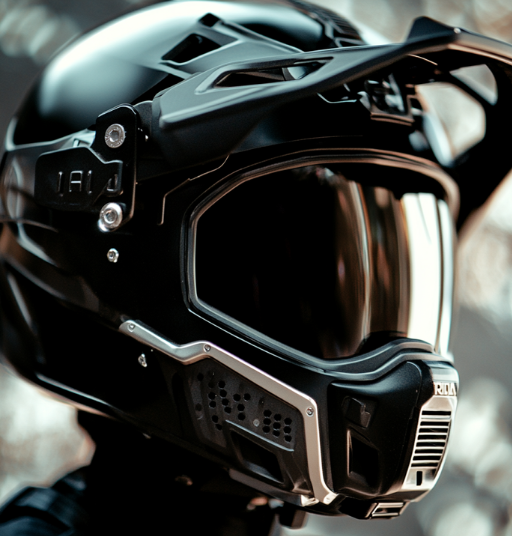

Filming motocross races — whether your own performance or someone else’s — produces completely different challenges than road riding footage. The combination of high speed, jumps, roost, tight corners, and unpredictable race conditions requires a specific approach to get footage worth watching. This guide covers techniques, camera placement, and settings that produce professional-quality motocross race footage.
Filming Your Own Riding: Helmet Cam Setup
Camera Placement for MX Racing
Chin mount: the standard for motocross
All major GoPro-sponsored motocross and MXGP athletes use chin mounts. The reasons are practical: the chin bar absorbs vibration from the rough terrain, the camera is sheltered from direct roost, and the perspective closely matches the rider’s eye line — which means viewers see what the rider sees through jumps, berms, and whoops.
Use a breakaway mount design for racing (not permanent adhesive) — if the helmet hits the ground, you want the camera to detach cleanly rather than applying rotational force to the helmet.
Best Settings for Race Footage
| Situation | Resolution | Frame Rate | Stabilization |
|---|---|---|---|
| Full race documentation | 4K | 60fps | HyperSmooth Boost |
| Jump slow-motion | 2.7K or 4K | 120fps | Standard |
| Long gate drop to checkered flag | 2.7K | 60fps | Boost (saves battery) |
| Practice lap analysis | 1080p | 120fps | Any |
Key setting: Horizon Lock ON — corners in motocross involve significant body lean. With Horizon Lock off, the camera tilts with your body, making footage look chaotic. With Horizon Lock on, the horizon stays level and corners look controlled and intentional.
Battery Management for Race Day
A standard motocross heat runs 30–35 minutes. A full race day with practice, qualifying, and 2 motos can run 4–5 hours of actual riding. Plan for:
- 2–3 batteries for GoPro Hero 13 (90 min each)
- 1–2 batteries for DJI Osmo Action 5 Pro (160 min each)
- Charge between sessions in the paddock via USB-C power bank
Use the Battery & Trip Planner to calculate exactly how much power you need for your race day schedule.
Filming Someone Else Racing: Ground Camera Techniques
Filming riders from trackside produces a very different type of motocross content — and for compelling action footage, ground cameras and multiple angles produce better spectator content than a single helmet cam.
Position 1: The Berm Exit
Position yourself just outside the exit of a fast berm corner, low to the ground. As riders exit the berm at full throttle, they pass within feet of the camera. At 60fps, this produces blurring of the background while the rider stays sharp — a cinematic effect without any post-production work.
Position 2: Jump Face and Landing
Set up on the side of a significant jump — not directly in line with the trajectory (obvious safety reason), but at 45°. Shoot at 120fps minimum to capture the full arc of the jump in slow motion. This is the most watchable type of motocross footage and the highest-traffic shot type on YouTube motocross channels.
Position 3: Start Gate
The holeshot is pure energy — 20+ bikes launching simultaneously. Set up wide at a 45° angle to the start gate, 30fps for the real-time chaos look or 120fps for slow-motion gate drop analysis.
Best Cameras for Trackside Motocross Filming
For filming from the side of the track (not helmet mounting), a different set of priorities applies:
- Zoom capability: Action cameras have fixed wide lenses — you need to be close to the action. For distance shots, a camera with optical zoom (Sony ZV-E10 with kit lens, or a 70–200mm telephoto) captures riders on the far side of the track.
- High frame rate: 120fps minimum to freeze the details of riders in the air.
- Burst photo mode: GoPro Hero 13 shoots 27MP bursts at 30fps — capturing split-second moments between video clips.
Audio for MX Race Footage
The sound of motocross is half the content — tyre roost, engine scream, landing impacts. External microphone options:
- Rode VideoMicro II — compact directional mic that attaches to a camera hotshoe. Directional pattern focuses on the action in front of you.
- Zoom H1n — separate handheld recorder. Record raw engine and crowd audio separately, sync in editing for clean multi-track audio.
- Smartphone mic — modern iPhones and Samsung flagships record excellent ambient audio. A separate phone on a mini tripod pointing at the track is surprisingly effective.
Editing Your Motocross Footage
Two tools dominate motocross content editing:
- GoPro Quik (free) — automated editing with beat-sync. Creates a watchable highlight reel in minutes. Limited control but excellent for quick social content.
- DaVinci Resolve (free) — full professional editing suite. Used by professional moto videographers. Has a learning curve but the Fusion compositor enables colour grading and effects that Quik can’t match.
Not sure which camera fits your motocross filming needs? Our Camera Recommender tool has a specific motocross profile that factors in vibration handling, frame rate, and budget.
Frequently Asked Questions
Do professional MX riders get paid to use GoPro?
Major MXGP and AMA Pro riders are typically sponsored by GoPro or DJI — they use specific cameras as part of their sponsorship agreements. The cameras they use are production models, not custom units, which is why the footage you see from factory riders is achievable with consumer cameras.
What’s the safest way to mount a camera on a motocross helmet?
Use a dedicated motocross chin mount with a breakaway release mechanism. Avoid permanent adhesive mounts that can’t release during a crash. Check that your helmet’s certification (ECE 22.06 or DOT) isn’t voided by external modifications — most chin mounts avoid this by attaching to the chin bar without adhesive rather than bonding to the helmet shell.
Official resources: GoPro Hero 13 Black | DJI Osmo Action 4.