GoPro vs DJI vs Insta360 for Motorcycles: Full Comparison

Which is the BEST Motorcycle Action Camera?  I Tried Them All...

Here is an honest comparison of cameras from all three major action camera brands, based on published specifications and documented performance across commuting, mountain passes, and track use.

Models covered: the cameras named in this guide. Manufacturers release new models regularly, so check current lineups, specifications and prices on the manufacturer pages before buying.

Three Cameras Worth Comparing for Motorcycle Use

  • GoPro Hero 13 Black ($399) — a popular choice as a primary road camera
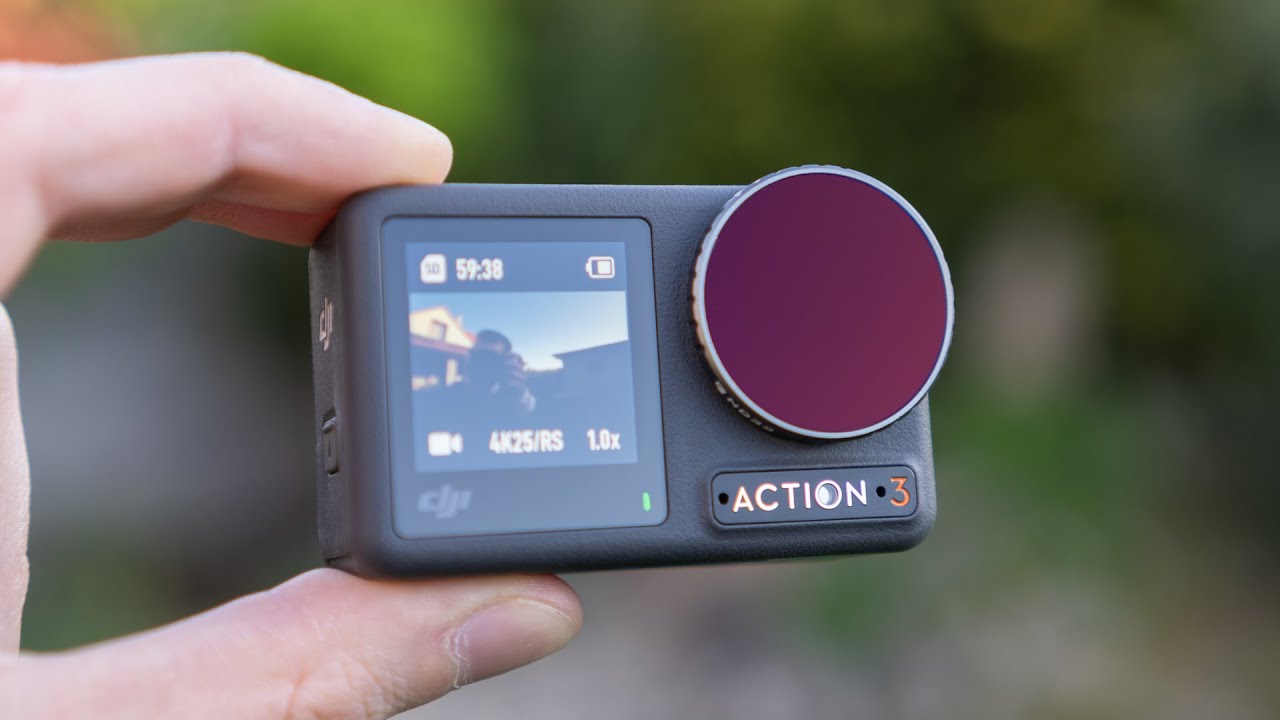
  • DJI Osmo Action 3 ($99-$149) — rated for reliable cold-weather operation
  • Insta360 Ace Pro 2 ($349) — a strong option for low-light and track use

Video Quality: Who Wins Where

In daylight riding conditions, all three cameras produce excellent footage that most viewers cannot distinguish at normal watching resolution. The differences show up in specific conditions:

Low light (dusk, dawn, tunnels): The Insta360 Ace Pro 2 uses a 1/1.3 inch sensor, larger than the sensors in the GoPro and DJI cameras compared here, which should give it an advantage in dim conditions such as early-morning commutes or tunnels. As a rule, larger sensors produce cleaner low-light footage, but results depend on the settings and lens used.

Colour accuracy: DJI’s colour is generally described as the most neutral, GoPro’s as slightly saturated and punchy (good for social media, less accurate), and Insta360’s automatic processing as the most aggressive.

Dynamic range (bright sky vs dark road): Hero 13 Black with an HLG or Log colour profile is designed to handle the contrast between bright sky and shadowed roads. DJI’s D-Log M is also excellent.

Stabilization on the Bike

All three are excellent. At highway speeds, all three are reported to produce usably smooth footage. On rough gravel roads, GoPro’s HyperSmooth 6.0 is generally considered to handle high-frequency engine vibration marginally better than DJI’s RockSteady, though the difference is small enough that most riders won’t notice it in finished footage.

Cold Weather Performance

This is where the published specifications separate the cameras most. DJI rates the Osmo Action 3 for operation down to about -20°C, while GoPro lists a warmer lower limit (around -10°C) for the Hero 13 Black. Lithium-ion batteries lose capacity in the cold on every camera, so expect shorter runtimes than the figures below, and keep a spare battery in an inner pocket. Check each manufacturer’s spec page for the current operating-temperature rating.

Mounting and Day-to-Day Use

DJI’s magnetic Quick-Release system is the fastest to use on a daily riding basis — one handed, one motion, the camera is off the helmet. GoPro’s standard buckle mount requires two hands and more attention. For daily commuting, DJI’s magnetic system is designed to make getting the camera on and off quick and one-handed.

Battery Life (Approximate)

Figures are approximate, based on manufacturer ratings and published reviews rather than our own measurements. Runtime varies with settings, temperature and battery age.

Camera Approx. Battery at 4K60 Cold-Weather Operating Rating
GoPro Hero 13 Black ~75 min Lower limit around -10°C (GoPro)
DJI Osmo Action 3 ~90 min Rated to about -20°C (DJI)
Insta360 Ace Pro 2 ~80 min See Insta360 spec page

Which Camera Suits Which Rider

Summer road riding and track days: GoPro Hero 13 Black. The lens mod system, stabilization, and established mounting ecosystem make it the most versatile for varied conditions.

Winter commuting: DJI Osmo Action 3. Its cold-weather rating and magnetic mounting make it a strong cold-season choice.

Creative content: Insta360 Ace Pro 2. The 1/1.3 inch sensor is the largest in any action camera at this price and the larger sensor is designed to hold up better in variable light such as shaded roads and late-afternoon sessions, where smaller-sensor cameras can look flat or noisy.

Insta360 markets the Ace Pro 2’s Leica co-engineered lens for sharpness and colour accuracy, which can reduce grading effort. The Insta360 app’s Shot Lab features (auto-cut, AI highlight reels and automatic colour correction) are designed to produce a usable edit from a short ride without desktop editing, which suits riders who publish to YouTube or Instagram without spending hours in Premiere.

The trade-off is that Insta360 footage is more processing-dependent. Recordings in LOG or HLG mode look flat without grading, and the AI edits, while good, do not give you the same manual control as editing GoPro or DJI raw footage yourself. If you want to grade and control every frame, GoPro and DJI give you more flexibility. If you want finished-looking footage faster, Insta360 is ahead.

See our individual reviews for deeper dives: DJI Osmo Action 3 review and our full best helmet cameras guide.

Frequently Asked Questions

Is GoPro or DJI better for motorcycle riding?

GoPro for warm climates and versatility; DJI for cold climates and ease of daily use. Both are excellent — the deciding factors are typically temperature range and mounting preference.

Is Insta360 worth it for motorcycle use?

Yes, particularly the Ace Pro 2 for low-light quality and the X4 for 360-degree coverage. The standard Insta360 action cameras are competitive with GoPro and DJI for most road riding use cases.

Which action camera has the best battery life for long motorcycle rides?

Among these three, the DJI Osmo Action 3 has the longest published battery rating at 4K60 and the widest rated cold-weather operating range.

Reviewed by the Digital Helmet Cameras Editorial Team. Compiled from manufacturer specifications and published stabilization comparisons. Prices and availability change; check current listings.

Official resources: GoPro Hero 13 Black | DJI Osmo Action 4 | Insta360 X4.

DJI Action Camera Review: Osmo Action 3, 4 & 5 Pro for Motorcycle Riding

DJI - Introducing DJI Action 2

DJI entered the action camera market in 2019 and has consistently challenged GoPro’s dominance with better battery life, competitive stabilization, and a dual-screen design that makes setup easier. This guide covers every current DJI action camera worth considering for motorcycle helmet use, their specifications, and who each camera is best suited to.

DJI has released newer Osmo Action models since this comparison was written (the Osmo Action 6 is now listed on DJI’s site). The models below remain useful for value comparisons, but check DJI’s current lineup and specifications before buying.

DJI Action Camera Lineup: Models Compared

Model Max Resolution Battery Life Sensor Price
Osmo Action 5 Pro 4K/120fps ~130 min (4K/60fps) 1/1.3″ ~$269
Osmo Action 4 4K/120fps ~100 min (4K/60fps) 1/1.3″ ~$199
Osmo Action 3 4K/120fps ~95 min (4K/60fps) 1/1.7″ ~$149

DJI Osmo Action 5 Pro: Best DJI Camera for Motorcycle Use

Key Specifications

  • Sensor: 1/1.3 inch — the largest in any action camera at this price point
  • Max video: 4K/120fps, 2.7K/120fps, 1080p/240fps
  • Stabilization: RockSteady 4.0 with Horizon Steady
  • Battery capacity: 1,950 mAh — largest action camera battery currently available
  • Battery life: ~130 min at 4K/60fps; ~160 min at 1080p/60fps
  • Waterproof: 20m without housing — best-in-class waterproofing
  • Weight: 179g with battery
  • Dual screen: 2.25″ rear touchscreen + 1.3″ front screen
  • Price: ~$269 (camera only), ~$369 (Adventure Combo)

Why Motorcycle Riders Choose the Action 5 Pro

Battery life: 130 minutes of 4K/60fps recording is the most of any action camera in this price range. For touring riders, this means a complete morning ride without battery changes. For commuters, it covers a full week of daily commutes (30 min × 5 days) on a single charge.

1/1.3-inch sensor: A larger sensor captures more light, which translates to better dynamic range. For motorcyclists who ride at dawn and dusk, or through areas with rapid light changes (tunnel exits, tree-lined roads), the Action 5 Pro handles these conditions better than smaller-sensor cameras.

20m waterproofing: Industry-leading for an action camera without a housing. Riding in heavy rain, river crossings on adventure bikes, and water sports are all handled without any additional case.

Best Settings for Motorcycle Use

Standard road riding:

  • 4K / 60fps
  • RockSteady 4.0 ON
  • Horizon Steady ON
  • Wide FOV
  • D-Cinelike colour profile (if editing) / Standard (if uploading direct)

Long-distance touring:

  • 2.7K / 60fps (saves ~30% storage and battery vs. 4K)
  • RockSteady ON, Horizon Steady ON
  • Loop recording not available — manage storage manually or use a 256GB card

Track days / performance riding:

  • 4K / 120fps
  • RockSteady Standard (Boost mode has limitations at 4K/120fps)
  • Normal FOV (less distortion for technique analysis)

DJI Osmo Action 4: The Value Sweet Spot

The Action 4 dropped to ~$199 after the Action 5 Pro launched — making it exceptional value. It uses the same 1/1.3-inch sensor as the Action 5 Pro, shoots 4K/120fps, and has RockSteady 3.0 stabilization. The main differences vs. the Action 5 Pro:

  • Battery life: ~100 min vs. 130 min (Action 5 Pro wins)
  • Stabilization: RockSteady 3.0 vs. 4.0 (marginal in real-world use)
  • Waterproofing: 18m vs. 20m (irrelevant for motorcycle use)
  • Price: ~$70 less

Verdict: If battery life isn’t a deciding factor (rides under 90 minutes), the Action 4 at $199 represents better value than the Action 5 Pro at $269.

DJI Osmo Action 3: Best Budget DJI Camera

Now available for ~$149, the Action 3 remains one of the best value motorcycle cameras on the market. It doesn’t have the 1/1.3-inch sensor of the newer models (it uses 1/1.7-inch), but the 160-minute battery life at 1080p is still best-in-class at its price point. For riders who don’t need 4K or the best low-light performance, the Action 3 covers all practical riding scenarios.

DJI vs. GoPro: The Honest Comparison

The two-brand rivalry is genuine — both are excellent, and the “right” choice depends on priorities:

Priority Choose DJI Choose GoPro
Battery life ✅ DJI wins
Low-light performance ✅ DJI (larger sensor)
Dual screen ✅ DJI standard
Max resolution ✅ GoPro (5.3K vs. 4K)
Mount ecosystem ✅ GoPro has more options
Modular accessories ✅ GoPro Media Mod, lenses
Stabilization in vibration Equivalent Equivalent

Use our Camera Recommender tool to get a specific GoPro vs. DJI recommendation based on your riding style — it takes 60 seconds and factors in the details that matter for your situation.

Mounting DJI Action Cameras on a Motorcycle Helmet

DJI’s magnetic quick-release system uses a proprietary mount but includes a GoPro-compatible adapter, so the full GoPro mount ecosystem is available.

Recommended mounts for DJI cameras:

  • DJI Helmet Chin Mount (~$29) — designed for DJI cameras specifically; quick magnetic release
  • ULANZI U-400 Chin Mount (~$18) — budget alternative; secure, compatible with DJI magnetic system
  • Telesin Helmet Chin Mount for DJI (~$15) — best value option
  • Any GoPro mount + DJI GoPro adapter — opens the full GoPro accessory range

Frequently Asked Questions

Is DJI Osmo Action 5 Pro better than GoPro Hero 13?

For battery life and low-light performance: yes. For maximum resolution, mount ecosystem, and modular accessories: no. They are roughly equivalent for the core use case of 4K/60fps motorcycle footage with stabilization. Your decision should come down to which secondary features matter more to you.

Does the DJI Osmo Action camera work underwater?

The Action 5 Pro is rated to 20 metres without housing — suitable for swimming, snorkelling, and rain riding. The Action 4 is rated to 18 metres. Neither requires an additional underwater housing for the conditions motorcycle riders typically encounter.

Can I use the DJI Mimo app for remote control while riding?

The DJI Mimo app connects over Wi-Fi and provides remote control, live preview, and settings adjustment. It’s not safe to use while riding — use it at the start/end of a ride for framing and settings confirmation. The front-facing screen on DJI cameras allows on-helmet framing checks without the app.

Official resources: DJI Osmo Action 3 | DJI Osmo Action 4 | DJI Osmo Action 5 Pro.

DJI Osmo Action 3 for Motorcycle Riding: Long-Term Durability Considerations

DJI OSMO ACTION 3 Long Term Review

Reviewed by the Digital Helmet Cameras Editorial Team. Based on manufacturer specifications and publicly available user feedback; not independent lab or road testing. Prices and availability change, so check current listings.

Why Long-Term Use Matters

Most action camera reviews are written within days of unboxing. That is useful for specs and first impressions, but it says less about what matters for motorcycle riders: how a camera holds up after months of engine vibration, UV exposure, temperature cycling and regular use. This guide looks at those long-term considerations for the DJI Osmo Action 3 using DJI’s published specifications, general knowledge of how action cameras age, and publicly available owner feedback. We have not run our own long-term test.

The Osmo Action 3 is an older model, and DJI has since released newer Osmo Action cameras. Treat this as a value and durability guide, and check DJI’s current lineup before buying.

What Tends to Matter Over Time

The Magnetic Mount System

The magnetic quick-release system is one of the Action 3’s headline features. It is designed to let you move the camera from a helmet chin mount to a handlebar mount quickly, even with gloves on. Magnetic mounts are sometimes assumed to be less secure than mechanical locks at highway speed, but DJI designed the system to hold reliably. A wrist tether or safety strap is still sensible insurance regardless of mount system.

Heat

Early Action 3 reviews in 2022 flagged overheating as a concern. In motorcycle use this is generally less of an issue, because a helmet-mounted camera sits in moving air, and DJI has released firmware updates that address thermal behavior. The scenario to watch is stationary recording in direct sun, such as a long stop with the camera running and facing the sun. Stop recording during extended breaks, which also saves storage.

Stabilization

RockSteady 3.0 is software-driven, so stabilization quality does not depend on mechanical wear. On smooth tarmac, electronic stabilization can produce very smooth footage. On rough chip-seal roads, some residual jitter is normal with any electronic stabilization system. HorizonSteady keeps the frame level through lean angles and is popular for canyon riding.

Battery Aging

Lithium-ion batteries lose capacity gradually with charge cycles. After a year or more of regular use, it is reasonable to expect noticeably shorter runtimes than the rated figure, and a spare battery that has seen fewer cycles will hold up better. This is normal aging and applies to GoPro and Insta360 batteries too. A USB-C power bank and a charging routine at fuel stops help on touring days.

Common Wear Points to Inspect

  • Lens protector: Front protectors collect micro-scratches from dust and grit. Replacement protectors are inexpensive, and replacing them periodically is normal maintenance.
  • Touchscreen: Touchscreens on most action cameras become less responsive in cold weather or with gloves, so plan to set modes before you ride.
  • Battery door and seals: Inspect latches and seals periodically, especially after dusty or wet rides, since waterproofing depends on them.

Firmware Updates

DJI has released firmware updates for the Action 3 since launch, including stabilization and exposure improvements. Check for updates periodically via the DJI Mimo app or dji.com’s downloads page.

Is It Worth Buying Now?

Because newer models exist, the Action 3 is often available at a lower price than at launch. For riders who mostly ride in good light and prioritize value, it can still be a sensible choice. The Action 4’s larger sensor is generally considered a meaningful upgrade for low-light riding. Check the current price on Amazon or at dji.com for bundle options.

Long-Term Summary

Factor What to expect Notes
Magnetic mount Designed for repeated use Use a tether regardless
Stabilization Software-based; does not wear Firmware updates may improve it
Battery life Declines gradually with cycles Normal lithium-ion aging
Heat Less of an issue in moving air Avoid stationary recording in direct sun
Wear items Lens protector, seals, latches Inspect and replace as needed

The DJI Osmo Action 3 has a strong reputation as a reliable, durable motorcycle camera. The main takeaway: it is designed to get out of the way and let you ride.

Get Your Download Immediately

Get Instant access to our Digital Helmet Camera ebook

You have Successfully Subscribed!